Choosing Upholstery Fabric
Picking a cover that lasts: abrasion ratings in double rubs, weave and fiber, pattern scale and repeat, leather, and estimating yardage from the old cover or a cutting plan.
- 4 min
- 5 steps
- 3 questions
- Lesson 21 of 26
In this lesson
- Durability
- Weave and fiber
- Pattern and scale
- Estimating yardage
- What to take from this
Picking up where you left off.
Durability
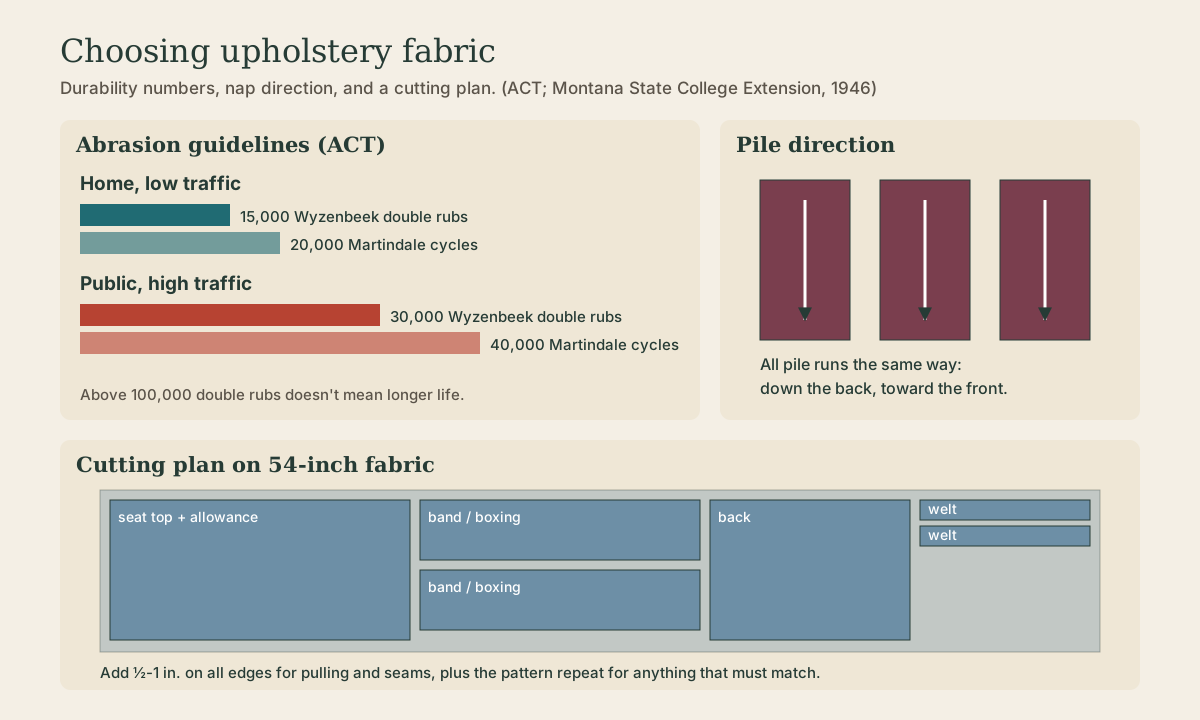
Upholstery fabric takes abrasion, stretching, and sun. The main abrasion tests are the Wyzenbeek (double rubs, ASTM D4157) and Martindale (cycles, ASTM D4966). The Association for Contract Textiles’ voluntary guidelines 1:
| Use | Wyzenbeek | Martindale |
|---|---|---|
| Low traffic, private (home) | 15,000 double rubs | 20,000 cycles |
| High traffic, public | 30,000 double rubs | 40,000 cycles |
These predict wear but don’t guarantee lifespan; fiber, weave, finish, furniture design, cleaning, and use all matter, and ACT cautions against reading very high Wyzenbeek results (over 100,000) as proof of longer life 1. ACT also publishes guidelines for pilling, breaking strength, and seam slippage, which matter for seats that see pull and stress 2.
Quick check
High-traffic upholstery: 30,000 double rubs or 40,000 Martindale cycles. Very high numbers don’t reliably mean longer life.
Weave and fiber
- Tight weaves wear better and snag less than loose, loopy ones. The 1946 Montana bulletin’s advice still holds: closely woven, comparatively heavy fabric for durability 3.
- Wool: durable, resilient, naturally flame-resistant, takes dye beautifully.
- Linen: strong and handsome but wrinkles and can wear at edges.
- Cotton: comfortable; durability depends on weave (canvas and duck are tough).
- Synthetics (polyester, nylon, olefin): tough, stain-resistant, good for heavy use.
- Mohair, velvet: luxurious; directional pile shows wear patterns.
- Leather: very durable but less pliable to fit than fabric 3; it needs different tools and techniques.
Check the fabric’s cleaning code (water-based, solvent, both, or vacuum only).
Pattern and scale
- Scale the pattern to the piece: small pieces want plain fabric or small patterns; the Montana bulletin suggests plain for a footstool if the rug or room already has much pattern 3.
- Center motifs on seat, back, and cushions.
- Stripes run square to the front and continue across pieces.
- Pile and nap (velvet, mohair) must all run the same direction - usually down the back and toward the front on seats - or panels look different colors.
- Pattern repeat (the distance before a pattern repeats) increases yardage for matching.
Quick check
Scale the pattern to the piece and consider the room.
Estimating yardage
- List every piece - seat top, boxing or bands, welt, back, arms, cushions - with its size plus allowance for pulling and seams (the Montana bulletin adds 1/2 to 1 inch on all edges when using an old cover as a pattern, more for pulling over a frame) 3.
- Draw the fabric width (commonly 54 inches) to scale on graph paper, and lay out pieces with the grain running the right way.
- Add pattern repeat for every piece that must match.
- Include welt strips: cut on the bias for curves, or straight for straight runs.
- Add a margin for mistakes.
The bulletin’s footstool cutting plan is a good example: top, four boxing pieces, and welt strips nested on 50-inch fabric 3.
Quick check
A cutting plan with real piece sizes, grain direction, and repeat avoids shortages.
What to take from this
For home use, look for at least 15,000 Wyzenbeek double rubs (30,000 for heavy use), tight weaves, and suitable fiber, keeping in mind that test numbers aren’t a lifespan guarantee. Scale patterns to the piece, center motifs, align stripes, run pile one way, and plan yardage on a scaled layout with real piece sizes, allowances, welt, and repeat.
Lesson complete
Nice work.
Sources for this lesson
- 1Textiles 101 (ACT performance guidelines). Wolf-Gordon. verifiedACT abrasion guidelines - low traffic 15,000 Wyzenbeek double rubs or 20,000 Martindale cycles; high traffic 30,000 double rubs or 40,000 cycles; very high results don't reliably predict longer life.
- 2Physical Properties Guideline for Woven Fabrics, Indoor Use. Association for Contract Textiles. verifiedVoluntary upholstery guideline covering pilling, breaking strength, seam slippage, test methods, minimums, and the limits of predicting field performance from one laboratory result.
- 3Margaret Huston Tuller. Simple Upholstery Methods (Bulletin 198, revised). Montana Extension Service, Montana State College. 1946. verifiedA sprung footstool step by step - webbing stretcher, 3-, 8-, and 12-ounce tacks, 3 1/2-inch webbing interlaced, springs sewn at intersections, 8-way tying with clove hitches, burlap, edge roll, hair and cotton padding, muslin, cover, welt, cambric; plus retying 'broken springs' and renewing webbing.