How Do Snowflakes Get Their Six Points?
Water vapor freezes straight onto a speck of dust high in a cold cloud, and the way water molecules lock together makes six-sided crystals.
- 3 min
- 6 steps
- 2 questions
- Lesson 89 of 157
In this lesson
- The short answer
- It starts with a speck
- Why six sides
- Why the designs differ
- Reaching the ground
- So
Picking up where you left off.
The short answer
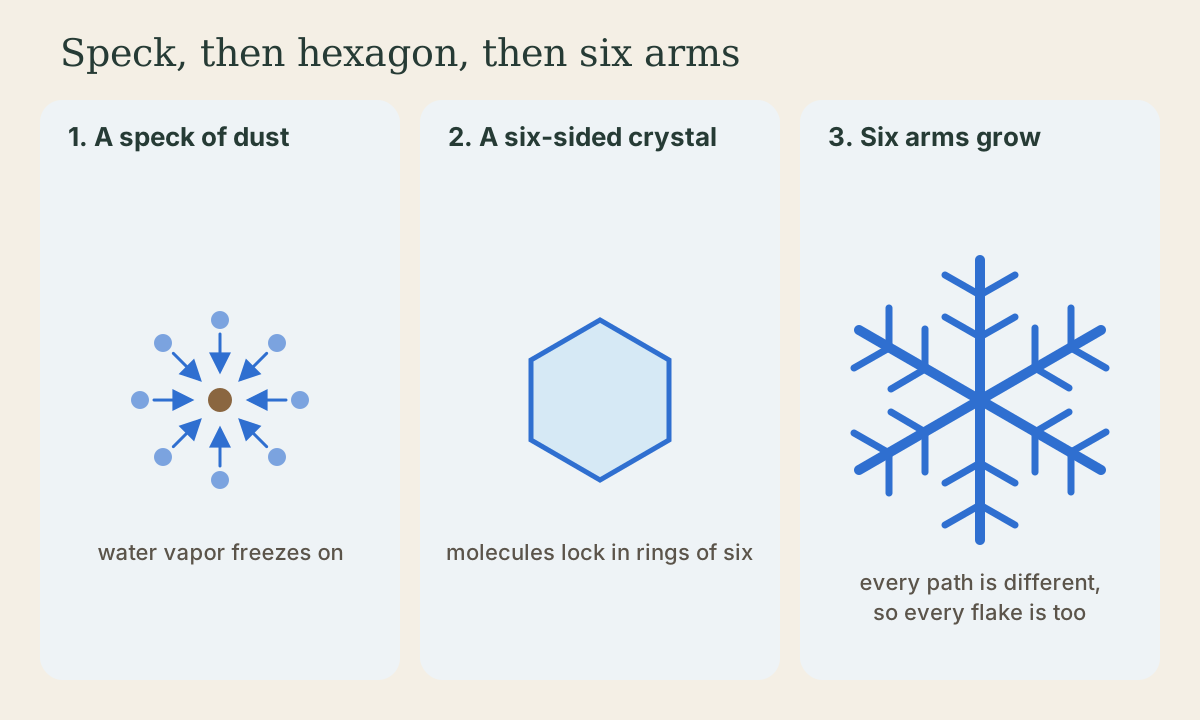
High up in a cloud where it’s below freezing, water vapor (water as an invisible gas) freezes onto a tiny speck of dust and starts building an ice crystal. Water molecules always lock together in six-sided rings when they freeze, so the crystal grows six-sided too. As it tumbles through the cloud, more vapor freezes onto it, growing six arms. Each snowflake takes a slightly different path through the cloud, so each grows a slightly different design.
It starts with a speck
Clouds are made of tiny water droplets and invisible water vapor. Even when a cloud is well below freezing, its tiny droplets often stay liquid, because water needs something to freeze onto. That something is a speck of dust, pollen, or even bacteria floating in the air. When vapor or a droplet freezes onto a speck, a tiny ice crystal is born 1.
Then the crystal grows. Water vapor in the air turns directly into ice on its surface, skipping the liquid step, the same way frost forms on a cold window on a winter morning.
Why six sides
A water molecule has a bent shape, like a wide letter V. When water freezes, each molecule holds hands with four neighbors in a fixed pattern, and that pattern makes rings of six 2. Every piece of ice, from an ice cube to a frozen lake, is built of this six-sided framework. A snowflake is a single crystal of it growing out into the air, so it shows that six-sided shape on the outside: a flat six-sided plate, or a star with six arms.
Why the designs differ
How a crystal grows depends on the temperature and how much moisture is in the air around it. Near 5 °F with plenty of moisture, crystals grow into the classic lacy stars with feathery arms. A few degrees warmer or colder, they grow as flat plates, thin needles, or little hollow columns.
All six arms grow at once in the same air, so they look alike. But as the flake falls, it drifts through slightly different temperatures and moisture, and each change shows up as a new branch or ridge on all six arms at the same moment. No two flakes travel the exact same path, so, as far as anyone has found, no two complex snowflakes come out exactly alike.
Quick check
Near 5°F with lots of moisture, crystals grow into classic star shapes.
Reaching the ground
Most snowflakes are smaller than half an inch. Many stick together as they fall into fluffy clumps. To reach the ground as snow, the air has to stay near or below freezing most of the way down; otherwise flakes melt into rain. Wisconsin’s very cold, dry days often give the finest, sparkliest powder, made of small, perfect crystals. Wetter snow near the freezing point makes big, heavy flakes that are perfect for snowballs.
So
Snowflakes form when water vapor freezes onto a speck of dust in a freezing cloud and keeps freezing on as the crystal falls; water’s molecules lock into six-sided rings, so the crystal grows six arms, and each flake’s unique path through the cloud gives it its own design.
Practice
When water freezes, its molecules join in a six-sided pattern. Every ice crystal, including a snowflake, grows from that pattern.
Lesson complete
Nice work.
Sources for this lesson
- 1Science of Snow. National Snow and Ice Data Center. verifiedSnow crystals form in clouds at or below freezing; most snowflakes are under half an inch.
- 2Paul Flowers, Klaus Theopold, Richard Langley, William R. Robinson. Chemistry 2e. OpenStax (Rice University). 2019. verifiedFree peer-reviewed general chemistry text; intermolecular forces, solutions, and colloids. Cited at: The Solid State of Matter.