If a Tree Is Alive, Why Doesn't It Scream When We Cut It?
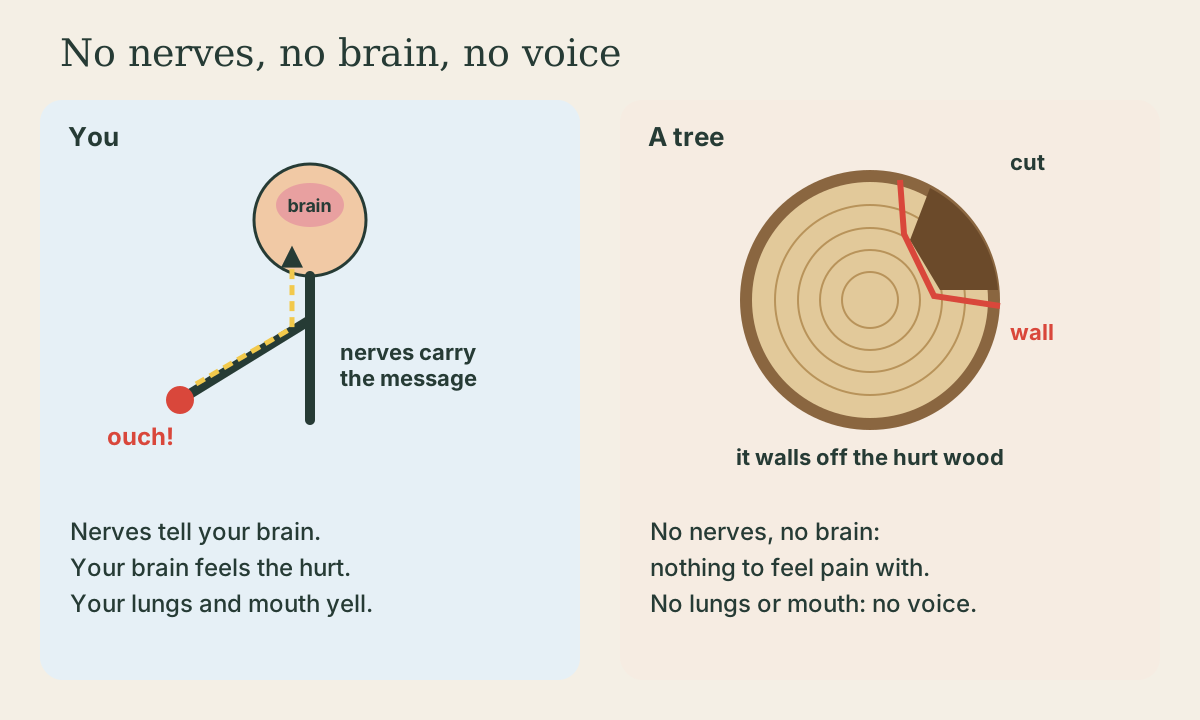
A tree is alive, but it has no nerves, no brain, and no lungs or mouth. Feeling pain takes nerves to carry the message and a brain to feel it, and screaming takes lungs and a mouth, so a tree has nothing to feel pain with and nothing to scream with. It reacts in its own quiet way: it plugs and walls off the hurt wood so germs can't spread, and grows new wood over the wound.
- 4 min
- 6 steps
- 3 questions
- Lesson 41 of 157
In this lesson
- The short answer
- Being alive doesn’t mean having feelings
- How you feel hurt
- What a tree doesn’t have
- What a tree does instead
- So
Picking up where you left off.
The short answer
A tree is alive, but it’s built completely differently from you. To feel pain, you need nerves to carry a “you’re hurt!” message and a brain to feel it. To scream, you need lungs to push air and a mouth and voice box to make a sound. A tree has none of those things, so there’s nothing in it that can feel pain and nothing it could scream with. A tree reacts to a cut in its own quiet, slow way: it plugs up and walls off the hurt wood so germs can’t spread, and it grows new wood over the wound.
Being alive doesn’t mean having feelings
Living things all grow, take in food and water, and make more of themselves 1. Bacteria do that. Mushrooms do that. Trees do that. Being alive just means doing those things. It doesn’t mean having a brain, thoughts, or feelings. Only animals have nerves and brains, and feeling things is what nerves and brains do.
How you feel hurt
When you bump your knee, tiny nerve endings in your skin notice the damage. They send a message zipping along your nerves, like signals along a wire, up through your spinal cord to your brain. Your brain is what actually feels the hurt and says “ouch!” 2. Then your brain can tell your lungs to push out air and your voice box and mouth to shape it into a yell.
Every step of that needs a part that a tree doesn’t have.
Quick check
A tree has neither nerves nor a brain.
What a tree doesn’t have
- No nerves. Nothing in a tree carries a hurt message.
- No brain. Nothing in a tree could feel the message even if there were one.
- No lungs, no voice box, no mouth. Even if a tree “wanted” to scream, there’s nothing to make the sound with.
So when someone saws a branch, the tree doesn’t feel it, and it doesn’t make a sound, because it can’t.
Quick check
Screaming takes lungs, a voice box, and a mouth, and trees have none of those.
What a tree does instead
A tree does react to being cut, just slowly and silently, like a building fixing a leak instead of a person crying out.
A cut lets in germs that can rot wood. So the tree builds walls around the hurt spot. It plugs up the tiny tubes above and below the wound, and it hardens the wood around it so rot can’t easily spread inside. Then the thin living layer just under the bark grows a strong new wall and keeps making new wood on the outside, slowly rolling over the wound 3. The hurt wood stays sealed inside, and the tree keeps growing around it.
Trees don’t heal a wound the way your skin heals a cut, replacing the hurt part. They close it off and grow past it. If you’ve ever seen a lump or a dark spot inside a cut log, you were looking at an old wound a tree walled off years ago.
Some plants also send out chemical signals when they’re nibbled or cut. The smell of fresh-cut grass is one of them. These are automatic chemical reactions, like a smoke alarm going off, not feelings 1.
Quick check
The hurt wood stays inside the tree forever, sealed off behind its walls.
So
A tree doesn’t scream when it’s cut because it has no nerves to carry a hurt message, no brain to feel it, and no lungs or mouth to make a sound. Being alive doesn’t mean having feelings. A tree reacts in its own quiet way instead: it walls off the hurt wood to keep germs from spreading and grows new wood over the wound.
Lesson complete
Nice work.
Sources for this lesson
- 1Mary Ann Clark, Matthew Douglas, Jung Choi. Biology 2e. OpenStax (Rice University). 2018. verifiedFree peer-reviewed college biology text; animal form and function, plants, and ecology chapters. Cited at: The Study of Life; Plant Sensory Systems and Responses.
- 2J. Gordon Betts, Kelly A. Young, James A. Wise, et al.. Anatomy and Physiology 2e. OpenStax (Rice University). 2022. verifiedFree peer-reviewed human anatomy and physiology text organized by body system. Cited at: Sensory Perception.
- 3Alex L. Shigo, Harold G. Marx. Compartmentalization of Decay in Trees (Agriculture Information Bulletin 405). USDA Forest Service. 1977. verifiedWounds start the processes that can lead to decay; after wounding, a tree plugs conducting elements above and below (Wall 1) and resists spread inward (Wall 2) and sideways (Wall 3); the cambium then forms a barrier zone (Wall 4) that confines invasion to the wood present at the time of wounding, so new rings are protected.