Why Do We Get Goosebumps?
Tiny muscles pull each hair upright when you're cold or scared, a leftover from when our ancestors had fur.
- 3 min
- 6 steps
- 2 questions
- Lesson 58 of 157
In this lesson
- The short answer
- A muscle for every hair
- You can’t control it
- What it does for furry animals
- Why we still have it
- So
Picking up where you left off.
The short answer
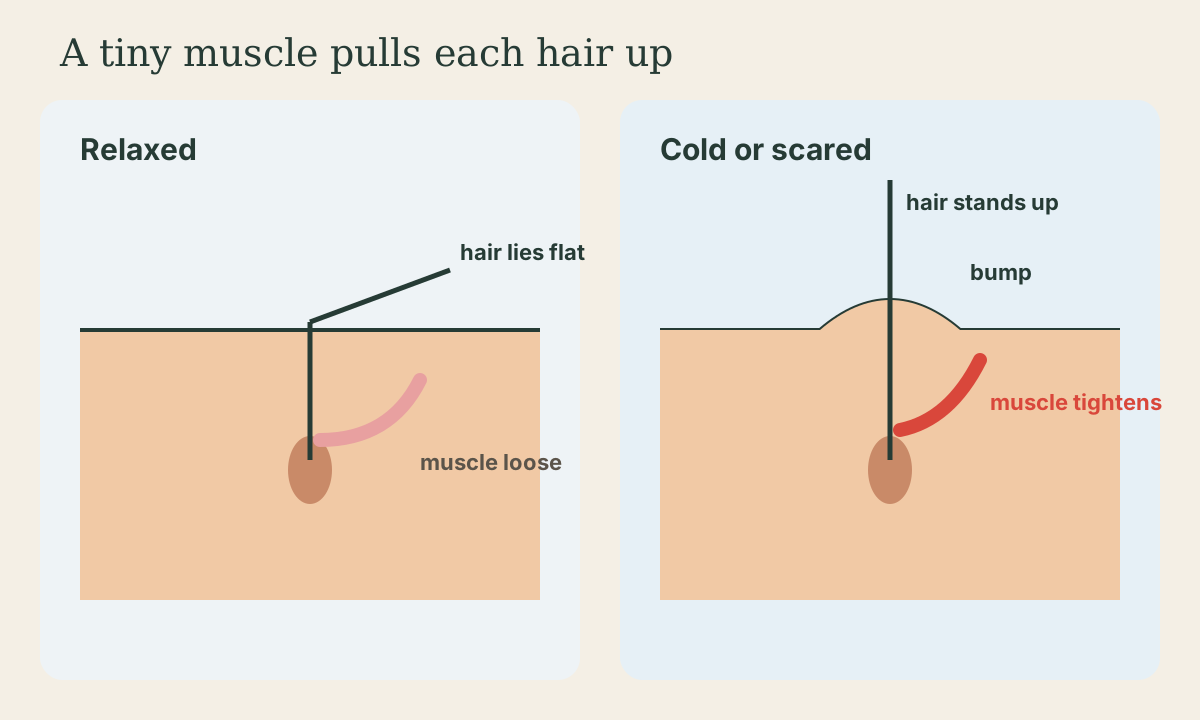
Each hair on your skin has a tiny muscle attached to its root. When you’re cold, scared, or thrilled, these muscles tighten and pull the hairs upright. The pulling bunches up the skin around each hair into a little bump. In furry animals, standing fur traps warm air or makes the animal look bigger. We have so little body hair that it doesn’t help us much, but our bodies still do it.
A muscle for every hair
Look closely at your arm. Each hair grows out of a little pocket in your skin called a follicle. Attached to the side of each follicle is a muscle so small you’d need a microscope to see it, called the arrector pili, which means “hair raiser” 1.
Normally the hairs lie at a slant. When the hair-raiser muscle tightens, it pulls the hair upright and tugs the skin around it, making a small bump. All over your arm at once, that’s goosebumps. They’re named after geese because plucked bird skin has the same bumpy look where the feathers were.
You can’t control it
You can’t make goosebumps on purpose. They’re controlled by the part of your nervous system that runs things automatically, the same part that makes your heart race when you’re frightened. A sudden chill or a jolt of fear or excitement sends a signal, and the muscles all tighten together. That’s why scary stories and beautiful music can give you goosebumps too.
What it does for furry animals
For a cat or a bear, the same reflex is very useful:
- Cold: fluffed-up fur traps a thicker layer of still air next to the skin, which keeps the animal warmer, like a puffy winter coat. Birds fluff their feathers the same way on a frosty morning.
- Fear: a cat with its fur standing on end looks much bigger, which can scare off an enemy.
Quick check
Fluffed fur also makes an animal look bigger to a threat.
Why we still have it
Long ago, our ancestors had thick body hair, and goosebumps kept them warm and made them look bigger. As humans lost most of that hair, the reflex stayed. It doesn’t warm us much anymore, but it’s a clue to our history.
The hair-raiser muscles do still have a job: scientists have found they help keep the cells that grow new hair active, so goosebumps’ little muscles also help your hair grow.
So
We get goosebumps because tiny muscles attached to each hair tighten when we’re cold, scared, or excited, pulling the hairs upright and bunching the skin into bumps, a reflex that keeps furry animals warm and helps them look bigger, left over from when our ancestors had fur.
Practice
Each hair has a tiny muscle attached. When it tightens, it pulls the hair up and bunches the skin around it into a bump.
Lesson complete
Nice work.
Sources for this lesson
- 1J. Gordon Betts, Kelly A. Young, James A. Wise, et al.. Anatomy and Physiology 2e. OpenStax (Rice University). 2022. verifiedFree peer-reviewed human anatomy and physiology text organized by body system. Cited at: Accessory Structures of the Skin.