Why Do I Get Sick?
Germs too small to see get inside and multiply; the sniffles, fever, and tiredness are mostly your body fighting them off.
- 3 min
- 6 steps
- 2 questions
- Lesson 63 of 157
In this lesson
- The short answer
- Germs are everywhere
- Your body’s defenders
- Feeling sick is often the fight
- Your body remembers
- So
Picking up where you left off.
The short answer
Most of the time we get sick because germs, living things far too small to see, get inside our bodies and multiply. The main kinds are viruses and bacteria. Many of the things that make you feel sick, like a fever, a runny nose, coughing, and feeling tired, are actually your body fighting the germs. Your body also remembers each germ it beats, so the same one usually can’t make you sick again.
Germs are everywhere
Bacteria are tiny living cells. Most are harmless and many are helpful, like the trillions in your gut that help digest food. A few kinds cause illness, such as strep throat. Viruses are even smaller. They aren’t really alive on their own: a virus has to get inside one of your cells and trick it into making copies of the virus 1. The common cold and flu are viruses.
Germs get in through your nose, mouth, and eyes, or through cuts. They spread when someone coughs or sneezes, on hands, and on things people touch. That’s why washing your hands works so well: it removes germs before they get inside.
Your body’s defenders
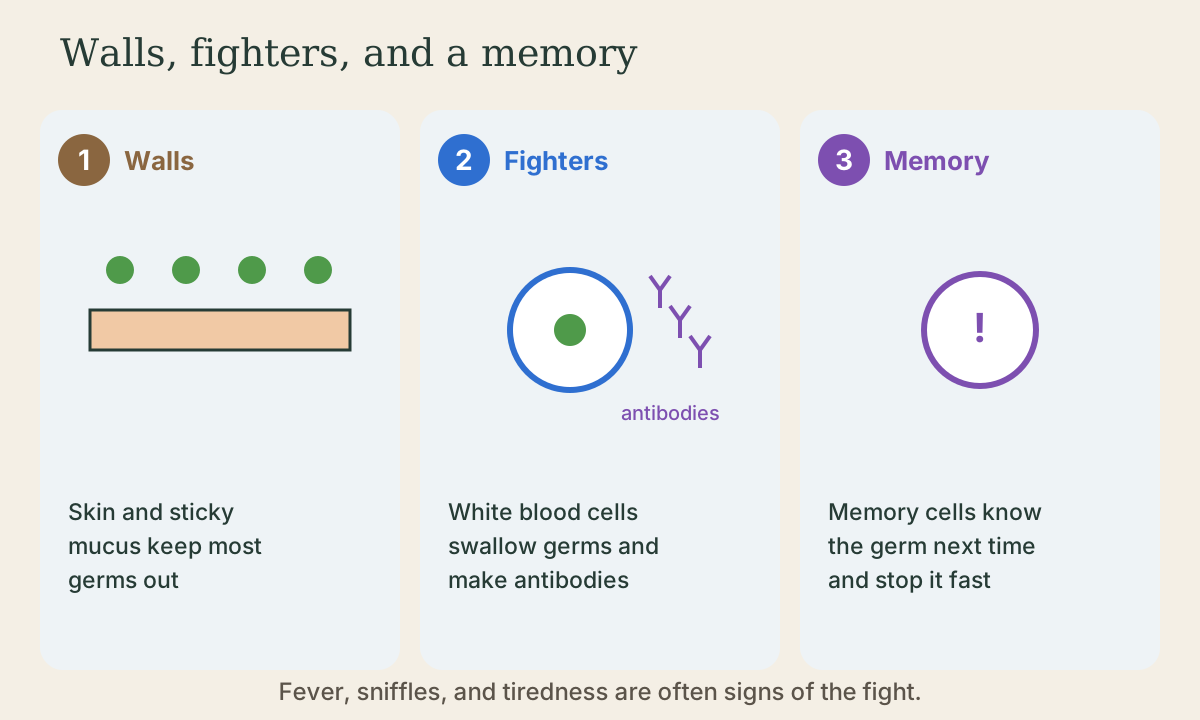
Your immune system is your body’s defense force 2. Your skin and the sticky mucus in your nose are the walls and moat. If germs get past them, white blood cells attack. Some swallow germs whole. Others make antibodies, little proteins shaped to grab onto one particular germ and mark it for destruction.
Feeling sick is often the fight
- Fever: your brain turns up your body temperature, which helps your defenders work faster and makes it harder for many germs to multiply.
- Runny nose and coughing: extra mucus traps germs, and coughing and sneezing push them out.
- Feeling tired: your body saves energy for the fight, which is why rest helps you get better.
- Swollen glands in your neck: those are lymph nodes, where white blood cells gather and multiply to fight.
Quick check
Much of feeling sick is your immune system fighting.
Your body remembers
After you beat a germ, your immune system keeps memory cells that recognize it. If the same germ comes back, they make antibodies so fast that it gets wiped out before you feel sick. That’s why you usually get chickenpox only once. Vaccines use this memory: they show your immune system a harmless piece or weakened version of a germ, so it learns to recognize it without you having to get sick first.
You still catch colds again and again because there are hundreds of different cold viruses, and each new one is a stranger to your immune system. Flu viruses also change a little every year.
Not every sickness is caused by germs. Sometimes a part of the body doesn’t work right, or something like an allergy makes the immune system react to something harmless. But catching colds, flu, and stomach bugs is about germs.
So
We get sick when germs like viruses and bacteria get inside us and multiply, and much of what we feel, from fever to sniffles to tiredness, is our immune system fighting them, a fight it remembers so the same germ usually can’t make us sick again.
Practice
After a fight, your immune system keeps memory cells that recognize that exact germ and wipe it out fast if it comes back.
Lesson complete
Nice work.
Sources for this lesson
- 1Mary Ann Clark, Matthew Douglas, Jung Choi. Biology 2e. OpenStax (Rice University). 2018. verifiedFree peer-reviewed college biology text; animal form and function, plants, and ecology chapters. Cited at: Viral Evolution, Morphology, and Classification.
- 2J. Gordon Betts, Kelly A. Young, James A. Wise, et al.. Anatomy and Physiology 2e. OpenStax (Rice University). 2022. verifiedFree peer-reviewed human anatomy and physiology text organized by body system. Cited at: Barrier Defenses and the Innate Immune Response.