Where Does Beach Sand Come From?
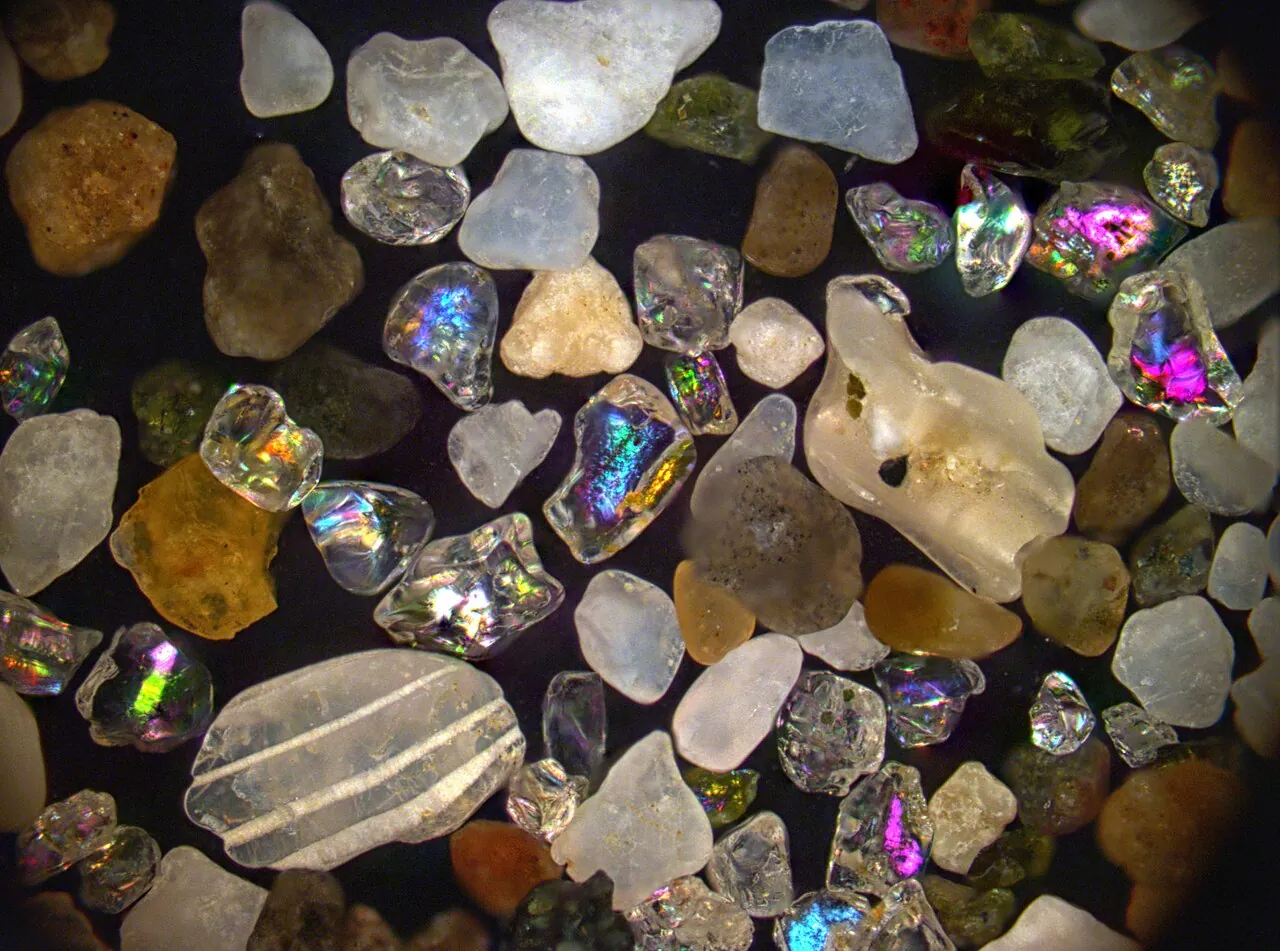
Most beach sand is made of tiny pieces of rock. Over thousands and even millions of years, rain, ice, and wind crack big rocks in mountains and cliffs into smaller pieces. Rivers carry those pieces toward the sea, knocking them against each other along the way so they get smaller and rounder. At the shore, waves and tides keep tumbling and grinding them until they're tiny grains. Tan sand is mostly a hard mineral called quartz, black sand comes from volcanic rock, and some white beaches are made of ground-up coral.
- 3 min
- 4 steps
- 2 questions
- Lesson 102 of 157
In this lesson
- The short answer
- From mountain to beach
- Sand of many colors
- So
Picking up where you left off.
The short answer
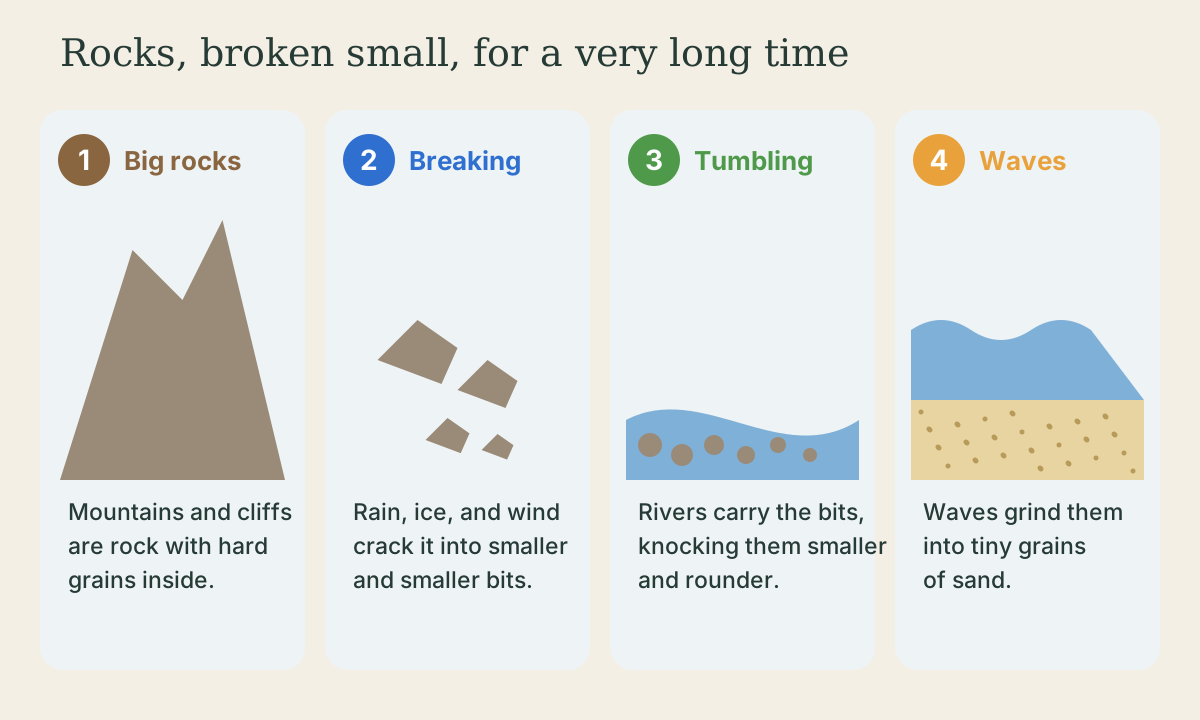
Most beach sand is made of tiny pieces of rock. Over thousands and even millions of years, rain, ice, and wind crack big rocks into smaller pieces 1. Rivers carry those pieces toward the sea, knocking them against each other so they get smaller and rounder. At the shore, waves and tides keep tumbling and grinding them until they’re tiny grains 1.
From mountain to beach
It starts with big rock, in mountains, cliffs, and hills. Rain soaks into cracks; in winter, the water freezes into ice, which pushes the cracks wider; wind blows grit against the rock. Little by little, pieces break off 1.
Then the pieces go traveling. Streams and rivers carry them downhill, sometimes from thousands of miles away from the ocean 1. As they bump and roll along the bottom, they knock their sharp corners off and get smaller and rounder, the way a pebble in a stream gets smooth.
When they finally reach the sea, the waves take over. Every wave rolls the pieces back and forth, rubbing them together, day and night, for ages 1. The softer bits wear away to nothing, and the hardest ones are left as sand. The most common one is a hard, clear mineral called quartz 1.
Quick check
Rain, ice, wind, rivers, and waves break rock into tiny grains.
Sand of many colors
- Tan sand, the most common kind, is mostly quartz tinted light brown by a little iron (the same stuff as rust), mixed with a tan mineral called feldspar 1.
- Black sand comes from dark volcanic rock, so it’s found on beaches near volcanoes, like in Hawaii 1.
- Pink sand, like in Bermuda, comes from the tiny pinkish shells of creatures too small to see 1.
- White sand on some Hawaiian beaches comes from parrotfish. They scrape coral with their beak-like teeth to eat the algae on it, grind up the hard coral inside them, and poop it out as sand: hundreds of pounds a year from each fish 1.

Playback is optional. If the player is unavailable, open the video at its source.
Quick check
Black sand beaches are near volcanoes, like in Hawaii.
So
Most beach sand is rock that rain, ice, wind, rivers, and waves have broken into tiny grains over thousands to millions of years. Tan sand is mostly quartz, black sand is volcanic rock, and some white sand is coral ground up by parrotfish.
Lesson complete
Nice work.
Sources for this lesson
- 1What is sand?. NOAA National Ocean Service. verifiedSand forms as rocks break down by weathering and erosion over thousands to millions of years, especially quartz and feldspar; rocks travel down rivers, breaking down along the way, then erode further from waves and tides. Tan sand: quartz tinted by iron oxide, plus feldspar; black sand from volcanic rock; Bermuda's pink sand from foraminifera; some Hawaiian white sand is ground coral excreted by parrotfish, which can produce hundreds of pounds a year.