How Can a Heavy Steel Boat Float When a Tiny Pebble Sinks?
Anything in water pushes some water out of the way, and the water pushes back up with a force equal to the weight of the water pushed aside. A pebble is small and heavy for its size, so the little water it pushes aside weighs less than it does, and it sinks. A steel boat is a thin shell full of air that pushes aside a huge amount of water, as heavy as the whole boat, so the water holds it up.
- 4 min
- 6 steps
- 3 questions
- Lesson 137 of 157
In this lesson
- The short answer
- Water pushes back
- Why the pebble sinks
- Why the boat floats
- If it fills with water
- So
Picking up where you left off.
The short answer
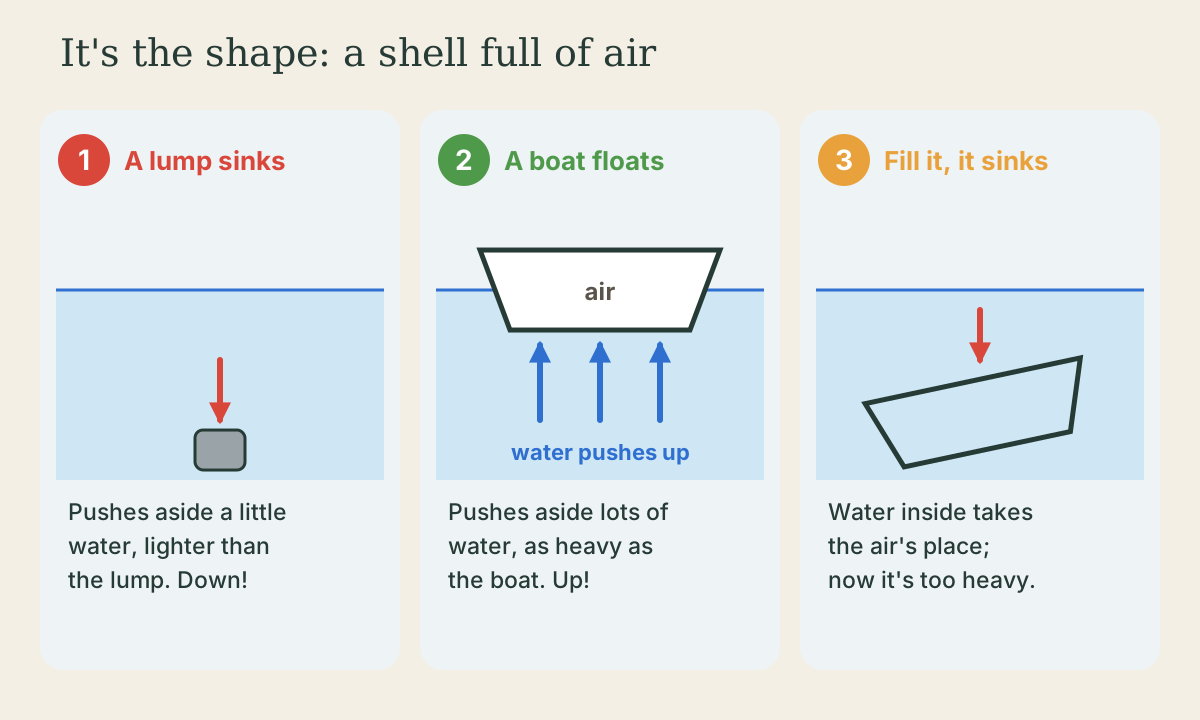
When something goes into water, it pushes some water out of the way, and the water pushes back up on it. How hard does the water push? Exactly as hard as the weight of the water that got pushed aside. A pebble is small and heavy for its size, so it pushes aside only a little water, and that little water weighs less than the pebble. The push up isn’t enough, so it sinks. A steel boat is shaped like a big, thin bowl full of air. It sits down into the water and pushes aside a huge amount of it. Once the pushed-aside water weighs as much as the whole boat, the water pushes up hard enough to hold it up, and it floats.
Water pushes back
Fill a bathtub to the brim and climb in, and water spills over the side. You pushed that water out of the way to make room for yourself.
The water pushes back. Water all around something presses on it from every side, and it presses hardest down deep, so the push from below is stronger than the push from above. That leftover upward push is called buoyancy. A Greek thinker named Archimedes worked out the rule more than 2,000 years ago: the water pushes up with a force equal to the weight of the water that was pushed aside 1.
So it’s a contest between two things:
- the weight of the object, pulling it down, and
- the weight of the water it pushes aside, pushing it up.
Quick check
Push aside a lot of water and you get a big push up; push aside a little and you get a little push.
Why the pebble sinks
A pebble is solid rock, packed tight. It’s heavy for how little space it takes up. When it goes into the water, it pushes aside only a pebble-sized bit of water, and a pebble-sized bit of water weighs much less than the pebble does. The push up is weaker than the pull down, so the pebble sinks.
A lump of steel the same size would sink even faster, because steel is even heavier for its size than rock.
Quick check
The push up is weaker than the pebble’s weight, so down it goes.
Why the boat floats
Now take a lot of steel and, instead of squashing it into a lump, spread it into thin sheets and shape them into a giant bowl: a boat. Inside the bowl is mostly air, which weighs almost nothing.
.jpg)
As the boat settles into the water, it pushes aside water to make room for its whole shape, steel and air together. That’s a huge amount of water. The boat keeps sinking a little deeper, pushing aside more and more water, until the water it has pushed aside weighs exactly as much as the boat. Then the push up equals the pull down, and the boat stops sinking and floats 1.
That’s why big ships ride lower in the water when they’re loaded with heavy cargo: they have to push aside more water to hold up the extra weight.
Quick check
The same steel squashed into a lump would sink like the pebble.
If it fills with water
If a hole lets water pour into the boat, the water takes the place of the air. Now the boat isn’t a light bowl of air anymore. It’s heavy all the way through, the water it pushes aside can’t match its weight, and it sinks, just like the lump. That’s why boats need to stay watertight.
You can try this with aluminum foil: a little foil boat floats, but squeeze the same foil into a tight ball and it sinks.
So
A heavy steel boat floats because of its shape. Water pushes up on anything with a force equal to the weight of the water it pushes aside. A pebble is small and heavy for its size, so the little water it moves weighs less than it does, and it sinks. A boat is a thin shell full of air that pushes aside so much water that the water’s push equals the boat’s whole weight, so it floats.
Lesson complete
Nice work.
Sources for this lesson
- 1University Physics, Volumes 1–3. OpenStax (Rice University). verifiedOpen calculus-based physics. Vol 1 mechanics; Vol 2 thermodynamics and electricity & magnetism; Vol 3 optics & modern physics. Cited at: Archimedes’ Principle and Buoyancy.
Previous: Why Does My Reflection in a Spoon Flip Upside Down?