Acorns: Leaching and Cooking
Acorns are a staple food once the tannin is leached out. Gather sound nuts from white or red oaks, shell them, and leach in cold water for the best flour or hot water for speed.
- 5 min
- 8 steps
- 3 questions
- Lesson 31 of 49
In this lesson
- Why acorns
- White oaks and red oaks
- Gathering
- Shelling
- Why leach
- Leaching
- Cooking with acorns
- What to take from this
Picking up where you left off.
Why acorns
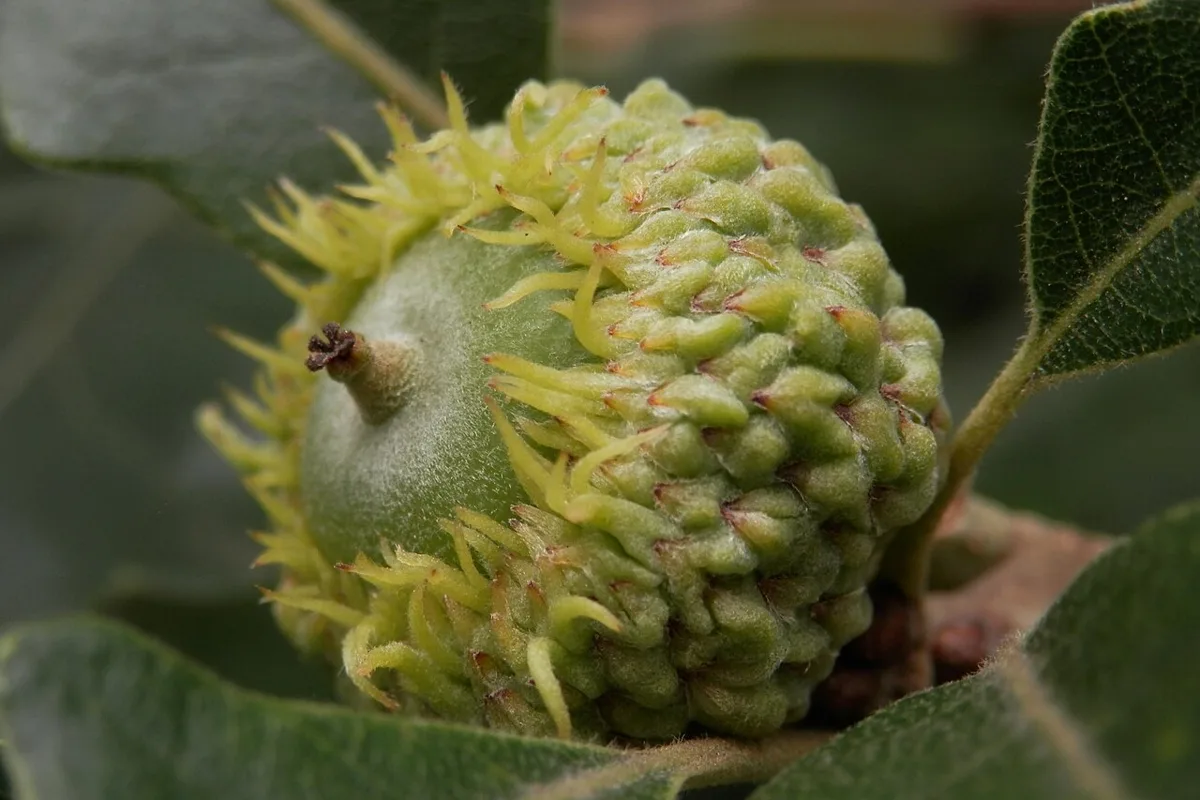
Acorns were a staple food for people across the oak forests of the Northern Hemisphere, and in a good year a single big oak drops hundreds of pounds. Acorn meal is mild, nutty, and filling, rich in starch and, in red oaks, in fat. Samuel Thayer, writing from northern Wisconsin, devotes one of the longest chapters of Nature’s Garden to them 1.
Acorns are nuts, so gathering them by hand for yourself is allowed on DNR land 2. Leave plenty; deer, bears, turkeys, squirrels, and jays depend on them.
White oaks and red oaks
Wisconsin’s oaks fall into two groups, and the difference matters for acorn food:
| White oak group | Red oak group | |
|---|---|---|
| Species | White, bur, swamp white oak | Northern red, black, pin, northern pin oak |
| Leaf lobes | Rounded, no bristles | Pointed, bristle-tipped |
| Acorns mature | In one season | Over two seasons |
| Tannin | Lower | Higher |
| Fat | Lower | Higher |
| Storage | Sprout soon after falling; process early | Dormant until spring; store well |
White oak acorns are sweeter and easier to leach; red oak acorns take longer but store better and are richer. Both make good food.
_-_Saskatoon,_Saskatchewan_2014-08-23.jpg)
Quick check
Red-oak acorns are more bitter but stay dormant and store well.
Gathering
- Gather in September and October as acorns fall, from under trees that have shed lots of sound nuts. Big crops come in mast years, every few years.
- Pick acorns that are heavy, glossy, and intact. Skip ones with small round holes (acorn weevil exits) or cracks, and those with the caps still stuck tight, which are often poorly developed.
- Float test: drop them in water; floaters are often wormy or hollow.
- Dry them in the shell for storage, in a warm, airy place, until the kernels rattle, then store in a cool, dry place safe from rodents. White oak acorns should be dried promptly so they don’t sprout.
Shelling
Crack the shells with a hammer, a nutcracker, or a hand-cranked grain mill set wide, and pick out the kernels. Discard any with dark, moldy, or wormy spots. A thin papery skin (the testa) clings to the kernel; it rubs off fairly easily from dry nuts, and it’s very bitter, so remove what you can.
Why leach
Raw acorns are full of tannins, the same compounds that make strong tea bitter and astringent. They taste harsh and can upset your stomach in quantity. Tannins dissolve in water, so the job is to soak them out 1. The finer you grind the acorns, the faster they leach.
Quick check
Tannins make raw acorns bitter and hard on the stomach. They dissolve in water, so soaking ground or chopped acorns in changes of water makes them mild.
Leaching
Cold leaching (best flour):
- Grind dried kernels coarsely or finely in a food processor or mill. Or grind fresh kernels with water in a blender into a slurry.
- Put the meal in a jar or bucket with several times its volume of cold water, stir, and let it settle.
- Pour off the brown water and replace it, once or twice a day.
- Taste after a few days. When the meal is no longer bitter or astringent, it’s done: this can take several days to a week or more, depending on the acorns and the grind. A cloth bag of meal in a cold stream is the traditional shortcut.
- Drain the meal in a cloth, and use it wet or dry it at low heat.
Cold-leached meal keeps its starch uncooked, so it binds like a flour in pancakes, breads, and muffins.
Hot leaching (fast):
- Boil whole or chopped kernels in water. When the water turns brown, drain and pour on already boiling water from a second pot, so the acorns don’t cool between changes; many foragers find cooled acorns leach more slowly.
- Repeat until the kernels taste mild: often a few hours of changes.
- Dry and grind.
Hot leaching is quicker but cooks the starch, so the meal doesn’t bind, and it’s darker and loses some flavor. It’s good for acorn grits, roasted nuts, and dishes where binding doesn’t matter.
Quick check
Cold leaching ground acorns produces flour that still holds together in breads and pancakes. Boiling removes tannin in hours but gelatinizes the starch.
Cooking with acorns
- Acorn flour in pancakes, muffins, cookies, and breads, usually mixed with wheat flour (acorns have no gluten).
- Acorn porridge or mush.
- Roasted leached kernels as a snack or coffee substitute.
- Acorn grits in place of rice or bulgur.
Dried, leached meal keeps for months in the freezer. The fat in red oak acorns goes rancid at room temperature.
What to take from this
Acorns are a staple food once leached. White oaks (rounded leaves) have sweeter, low-tannin acorns that sprout early; red oaks (bristle-tipped leaves) have bitter, oily acorns that store well. Gather heavy, unholed acorns, float out the duds, dry and shell them, and leach ground meal in changes of cold water until it’s mild, or boil in changes of boiling water for speed at the cost of binding.
Lesson complete
Nice work.
Sources for this lesson
- 1Samuel Thayer. Nature's Garden: A Guide to Identifying, Harvesting, and Preparing Edible Wild Plants. Forager's Harvest Press. 2010. verifiedCompanion volume of 41 plants, including a 51-page acorn chapter. Cited at: Acorns.
- 2Wis. Admin. Code NR 45.04: Protection of natural resources (department lands). Wisconsin Legislature. verifiedNR 45.04(1)(a) bars removing natural growth from DNR lands; (1s) allows collecting edible fruits, edible nuts, wild mushrooms, wild asparagus, and watercress by hand for personal consumption, and removing listed invasive herbaceous plants. Cited at: NR 45.04(1s).