Hypothermia and Frostbite
Recognizing and treating cold injuries: the warning signs of hypothermia and when to get emergency care, warming the core first, the signs of frostbite, warm-not-hot rewarming and what never to do, preventing both, and why cold water is worse than cold air.
- 4 min
- 6 steps
- 3 questions
- Lesson 48 of 49
In this lesson
- Hypothermia
- Frostbite
- Prevention
- Cold water is different
- Try it
- What to take from this
Picking up where you left off.
Hypothermia
Hypothermia is a dangerously low body temperature. It sneaks up, because one of its early effects is poor judgment. CDC’s warning signs in adults 1:
- shivering, exhaustion or feeling very tired
- confusion, memory loss, slurred speech
- fumbling hands
- drowsiness
If you can take a temperature and it’s below 95 °F, get medical attention immediately 1.
What to do 1:
- Get the person into a warm shelter or at least out of the wind.
- Remove wet clothing.
- Warm the center of the body first: chest, neck, head, and groin, with blankets, dry layers, or skin-to-skin contact in a sleeping bag.
- Give warm, non-alcoholic drinks only if they’re conscious.
- Keep them warm and wrapped, including the head and neck, and get care.
- If they’re unresponsive with no pulse, start CPR and keep warming.
Handle a severely hypothermic person gently and keep them lying down; don’t have them walk or exercise to warm up.
Playback is optional. If the player is unavailable, open the video at its source.
Quick check
If body temperature is below 95 °F, get medical attention immediately.
Quick check
Warm the chest, neck, head, and groin first; warm drinks only if fully alert.
Frostbite
Frostbite is frozen tissue, most often the nose, ears, cheeks, chin, fingers, and toes. Because the area goes numb, people often don’t notice it 2. Signs 2:
- redness or pain, often the first sign
- skin that turns white or grayish-yellow
- skin that feels unusually firm or waxy
- numbness
What to do 2:
- Get medical care, and move to a warm place; remove wet clothing.
- Rewarm in warm, not hot, water, or with body heat (fingers in an armpit, a warm hand over a cheek).
- Don’t walk on frostbitten feet or toes unless you must.
- Don’t rub or massage the area.
- Never use a heating pad, heat lamp, stove, fireplace, or radiator: numb skin burns easily.
In the field, don’t rewarm a frozen foot if it might refreeze before you reach help; thawing and refreezing does more damage. If someone has both, treat hypothermia first and get emergency care 2.
Playback is optional. If the player is unavailable, open the video at its source.
Quick check
Numb skin burns easily, and rubbing damages frozen tissue.
Prevention
- Dress to stay dry and cover exposed skin: hat, face covering, mittens (see Dressing for Cold) 1.
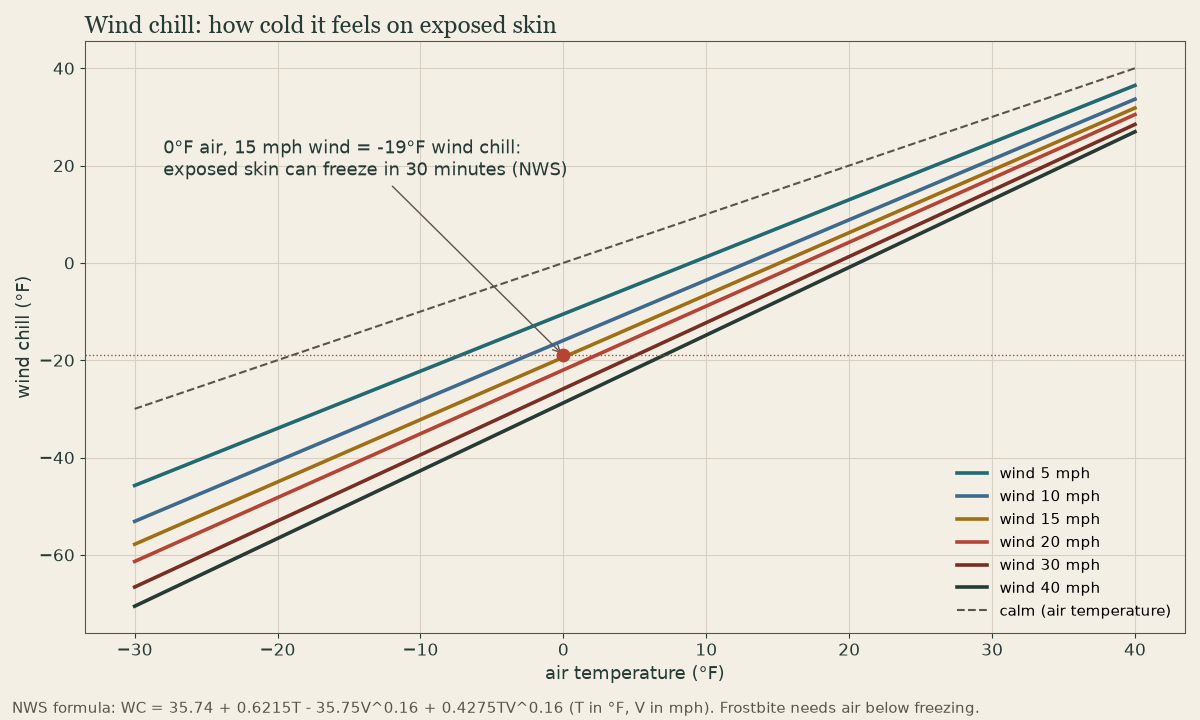
- Watch the wind chill: at -19 °F, exposed skin can freeze in 30 minutes 3.
- Buddy checks: look at each other’s faces for white patches every so often; you can’t see your own.
- Eat, drink, and rest: fatigue, dehydration, and hunger set people up for hypothermia. Alcohol makes you feel warm while you lose heat faster.
- Change out of wet clothes promptly, and don’t let a sweaty base layer cool on you at a stop.
- Turn around early: numb fingers that won’t warm up, a stumbling partner, or rising wind are reasons to end the day.
Cold water is different
Water pulls heat from the body far faster than air at the same temperature. Falling through ice or capsizing in spring meltwater starts with cold shock, which can drown you in the first minutes, followed by progressive loss of strength in arms and legs; hypothermia comes later 4. Keep your head up, get out or get your body out of the water as much as possible, and in a canoe on cold water, dress for immersion (see Ice Safety and Ice Thickness).
Try it
Practice a hypothermia wrap with a partner and your winter gear: a ground pad, sleeping bag, dry layers, a hat, and a hot water bottle at the chest, wrapped in a tarp. Time how long it takes to set up, in mittens.
What to take from this
Hypothermia shows as shivering, exhaustion, confusion, fumbling, slurred speech, and drowsiness; below 95 °F needs medical care. Shelter the person, remove wet clothes, warm the core first, and give warm drinks only if alert. Frostbite shows as red or painful, then white or waxy, numb skin; rewarm in warm, not hot, water or with body heat, never rub it or use a stove, and don’t thaw it if it may refreeze. Prevent both by staying dry, covering skin, watching wind chill, eating and drinking, and turning back early.
Lesson complete
Nice work.
Sources for this lesson
- 1Preventing Hypothermia. Centers for Disease Control and Prevention. verifiedSigns of hypothermia (shivering, exhaustion, confusion, fumbling hands, memory loss, slurred speech, drowsiness); below 95 °F get medical care; move to shelter, remove wet clothing, warm the core first, warm drinks if conscious; dress in loose layers with hat, face covering, mittens, water-resistant coat and boots.
- 2Preventing Frostbite. Centers for Disease Control and Prevention. verifiedRedness or pain may be the first sign, then white or grayish-yellow, firm or waxy, numb skin; seek care; warm shelter, remove wet clothing, warm (not hot) water; don't walk on frostbitten feet unless necessary, don't rub, never use heating pads, lamps, stoves, or fireplaces; body heat is fine.
- 3Wind Chill Chart. National Weather Service. verifiedWind chill formula in °F and mph; at 0 °F and 15 mph the wind chill is -19 °F and exposed skin can freeze in 30 minutes; air must be below freezing for frostbite.
- 4The 1-10-1 Myth. National Center for Cold Water Safety. verifiedCold shock can kill within seconds to two minutes; incapacitation occurs within 2 to 30 minutes, progressively, not on a fixed schedule; in water near 32 °F incapacitation can come within 2-10 minutes; thermal protection and a PFD both matter.