Stinging Nettle
A painful plant and one of the best wild greens: young tops cooked or dried lose their sting completely. Identify it by opposite toothed leaves and stinging hairs, and pick the tops with gloves.
- 4 min
- 5 steps
- 3 questions
- Lesson 21 of 49
In this lesson
- The plant
- How the sting works
- Harvesting
- Cooking
- What to take from this
Picking up where you left off.
The plant
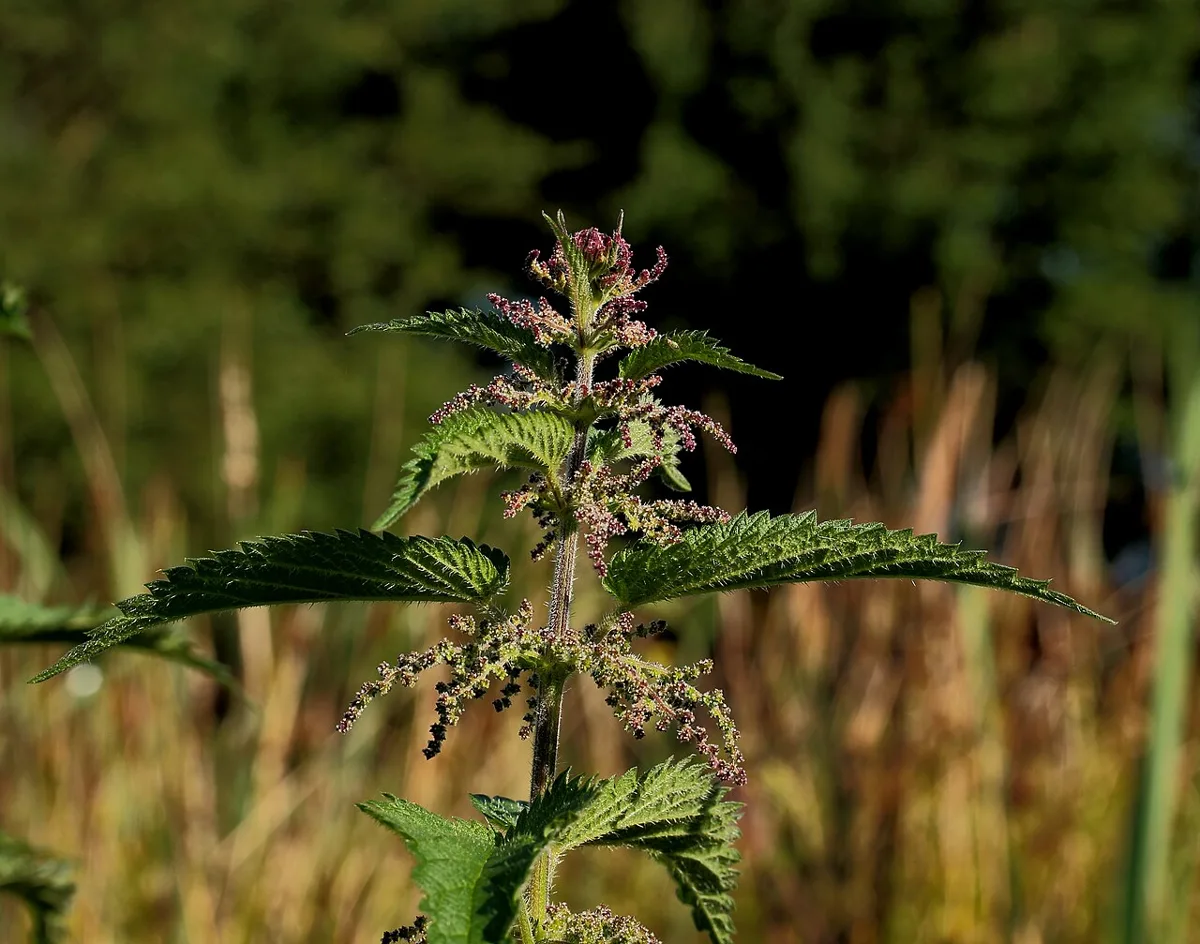
Stinging nettle (Urtica dioica) grows in dense patches in rich, moist ground: river bottoms, stream banks, woods edges, and old farmyards with rich soil. It comes up in April and May in Wisconsin and grows to 3 to 6 feet by summer.
- Leaves: opposite, oval to lance-shaped with a pointed tip and coarse, regular teeth.
- Stem: square-ish and unbranched, covered with stinging hairs.
- Flowers: dangling greenish strings from the leaf joints in summer.
- The sting: brush it and you’ll know.
Wood nettle (Laportea canadensis), common in Wisconsin’s moist woods, also stings and is also a good food. Its leaves are alternate and broader. Neither has a dangerous look-alike; the mint-family plants that resemble nettle, such as false nettle and some hedge nettles, don’t sting.

Quick check
Both sting and both are good cooked.
How the sting works
The leaves and stems are covered with hollow hairs tipped with silica, like tiny glass needles. A touch breaks the tip, and the hair injects a mix of histamine, serotonin, formic acid, and acetylcholine, causing burning and itching that lasts from minutes to hours 1.
Cooking or drying destroys the hairs completely 1. A brief blanch makes nettles safe to handle and eat; dried nettles can be crumbled by hand.
Quick check
The sting comes from fine hairs that inject irritants. Blanching, cooking, or drying breaks them, and the leaves become a mild, spinach-like green.
Harvesting
Wear gloves and long sleeves, and use scissors:
- Cut the top four to six inches of young plants, before they flower, when they’re under about knee height.
- Picking the tops makes the plant branch and send up more tender growth, so frequent picking stretches the season into June 1.
- Once plants are tall, flowering, and fibrous, they’re too tough to eat. Cutting a patch back in early summer brings a second flush of young tops.
Nettles are abundant and grow back vigorously, so you can harvest freely from a big patch. Remember that greens like nettles aren’t on DNR land’s list of foods you may gather without permission.
Cooking
Nettles taste like a rich, slightly earthy spinach. Nutritionally they’re strong for a green: about 15 percent protein on a dry-weight basis, and a good source of iron, potassium, calcium, and vitamins A and C 1.
- Bring a big pot of salted water to a boil. With gloves or tongs, drop in the tops for one to two minutes.
- Drain, cool in cold water, squeeze dry. They’re now sting-free.
- Chop and use like spinach: in soup, pasta, pesto, gnocchi, spanakopita, or saag.
Nettle soup with potato and onion is classic across Northern Europe. Nettle tea is made from fresh or dried leaves. To preserve, blanch and freeze in portions, or dry the leaves on screens and store them in a jar.
Strip leaves from the stems after blanching; the stems of all but the youngest plants are stringy. The tough fiber in old stems was once spun into linen-like cloth.
What to take from this
Stinging nettle grows in rich, moist ground, with opposite, coarsely toothed leaves and stinging hairs that inject histamine and other irritants. Cooking or drying destroys the sting. Pick the top few inches of young plants with gloves in April through June, blanch a minute or two, and use them like spinach. Wood nettle, with alternate leaves, is also good.
Practice
Young tops are tender; older plants turn tough and fibrous. Picking the tops makes the plant send up more, stretching the season into June.
Lesson complete
Nice work.
Sources for this lesson
- 1Talia Isaacson. Stinging Nettles: Not Just for Breakfast Anymore. Cornell Small Farms Program. 2018. verifiedSilica-tipped hairs inject histamine, serotonin, formic acid, and acetylcholine; cooking or drying destroys the sting; pick young tops, which regrow; about 15 percent protein dry weight.
Further reading
- Samuel Thayer. The Forager's Harvest: A Guide to Identifying, Harvesting, and Preparing Edible Wild Plants. Forager's Harvest Press. 2006. verifiedWisconsin forager's in-depth plant chapters, with sections on identification, safety, conservation, and harvest methods.