Ice Safety and Ice Thickness
Lake and river ice in Wisconsin and Minnesota: why no ice is safe ice, DNR thickness guidelines for clear ice and why white ice needs double, where ice is thin, testing as you go with a spud bar, what to carry, and getting out if you go through.
- 5 min
- 8 steps
- 3 questions
- Lesson 47 of 49
In this lesson
- No ice is safe ice
- Thickness guidelines
- Where ice is thin
- Test as you go
- What to carry
- If you go through
- Try it
- What to take from this
Picking up where you left off.
No ice is safe ice
That’s the Wisconsin DNR’s message every winter 1. Temperature swings, wind, currents, and springs vary across the state and across a single lake; ice can be 2 ft thick in one spot and an inch thick a few yards away 2. Neither the Wisconsin nor the Minnesota DNR measures or monitors lake ice; the responsibility is yours 1 2. For current conditions, ask local fishing clubs, bait shops, and outfitters, who check it routinely 1.
Thickness guidelines
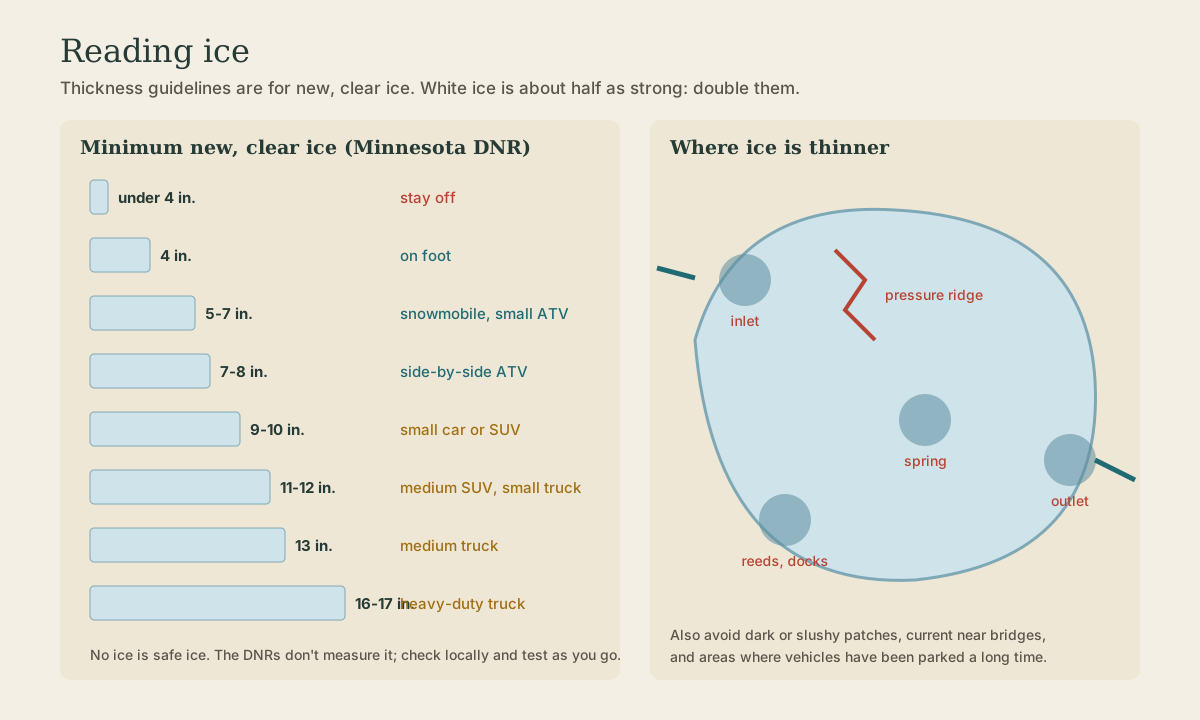
The Minnesota DNR’s guidelines are for new, clear ice 2:
| Clear ice | Minimum for |
|---|---|
| under 4 in. | stay off |
| 4 in. | on foot, ice fishing |
| 5-7 in. | snowmobile or small ATV |
| 7-8 in. | side-by-side ATV |
| 9-10 in. | small car or SUV |
| 11-12 in. | medium SUV or small truck |
| 13 in. | medium truck |
| 16-17 in. | heavy-duty truck |
White ice, formed when snow melts and refreezes, is only about half as strong as clear ice, so double the figures 2. Thickness isn’t everything: temperature, snow cover, currents, and decaying plants all weaken ice 2. A UTV weighs roughly 3,000 lb, about the same as a car 1. Move parked vehicles every two hours and keep them at least 50 ft apart 2.
Quick check
Under 4 in., stay off; 5-7 in. for a snowmobile or small ATV.
Quick check
White ice forms when snow melts and refreezes.
Where ice is thin
- Inlets, outlets, and narrows where current flows under the ice.
- Springs, which keep water moving and warmer.
- Pressure ridges and heaves, cracks pushed up by expanding ice, are signs of thin spots 1.
- Around docks, reeds, logs, and rocks, which absorb sun.
- Dark, gray, or slushy patches, and ice under deep snow, which insulates it from freezing.
- Early and late season, especially after a warm spell.
Test as you go
Carry a spud bar (an ice chisel) and strike the ice ahead of you as you walk to new areas 1. If it goes through in one or two hard blows, turn back. Drill test holes with an auger and measure. Travel with a partner spread apart, avoid unfamiliar areas, and stay off the ice at night 1.
What to carry
The Wisconsin DNR’s list 1:
- Hand spikes (ice picks) around your neck or in a top pocket, and a length of light rope.
- A life jacket or float coat for everyone.
- Creepers on your boots for traction.
- Extra mittens and a charged phone.
- Tell someone where you’re going and when you’ll be back.
If you go through
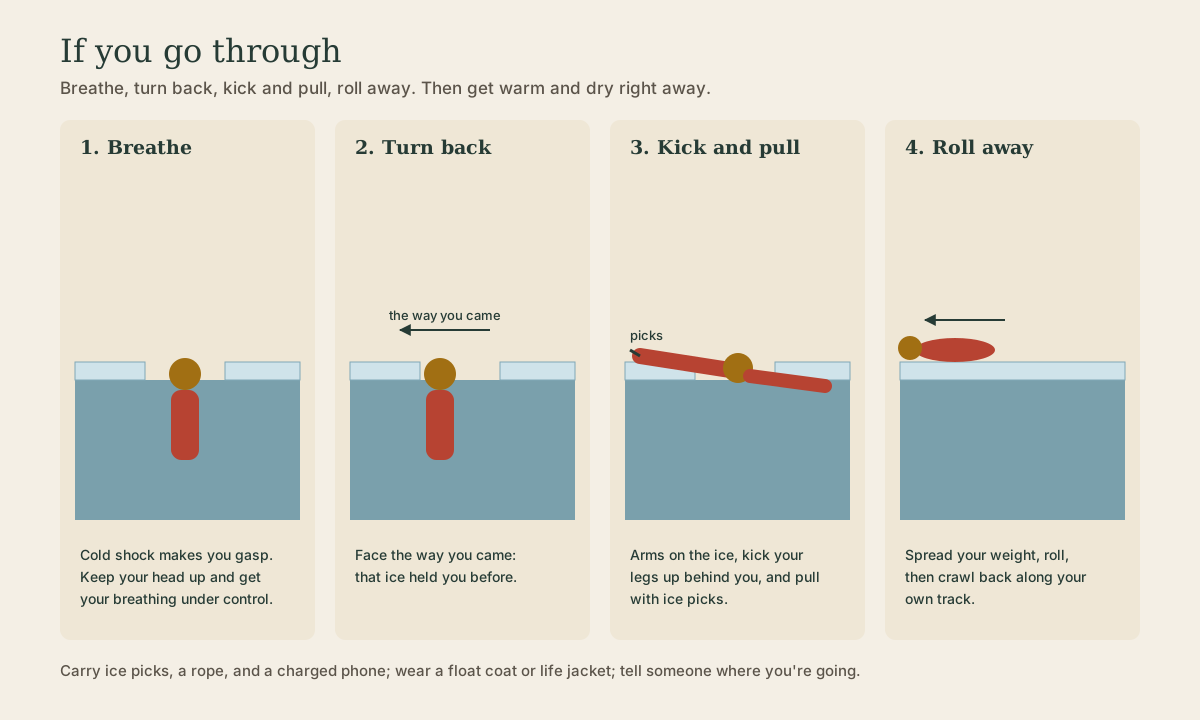
The first danger isn’t hypothermia; it’s cold shock. Sudden immersion makes you gasp and hyperventilate, and cold shock can kill within seconds to two minutes 3. Then your arms and legs weaken progressively: in water near 32 °F, a person can be incapacitated within 2-10 minutes 3. That’s why the popular “1-10-1” rule is misleading: you don’t get a guaranteed minute, ten minutes, and an hour 3. A float coat or life jacket keeps your head up through the gasping, and thermal protection buys time 3.
- Keep your head up and get your breathing under control.
- Turn back toward the way you came: that ice held you.
- Arms out on the ice, kick your legs up behind you, and pull with your ice picks.
- Roll away from the hole to spread your weight, then crawl back along your track.
- Get warm and dry immediately and call for help 1.
Helping someone else: don’t run to the hole. Call 911, then reach with a rope, pole, or branch from solid ice, lying flat; rescuers should also be tied to a rope 1.
Playback is optional. If the player is unavailable, open the video at its source.
Quick check
Thermal protection and a flotation device both matter.
Try it
Before the season, make or buy ice picks and wear them on every trip. On your first outing of the winter, go with someone who knows the lake, carry a spud bar, and drill and measure five test holes as you go.
What to take from this
No ice is safe ice, and the DNRs don’t check it. For clear ice, 4 in. is the minimum for walking and 5-7 in. for a snowmobile; double for white ice, and avoid inlets, outlets, springs, pressure ridges, and dark patches. Test with a spud bar, carry ice picks, rope, and a float coat, and tell someone your plan. If you go through, cold shock is the first danger: keep your head up, breathe, turn back the way you came, kick and pull out, roll away, and get warm.
Lesson complete
Nice work.
Sources for this lesson
- 1Ice safety reminders: no ice is safe ice. Wisconsin Department of Natural Resources. 2025. verifiedThe DNR doesn't monitor ice; ask clubs, outfitters, and bait shops; carry a spud bar, hand spikes, and light rope, wear life jackets or float coats, carry extra mittens, creepers, and a charged phone; tell someone your plans; avoid unfamiliar areas and night travel; watch for pressure ridges; UTVs weigh about 3,000 lb.
- 2General ice thickness guidelines. Minnesota Department of Natural Resources. verifiedFor new, clear ice; under 4 in. stay off; 4 in. on foot; 5-7 in. snowmobile or small ATV; 7-8 in. side-by-side; 9-10 in. small car or SUV; 11-12 in. medium SUV or small truck; 13 in. medium truck; 16-17 in. heavy-duty truck. White ice is about half as strong, so double it. The DNR doesn't measure ice; thickness varies across a lake; move parked vehicles every two hours, 50 ft apart.
- 3The 1-10-1 Myth. National Center for Cold Water Safety. verifiedCold shock can kill within seconds to two minutes; incapacitation occurs within 2 to 30 minutes, progressively, not on a fixed schedule; in water near 32 °F incapacitation can come within 2-10 minutes; thermal protection and a PFD both matter.