Winter Camping
Camping in the Northwoods winter: Boundary Waters permits and conditions, cold camping versus a canvas hot tent with a wood stove, quinzhees, a sleeping system for -30 °F, water from snow or a hole in the ice, food, hauling a pulk or toboggan, and carbon monoxide.
- 5 min
- 8 steps
- 3 questions
- Lesson 46 of 49
In this lesson
- Conditions and permits
- Hot tent or cold camping
- Snow shelters
- Sleeping warm
- Water and food
- Hauling
- Try it
- What to take from this
Picking up where you left off.
Conditions and permits
In the Boundary Waters, an overnight trip between October 1 and April 30 needs only a free, self-issued permit from a Superior National Forest office or entry point 1. Expect days that stay below zero, nights down to -30 °F, wind chills worse than that, and 50-60 in. of snow 1. Some roads to remote entry points aren’t plowed, adding miles of skiing.
Pitch at least 200 ft from summer campsites; north-shore spots catch more sun, and some campers camp on the lake ice for early light, though the booming of cracking ice can startle you awake 1.
Quick check
Available at Superior National Forest offices and entry points.
Hot tent or cold camping
- Cold camping: a lightweight nylon tent, which breathes so frost forms less, and a very warm sleeping system 1. Light and quick, but evenings are spent in your bag.
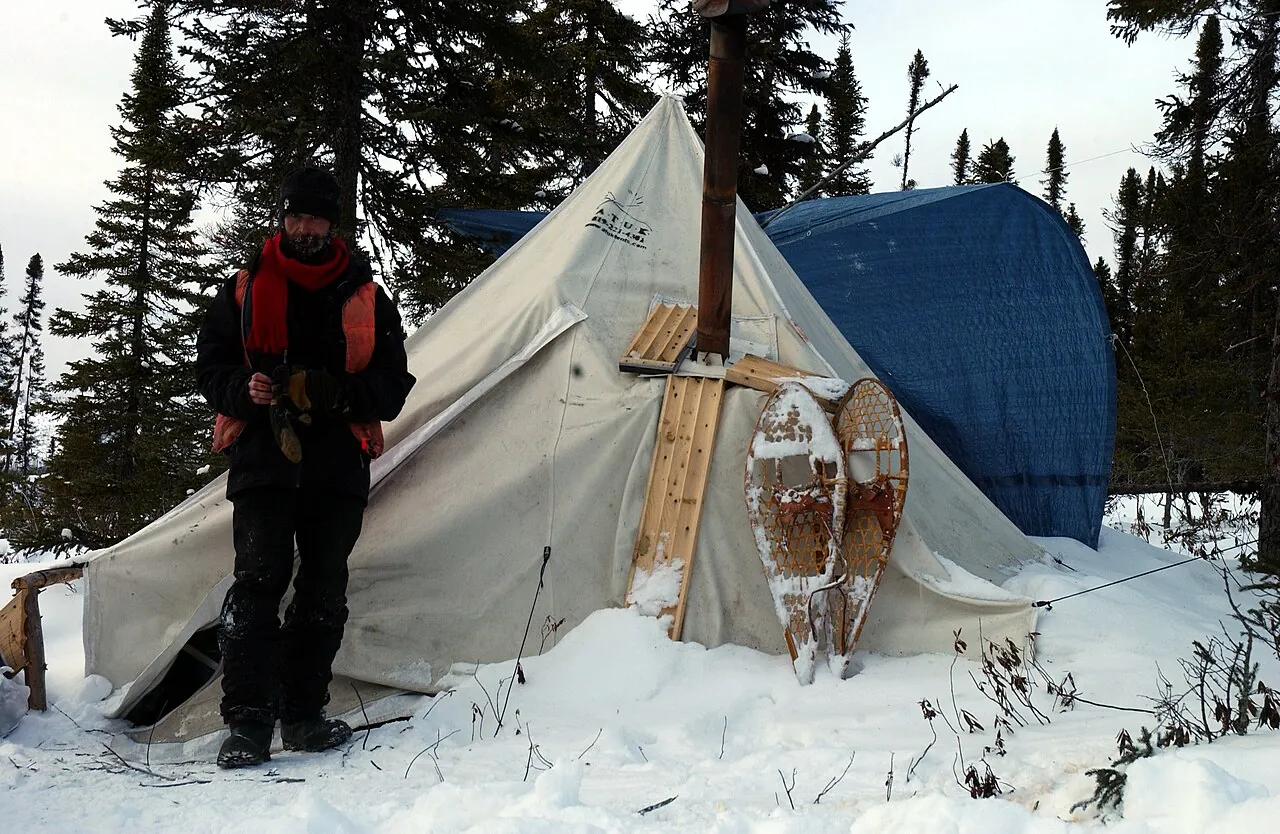
- Hot tent: a large canvas tent with a wood stove 1. You can stand, dry clothes and boots, and cook inside. The costs: weight, hours of sawing and splitting, condensation, and the hazards of a stove in a fabric shelter.
.jpg)
Stove safety: use a stove made for tents with a spark arrestor and proper stove jack, keep combustibles away, never burn a stove or any fuel-burning heater in a closed tent without ventilation, and never sleep with a smoldering stove in a sealed shelter. Carbon monoxide is odorless; a battery CO alarm is cheap insurance.
Playback is optional. If the player is unavailable, open the video at its source.
Quick check
Cold campers trade comfort for a much lighter load.
Snow shelters
A quinzhee is a mound of snow piled up, left to settle and sinter for a couple of hours, then hollowed out. Push foot-long sticks into the mound first; when you hit them from inside, the walls are thick enough. Keep the entrance low, poke a vent hole, and mark the shelter outside so no one walks or drives over it. Snow shelters hold just around freezing inside when it’s far colder out, and they’re quiet and windproof, but building one soaks clothes, so dig in a shell and change into dry layers after.
Playback is optional. If the player is unavailable, open the video at its source.
Sleeping warm
- Bag: rated for the coldest night you expect; experienced Boundary Waters campers use bags rated to -40 °F 1. A liner and an overbag extend a three-season bag.
- Pads: insulation from the snow matters as much as the bag. Use two: a closed-cell foam pad under an insulated inflatable. Their insulation adds up, and the foam still works if the inflatable punctures.
- Before bed: eat something fatty, put on dry socks and a hat, and pee before you get in. A bottle of hot water in the bag warms it for hours.
- Moisture: breath and body vapor freeze inside the bag over a long trip; air it each day and turn it inside out in the sun.
- Boots: liners and water bottles go in the bag so they don’t freeze.
Quick check
The snow under you pulls heat faster than the air above.
Water and food
- Water: melt snow (slowly, with a little water in the pot first so it doesn’t scorch) or chop or drill a hole in the lake ice and filter or treat the water 1. Keep a filter warm inside your clothes so it doesn’t freeze and crack 1. Melting snow takes a lot of fuel; budget for it.
- Food: winter is a natural refrigerator, so bring calorie-dense meat and butter and cook over the fire 1. Cold burns energy fast; eat often.
Try it
Do a first winter night close to the car or the house: pitch a tent in the backyard or a state park campground on a 10-20 °F night, sleep on two pads, and practice melting snow for water and drying boot liners.
What to take from this
Winter Boundary Waters trips need a free permit from October 1 to April 30 and gear for -30 °F nights. Choose light cold camping in a nylon tent or a canvas hot tent with a wood stove, and treat the stove and carbon monoxide seriously. Sleep on two pads in a very warm bag, melt snow or filter lake water while keeping the filter from freezing, eat calorie-dense food, and haul it all in a pulk or toboggan.
Lesson complete
Nice work.
Sources for this lesson
- 1Blane Klemek. When Heaven Freezes Over. Minnesota Conservation Volunteer. 2018. verifiedFree self-issued Boundary Waters permits October 1-April 30; days below zero and nights to -30 °F, 50-60 in. of snow; wool or synthetic base layers, no cotton; shed layers to avoid sweat; nylon tents versus canvas tents with wood stoves; bags rated to -40 °F; pulks pulled on skis or snowshoes; melt snow or filter water from holes, keeping filters from freezing.