Foraging Law in Wisconsin
What you can pick where - DNR land's short list of fruits, nuts, mushrooms, asparagus, and watercress; free personal gathering on the national forest; county forests and private land; and the special rules for ginseng and wild rice.
- 4 min
- 6 steps
- 3 questions
- Lesson 16 of 49
In this lesson
- DNR land: state parks, forests, and wildlife areas
- The national forest
- County forests and other public land
- Private land
- Special cases
- What to take from this
Picking up where you left off.
DNR land: state parks, forests, and wildlife areas
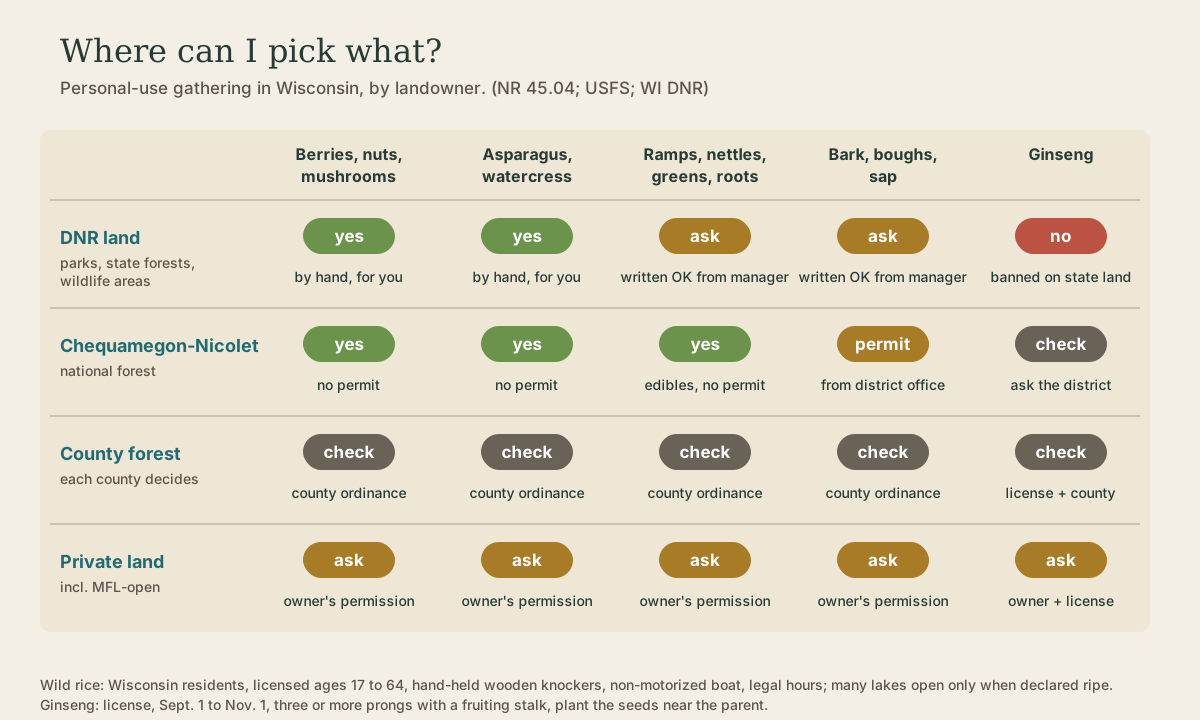
Wisconsin’s Department of Natural Resources manages state parks, state forests, wildlife and fishery areas, and state natural areas. On all of them, the rule starts with a prohibition: no person may damage or remove any natural growth 1.
Then comes a short list of exceptions. You may collect, by hand, for personal consumption 1:
- edible fruits
- edible nuts
- wild mushrooms
- wild asparagus
- watercress
You may also pull invasive herbaceous plants listed as prohibited or restricted - which makes garlic mustard and wild parsnip fair game, if you want them. Collecting seeds beyond the edible fruits and nuts you eat takes a seed-collecting permit, and state natural areas have tighter rules still 1.
What this leaves out matters. Ramps, nettles, fiddleheads, greens, roots, bark, and sap are not on the list. On DNR land, those take written permission from the property manager. Berries, nuts, morels, chanterelles, and hen of the woods are fine. Check the posted rules at a particular property as well; individual parks can close areas.
Quick check
NR 45.04(1s) lists exactly those five. Everything else - including ramp bulbs, nettles, and roots - is natural growth you may not remove without permission.
The national forest
The Chequamegon-Nicolet National Forest covers about 1.5 million acres of northern Wisconsin. Its rule is simpler: when you gather edible material such as morels for your own consumption, no permit is needed. Boughs, Christmas trees, firewood, birch bark, and other forest products need a permit or free-use permit from a district office 2. Commercial gathering of anything needs a permit.
County forests and other public land
Wisconsin’s county forests are a huge share of public land in the north, and each county sets its own rules by ordinance. Many allow personal gathering of berries and mushrooms; check the county forest office before you pick. Town, city, and county parks vary even more. Federal national wildlife refuges and the national lakeshore and riverways have their own rules; assume nothing is allowed until you’ve read them.
Private land
On private land you need the owner’s permission, for anything. Wisconsin trespass law covers unposted land too, and land enrolled in Managed Forest Law as “open” is open on foot only for hunting, fishing, hiking, sight-seeing, and cross-country skiing; picking berries or mushrooms there still needs the owner’s permission 3. Ask. Most landowners say yes to someone who asks politely and respects their land.
Roadsides belong to the adjacent landowner or the road authority and are often sprayed; they’re poor places to forage anyway.
Quick check
County forests set their own rules; private land always needs the owner’s permission.
Special cases
Wild ginseng is regulated tightly because the roots sell for a lot. You need a license; the season runs September 1 to November 1; you may dig only plants with three or more prongs and a fruiting stalk; you must plant all the seeds from harvested plants near the parent; and harvest is prohibited on all state land 4.
Wild rice may be harvested only by Wisconsin residents, with a license for ages 17 to 64, during legal hours, from a non-motorized boat with hand-held wooden knockers. Many northern lakes open only when the DNR and Ojibwe tribes declare the rice ripe 5. The Wild Rice lesson covers the rules.
Tribal land belongs to the tribe, and its own rules apply. The Ojibwe bands also hold treaty rights to hunt, fish, and gather on public land in the ceded territory of northern Wisconsin; those rights are separate from state rules for non-tribal foragers.
Endangered and threatened plants may not be taken from public land, and several Wisconsin orchids and woodland wildflowers are on the list.
What to take from this
On DNR land, gather only edible fruits, nuts, wild mushrooms, wild asparagus, and watercress, by hand, for yourself; ramps, nettles, and roots need permission. On the Chequamegon-Nicolet, personal gathering of edibles needs no permit. County forests set their own rules, and private land needs the owner’s permission. Ginseng and wild rice have their own licenses, seasons, and methods.
Practice
Licensed ginseng harvest runs September 1 to November 1, on private or other public land with permission; it is prohibited on state land.
Lesson complete
Nice work.
Sources for this lesson
- 1Wis. Admin. Code NR 45.04: Protection of natural resources (department lands). Wisconsin Legislature. verifiedNR 45.04(1)(a) bars removing natural growth from DNR lands; (1s) allows collecting edible fruits, edible nuts, wild mushrooms, wild asparagus, and watercress by hand for personal consumption, and removing listed invasive herbaceous plants. Cited at: NR 45.04(1)(a); NR 45.04(1s).
- 2Chequamegon-Nicolet National Forest: Permits. USDA Forest Service. verifiedNo permit needed to gather edible material such as morels for your own consumption; boughs, firewood, birch bark, and other forest products need a permit.
- 3Managed Forest Law: Public access FAQ. Wisconsin Department of Natural Resources. verifiedMFL-Open land is open on foot for hunting, fishing, hiking, sight-seeing, and cross-country skiing; all other uses need the landowner's permission.
- 4Wisconsin Wild Ginseng Program. Wisconsin Department of Natural Resources. verifiedLicense required; season September 1 to November 1; plants must have three or more prongs and a fruiting stalk; seeds must be planted near the parent; harvest prohibited on state land.
- 5Wild rice harvesting. Wisconsin Department of Natural Resources. verifiedResidents only; license for ages 17-64 ($8.25); date-regulated lakes opened jointly with Ojibwe tribes and posted by GLIFWC; harvest 10 a.m. to sunset; boats at most 17 ft by 38 in, push-pole or paddle; smooth rounded wooden knockers at most 38 in.