Water Purification
Making lake and river water safe to drink: the four kinds of germs, boiling as the most reliable method, what filters, purifiers, chlorine, iodine, chlorine dioxide, and UV each remove, why cloudy water gets filtered first, and pairing methods to cover the gaps.
- 4 min
- 7 steps
- 3 questions
- Lesson 42 of 49
In this lesson
- Four kinds of germs
- Boil
- Filters and purifiers
- Chemicals and UV
- Pairing methods
- Try it
- What to take from this
Picking up where you left off.
Four kinds of germs
Clear, cold water from a northern lake or a spring can still make you sick. The CDC sorts the risks into four groups 1:
- Bacteria: E. coli, Salmonella, Shigella, Campylobacter.
- Viruses: norovirus, hepatitis A, enteroviruses, rotavirus. The smallest.
- Giardia: a protozoan parasite with a tough cyst stage.
- Cryptosporidium: a protozoan with an even tougher oocyst shell that shrugs off chlorine.
No single method except boiling handles all four in every case. Most treatment choices come down to knowing which method misses which group 1.
Boil
Boiling is the most reliable way to kill germs: bring water to a rolling boil for 1 minute, or 3 minutes above 6,500 feet 1. Nowhere in Wisconsin is close to that elevation, so 1 minute is enough. Older guidance, including the Army survival manual, adds a minute per 300 meters of elevation or says to boil 10 minutes anywhere 2; the CDC’s shorter times are current.
Boiling costs fuel and time and leaves the water hot, but it works on cloudy water too.
Quick check
Boiling is the most reliable way to kill all four groups of germs.
Filters and purifiers
Filters strain germs out 1:
.jpg)
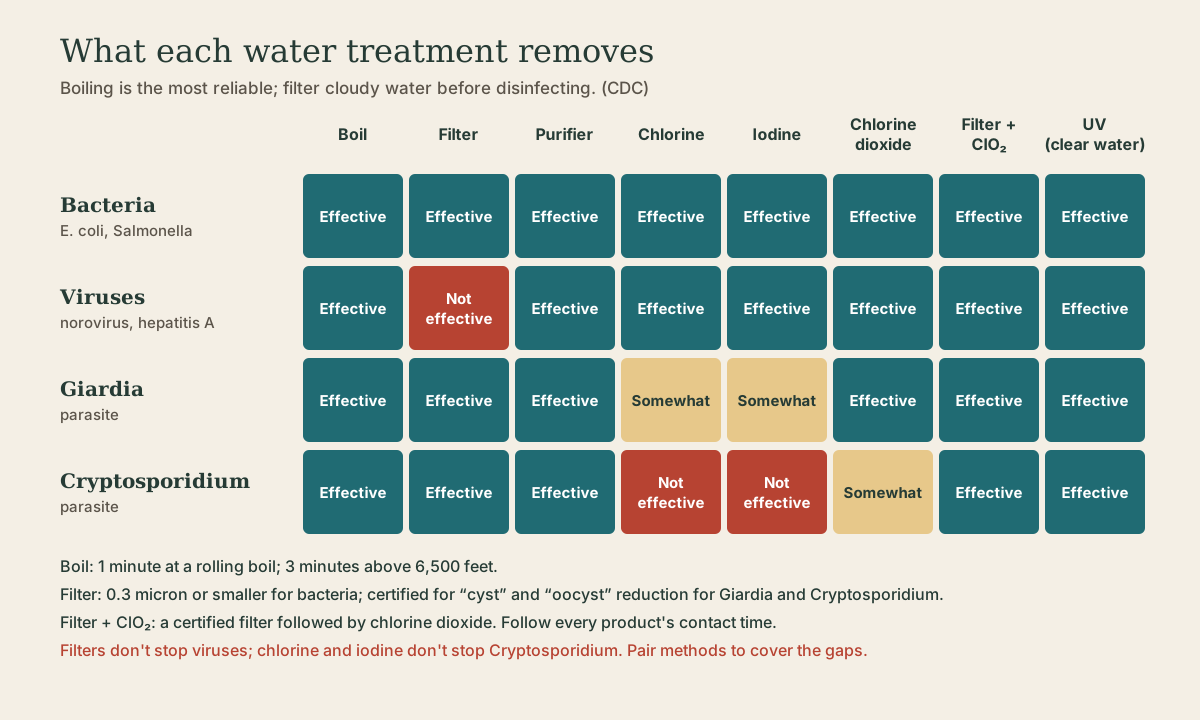
- Pores of 0.3 micron or smaller remove bacteria.
- A filter certified for “cyst” and “oocyst” reduction removes Giardia and Cryptosporidium.
- Filters don’t remove viruses.
Purifiers are devices rated to remove or kill viruses too, and handle all four groups 1.
Cloudy water: filter it first. If you can’t boil, the CDC’s next-best option is a filter, especially for cloudy water, followed by another treatment 1. Even a bandanna or coffee filter as a pre-filter keeps silt from clogging the real filter and from shielding germs from chemicals and UV.
Quick check
Viruses are too small; a purifier or a disinfectant covers them.
Chemicals and UV
- Chlorine and iodine kill bacteria and viruses, are only somewhat effective against Giardia, and don’t kill Cryptosporidium 1.
- Chlorine dioxide kills bacteria, viruses, and Giardia and is somewhat effective against Cryptosporidium 1.
- UV light works on all four, but only in clear water 1.
Follow the product label, including the contact time 1. Chemicals need time to work; drinking right after dropping in a tablet defeats the point.
Quick check
Its tough oocyst shell resists them. Boil, use a certified filter, or use chlorine dioxide with a filter.
Pairing methods
Since each method has a gap, combine two that cover each other 1:
- Certified filter + chlorine dioxide: the filter catches the parasites, the chlorine dioxide handles viruses. Effective on all four 1.
- Pre-filter + boil, or pre-filter + UV for clear results.
Rainwater collected in clean containers is usually safe, but water from lakes, ponds, springs, and streams should be treated, especially near human settlements 2.
Playback is optional. If the player is unavailable, open the video at its source.
Try it
Take your filter on a day paddle and treat lake water three ways: a filter alone, a filter plus chlorine dioxide tablets (read the contact time on the package and set a timer), and a pot boiled for one minute on a stove. Note how long each takes, how much fuel the boil uses, and how a cloth pre-filter changes the filter’s flow on murky water.
What to take from this
Treat lake, river, and spring water. Boiling is most reliable: 1 minute, or 3 above 6,500 feet. Filters (0.3 micron or smaller, cyst-certified) remove bacteria and parasites but not viruses; purifiers handle viruses too. Chlorine and iodine miss Cryptosporidium; chlorine dioxide is better; UV needs clear water. Filter cloudy water first, follow contact times, and pair a filter with a disinfectant to cover all four groups.
Lesson complete
Nice work.
Sources for this lesson
- 1Water Treatment While Hiking, Camping, and Traveling. Centers for Disease Control and Prevention. verifiedBoiling is the most reliable method: 1 minute, or 3 minutes above 6,500 feet; otherwise filter (especially cloudy water) and then use another method; follow product contact times. Effectiveness table: filters of 0.3 micron or smaller remove bacteria, cyst/oocyst-certified filters remove Giardia and Cryptosporidium, filters don't remove viruses; purifiers, chlorine dioxide plus filter, and UV in clear water handle all four groups; chlorine and iodine are somewhat effective on Giardia and not effective on Cryptosporidium; chlorine dioxide is somewhat effective on Cryptosporidium.
- 2Department of the Army. FM 21-76 Survival. U.S. Department of the Army. 1992. verifiedFirecraft: fire triangle of air, heat, and fuel; clear a circle at least 1 m across; no wet or porous rocks (they can explode); green-log platform on snow; tinder, kindling, fuel; char cloth; tepee, lean-to (green stick at 30 degrees pointed into the wind), cross-ditch (about 30 cm across, 7.5 cm deep), and pyramid lays; light from the upwind side; metal match, flint and steel with carbon steel; bow drill dimensions; bank the fire overnight. Shelters: most common error is building too big; avoid dead trees and sites below the high-water mark; poncho lean-to with drip sticks, back to the wind, round turn and two half hitches; up to 80 percent of body heat lost to the ground at rest; field-expedient lean-to with a fire reflector wall; debris hut with at least 1 m of debris and a 30 cm bed.