Spring Wildflowers
The spring ephemerals of Wisconsin's hardwood forests (hepatica, bloodroot, Dutchman's breeches, trout lily, spring beauty, trillium) and how they live: coming up, blooming, and storing food underground in the few weeks between thaw and the canopy leafing out, then vanishing by summer. Bloodroot's one-day flowers, queen bumblebees and Dutchman's breeches, ants that plant the seeds for an oily treat, and the two things thinning these flowers in Wisconsin: deer browse, which researchers tied to at least 40 percent of 60 years of understory change, and garlic mustard.
- 6 min
- 6 steps
- 3 questions
- Lesson 6 of 49
In this lesson
- A window of light
- The ones to know
- Pollinators in a cold month
- Ants plant the seeds
- What’s thinning them
- What to take from this
Picking up where you left off.
A window of light
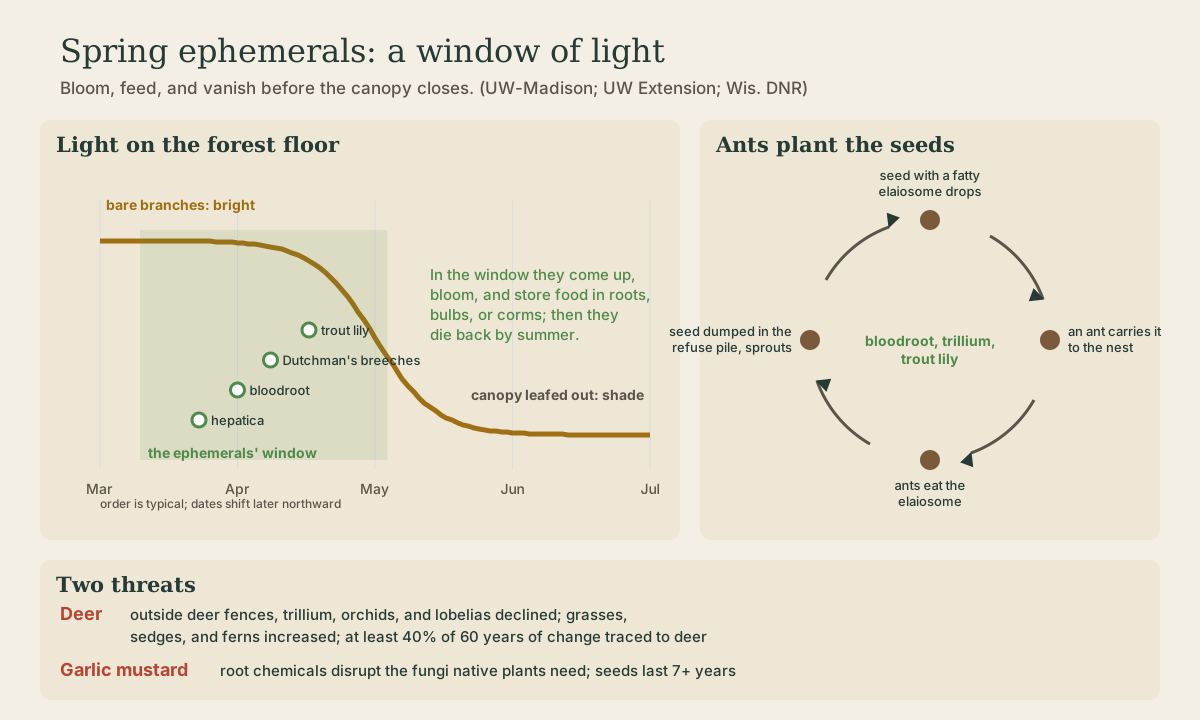
In April, before the maples and basswoods leaf out, the floor of a Wisconsin hardwood forest gets full sun. Within a few weeks the canopy closes and the floor goes dim for the rest of the year. A group of wildflowers called spring ephemerals lives in that gap: they come up as the ground thaws, flower, and make their food while the light lasts, then go dormant as the canopy fills in 1. Most are perennials that store the season’s food in bulbs, corms, or roots for next year’s growth 1. By midsummer you’d never know they were there.
Quick check
They store the season’s food in roots, bulbs, or corms for next spring.
The ones to know
Walk a rich woods from early April into May, especially north-facing slopes and ravines in the Driftless and the maple woods of the north and east, and they come roughly in order:
- Hepatica comes first, small lavender, pink, or white flowers on fuzzy stems, with last year’s leathery three-lobed leaves still lying on the litter.
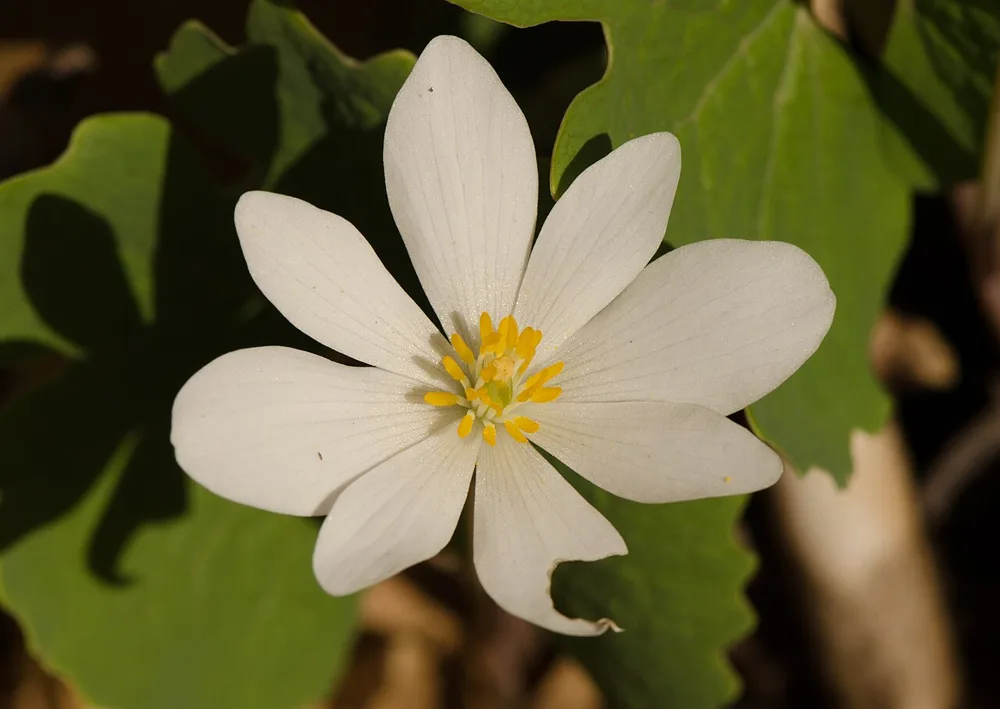
- Bloodroot: one white flower with a gold center, wrapped in a single lobed leaf as it comes up. It blooms before the leaf unfolds, and its petals drop within a day or two of pollination 2, so you have to catch it. The leaf keeps growing after the flower fades, up to 9 inches across 2. Snap a root and it bleeds orange-red sap.
- Dutchman’s breeches: white flowers shaped like pairs of pantaloons hung upside down. Its nectar sits deep in the spurs, where only the long tongues of early-flying queen bumblebees can reach 3.
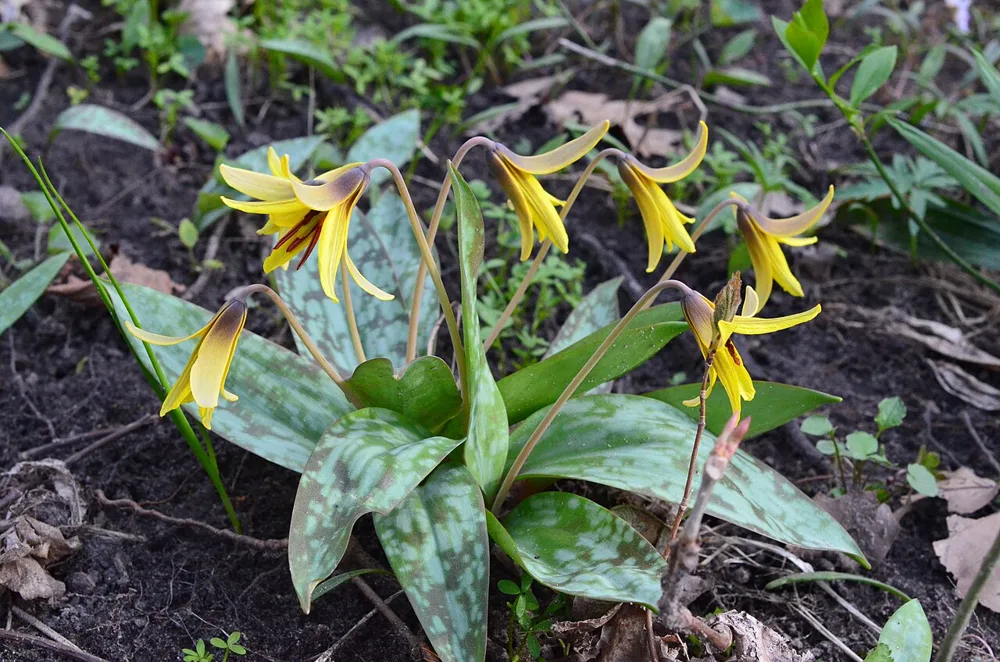
- Trout lily: a nodding yellow flower with petals swept back, over mottled leaves that look like the side of a brook trout 4. A flowering plant has two leaves and one flower 4; a carpet of single leaves with no flowers is young plants not yet old enough to bloom. On UW–Madison’s Muir Woods hillside, trout lily and toothwort are the most common ephemerals 4.
- Spring beauty: small white-to-pink striped flowers that open only in full sun and close when a cloud comes over 1.
- Large-flowered trillium: a big white flower of three petals over three leaves, turning pink as it ages, later in the season as the canopy starts to fill.
_(21857621280).jpg)
Pollinators in a cold month
Flowering in April means flowering when few insects are flying. Many ephemerals depend on native bees, especially early queen bumblebees and small solitary bees, and on flies 1. In return they’re some of the first food of the year for those insects, and their roots hold the soil while little else is growing 1. Bloodroot hedges its bet: bees and other insects cross-pollinate it, but if none come it can pollinate itself 2.

Ants plant the seeds
Look closely at a ripe bloodroot or trillium seed and you’ll see a pale, fleshy bump attached to it: an elaiosome, rich in fats and proteins 1. Ants find the seeds, carry them home, and eat the elaiosome. Then they haul the seed out to their refuse pile, where it’s protected and sits in rich soil until it germinates 2. Nearly all the spring ephemerals use ants this way; it’s called myrmecochory 1. It’s also why ephemerals spread slowly: an ant only carries a seed a short distance, so a colony of bloodroot or trillium creeps outward over decades. Bloodroot grown from seed takes 2 or 3 years to flower 2.
Quick check
It’s called myrmecochory: ants plant the next generation.
What’s thinning them
Two things have changed Wisconsin’s woods since these flowers had them to themselves.
Deer. UW–Madison botanist Don Waller’s team revisited 62 forest sites in northern Wisconsin and Michigan first surveyed in the 1950s and compared plants inside and outside fenced deer exclosures. Outside the fences, trillium, orchids, and lobelias had declined while grasses, sedges, ferns, and weedy plants deer don’t eat had increased. They traced at least 40 percent of the region’s 60 years of understory change directly to deer 5. A woods carpeted with trillium in May is a sign that deer there are kept in balance.
Garlic mustard. This invasive biennial makes a rosette of scalloped, kidney-shaped leaves its first year and flowers with small white four-petaled flowers the second; crushed, it smells of garlic 6. It moves into high-quality woods and releases chemicals that disrupt the mycorrhizal fungi native plants rely on, and native wildflower cover drops where it spreads 6. Its seeds last at least seven years in the soil, so control means pulling it every spring before it sets seed, bagging any that are flowering 6. Don’t pull native toothwort or sweet cicely by mistake: both bloom white at the same time 6.
And don’t dig wild plants for a garden: over-collecting has caused big declines in bloodroot and others 2. Buy nursery-propagated plants instead.
Playback is optional. If the player is unavailable, open the video at its source.
Quick check
Deer eat the wildflowers and leave the plants they don’t like.
What to take from this
Spring ephemerals live in the few weeks between thaw and canopy closure, storing food underground and vanishing by summer. Learn hepatica, bloodroot (one-day flowers), Dutchman’s breeches (queen bumblebees), trout lily (mottled leaves, two leaves per flowering plant), spring beauty, and trillium. Ants plant their seeds for the oily elaiosome, so colonies spread slowly. Deer browse and garlic mustard are what’s thinning them: pull garlic mustard in spring, and read a trillium carpet as a sign deer are in balance.
Lesson complete
Nice work.
Sources for this lesson
- 1Spring Ephemerals in the Woods. Chicago Botanic Garden. verifiedSpring ephemerals live in the window between thawing ground and the canopy leafing out, then go dormant; most are perennials with bulbs, corms, or other storage organs that feed next year's growth. Bloodroot blossoms may last only a day; spring beauties open only in full sun. Trout lilies are named for mottled leaves. Many depend on native bees and flies for pollination and hold soil when little else grows. Essentially all rely on ants to disperse seeds (myrmecochory): elaiosomes rich in lipids and proteins draw ants, which eat them and leave the seed in trash piles, a rich seedbed.
- 2Bloodroot, Sanguinaria canadensis. University of Wisconsin–Madison Division of Extension, Horticulture. verifiedBloodroot flowers are ephemeral, petals falling within a day or two of pollination; it blooms before its single leaf unfolds, the leaf wrapping the flower stalk as it emerges and expanding to 9 inches after flowering; cross-pollinated by bees and other insects, with self-pollination if not visited. Seeds carry a fleshy elaiosome; ants carry them to their nests, eat the elaiosome, and haul the seed to their refuse pile, where it is protected until it germinates. It takes 2 to 3 years to reach blooming size from seed; over-collecting has caused declines, so don't dig wild plants.
- 3Dutchman's Breeches: Pantaloons Fit for a Queen. New York Botanical Garden, Science Talk. 2013. verifiedDutchman's breeches (Dicentra cucullaria) is pollinated by early-flying queen bumblebees, whose tongues are long enough to reach the nectar in its spurred flowers; it's a true spring ephemeral, completing its above-ground life in a few weeks.
- 4David Tenenbaum. Spring ephemerals carpet a campus hillside. University of Wisconsin–Madison News. verifiedEphemerals are spring flowers that bloom before trees shade them for the summer; in UW–Madison's Muir Woods, trout lily and toothwort are most common, with bloodroot, wild ginger, and Solomon's seal. Trout lily, named for its resemblance to brown or brook trout, has nodding flowers with yellow stamens, two leaves and one flower per flowering plant, and is also called adder's tongue; the hillside benefited from restoration removing exotic trees and shrubs.
- 5Study Finds Deer Have Caused Extreme Changes to Wisconsin Ecosystem. Wisconsin Public Radio. verifiedUW–Madison botanist Don Waller's team revisited 62 northern Wisconsin and Michigan forest sites first studied in the 1950s and compared plants inside and outside 17 deer exclosures: outside the fences, trillium, orchids, and lobelias declined while grasses, sedges, ferns, and weedy plants increased; at least 40 percent of the region's 60-year change in understory species was attributed directly to deer.
- 6Garlic mustard (Alliaria petiolata). Wisconsin Department of Natural Resources. verifiedRestricted invasive biennial: first-year basal rosettes of scalloped, kidney-shaped leaves stay green over winter; second-year plants flower with small white four-petaled flowers in spring; crushed leaves smell of garlic. It invades high-quality upland and floodplain forests and savannas, exudes antifungal chemicals that disrupt mycorrhizal associations with native plants, and native herb cover declines where it spreads; seeds stay viable in soil at least seven years. Hand-pull in early spring before seed set and bag flowering plants. Native toothworts and sweet cicely bloom at the same time and can be mistaken for it.