Sustainable Harvest
Pick so the patch thrives: match the harvest to how the plant reproduces, take leaves from slow perennials like ramps, leave plenty for wildlife, and prefer abundant and invasive species.
- 4 min
- 6 steps
- 3 questions
- Lesson 17 of 49
In this lesson
- How the plant lives
- Slow plants: ramps
- Fast plants: weeds and invasives
- Rules of thumb
- Where not to pick
- What to take from this
Picking up where you left off.
How the plant lives
The first question for any wild food is: what does harvesting it do to the organism? The answer depends on which part you take 1.
- Fruit, nuts, and seeds are made to be taken. A raspberry cane or an oak doesn’t notice what you pick, though wildlife does.
- Mushrooms are the fruit of a fungus living in the soil or wood. Picking them is like picking apples; the fungus lives on. Cutting or pinching above the soil and carrying them in a mesh bag is the usual advice 2.
- Leaves and shoots of vigorous perennials grow back. Nettles respond to picking by sending up more young tops, which stretches the season 3.
- Roots, bulbs, and whole plants kill the plant. For abundant weeds that doesn’t matter; for slow native perennials it matters a lot.
Quick check
Picking an apple doesn’t hurt the tree, and a mushroom is the fruit of a fungus living in the soil or wood. Digging a ramp removes a plant that took years to grow.
Slow plants: ramps
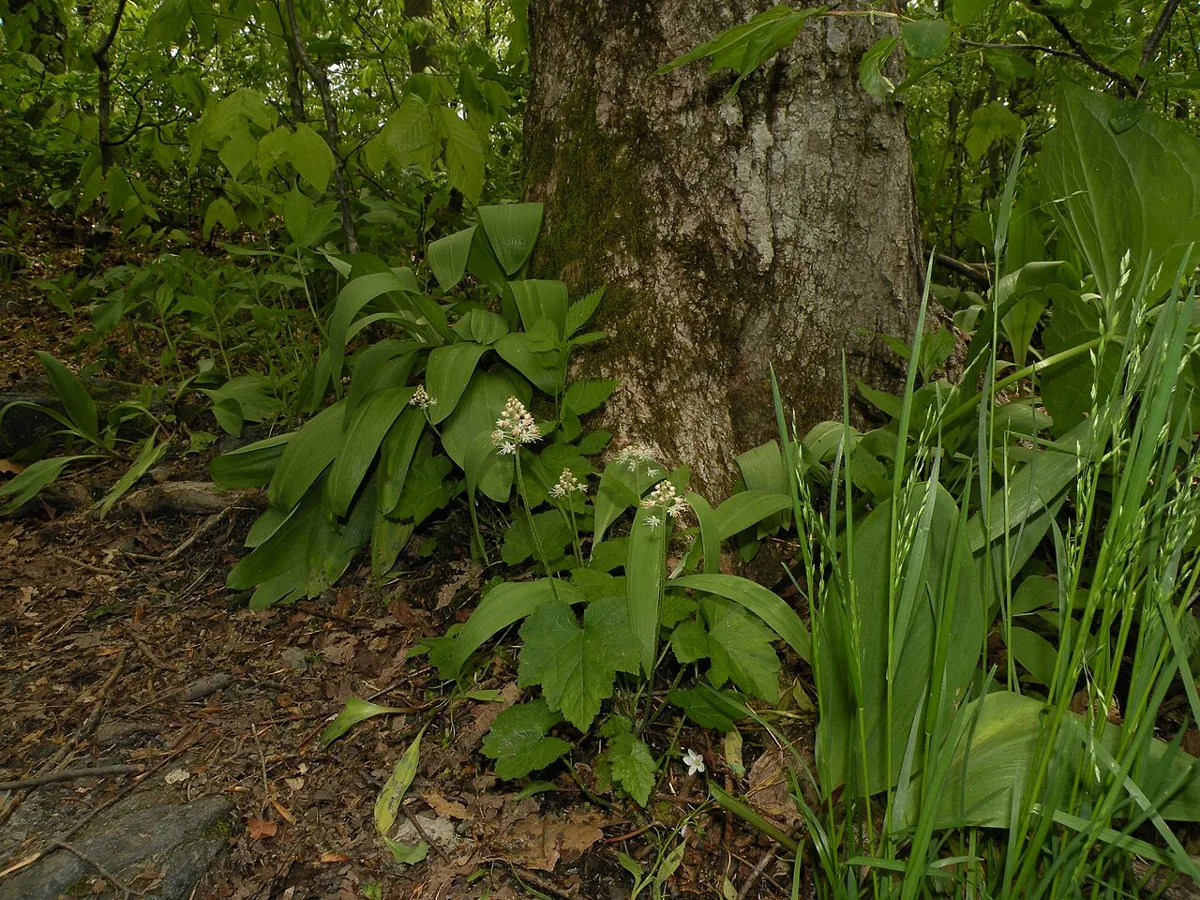
Ramps are the textbook case. A ramp can take up to seven years to grow from seed to maturity, and patches spread slowly by dividing bulbs. One study estimated that harvesting whole plants from a quarter of a patch could take 22 years to recover from. Ramps are listed as of special concern in several eastern states, and Quebec banned commercial harvest after many patches disappeared 4.
Better practice: cut one leaf per plant and leave the bulb. If you want bulbs, take a few from a large patch, leave the root plate in the ground, and take about 10 percent or less, not every year in the same place 4. The leaves carry most of the flavor anyway.
The same logic applies to wild ginger, trilliums, wildflowers, and anything that is slow and uncommon: leave it, or take very little.
,_Tiarella_stolonifera_(Creeping_Foamflower),_Mount_Greylock,_MA_(31358676333).jpg)
Fast plants: weeds and invasives
At the other end are plants you can’t hurt: garlic mustard, dandelion, lamb’s quarters, purslane, wild parsnip roots, and many others. Garlic mustard is an invasive plant that crowds out woodland wildflowers, and pulling it helps the woods; on DNR land, invasive herbaceous plants may be removed freely 5. Foraging that leans on these species takes pressure off the native plants.
Quick check
Lean on abundant weeds and invasives, and go light on slow natives like ramps.
Rules of thumb
- Take a fraction. Leave most of any patch, and spread your picking across it.
- Leave the best. The biggest, most vigorous plants are the breeders.
- Leave food for wildlife. Bears, birds, deer, and squirrels depend on fall nuts, acorns, and berries.
- Know local abundance. A plant abundant in the Driftless may be scarce up north, and the reverse.
- Don’t trample. A patch of spring ephemerals can be crushed by careless feet.
- Harvest cleanly. Use scissors or a knife on leaves and stems, and fill holes when you dig.
- Come back. A patch you return to every year teaches you what it can bear.
Where not to pick
Some places are contaminated rather than fragile:
- Roadsides and railroad rights-of-way, which are often sprayed and catch runoff.
- Old orchards, farmyards, and building sites, which may have lead and arsenic in the soil from old pesticides and paint.
- Lawns and parks treated with herbicides.
- Water downstream of farms, feedlots, or septic systems for watercress and other aquatic plants, which can carry pathogens; cook them if in doubt.
What to take from this
Match the harvest to how the plant lives. Fruit, nuts, and mushrooms can be picked freely without killing anything; leaves of vigorous perennials grow back; roots and bulbs kill the plant. Take one leaf per ramp and leave the bulb, and lean on abundant weeds and invasives. Leave the best plants and plenty for wildlife, and avoid sprayed roadsides, old orchard soils, and contaminated water.
Practice
Ramps can take up to seven years to mature from seed. A single leaf leaves the plant alive; whole-plant harvest of a quarter of a patch can take decades to recover from.
Lesson complete
Nice work.
Sources for this lesson
- 1Samuel Thayer. The Forager's Harvest: A Guide to Identifying, Harvesting, and Preparing Edible Wild Plants. Forager's Harvest Press. 2006. verifiedWisconsin forager's in-depth plant chapters, with sections on identification, safety, conservation, and harvest methods. Cited at: Conservation.
- 2Harvesting morel mushrooms. University of Minnesota Extension. verifiedLate April through May in southern Minnesota, into June farther north; under decaying elm, ash, poplar, and apple; pinch or cut above the soil; mesh bag; Poison Control 1-800-222-1222 and save an uncooked sample.
- 3Talia Isaacson. Stinging Nettles: Not Just for Breakfast Anymore. Cornell Small Farms Program. 2018. verifiedSilica-tipped hairs inject histamine, serotonin, formic acid, and acetylcholine; cooking or drying destroys the sting; pick young tops, which regrow; about 15 percent protein dry weight.
- 4WVU experts encourage sustainable wild leek harvesting. West Virginia University. 2023. verifiedUp to seven years from seed to maturity; cut one leaf and leave the bulb, or leave the root plate; take about 10 percent; a patch can take 22 years to recover from 25 percent whole-plant harvest.
- 5Wis. Admin. Code NR 45.04: Protection of natural resources (department lands). Wisconsin Legislature. verifiedNR 45.04(1)(a) bars removing natural growth from DNR lands; (1s) allows collecting edible fruits, edible nuts, wild mushrooms, wild asparagus, and watercress by hand for personal consumption, and removing listed invasive herbaceous plants. Cited at: NR 45.04(1s).