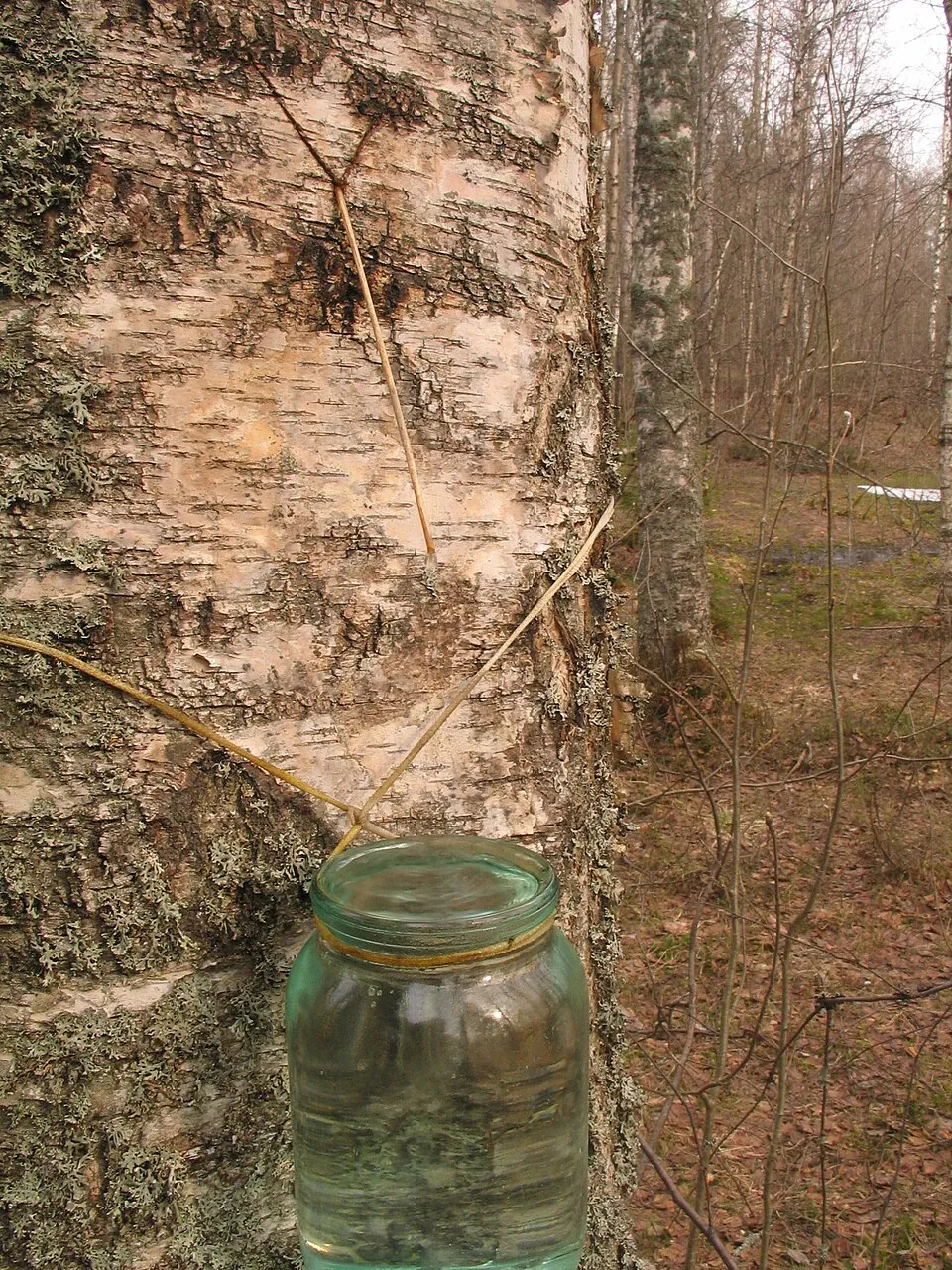
Birch and Box Elder Syrup
Box elder is a maple and makes maple-like syrup at about 60 to 1. Birch runs on root pressure after the maple season ends and takes over 100 gallons of sap per gallon of tangy, caramel syrup, boiled gently to avoid scorching.
- 4 min
- 4 steps
- 3 questions
- Lesson 35 of 49
In this lesson
- Box elder
- Birch
- Drinking sap
- What to take from this
Picking up where you left off.
Box elder
Box elder (Acer negundo) is a maple, though it doesn’t look like one: it has compound leaves of three to five leaflets, green twigs often covered with a whitish bloom, and an untidy, sprawling habit along rivers, ditches, and lot edges. It’s common and fast-growing throughout Wisconsin, often where sugar maples aren’t.
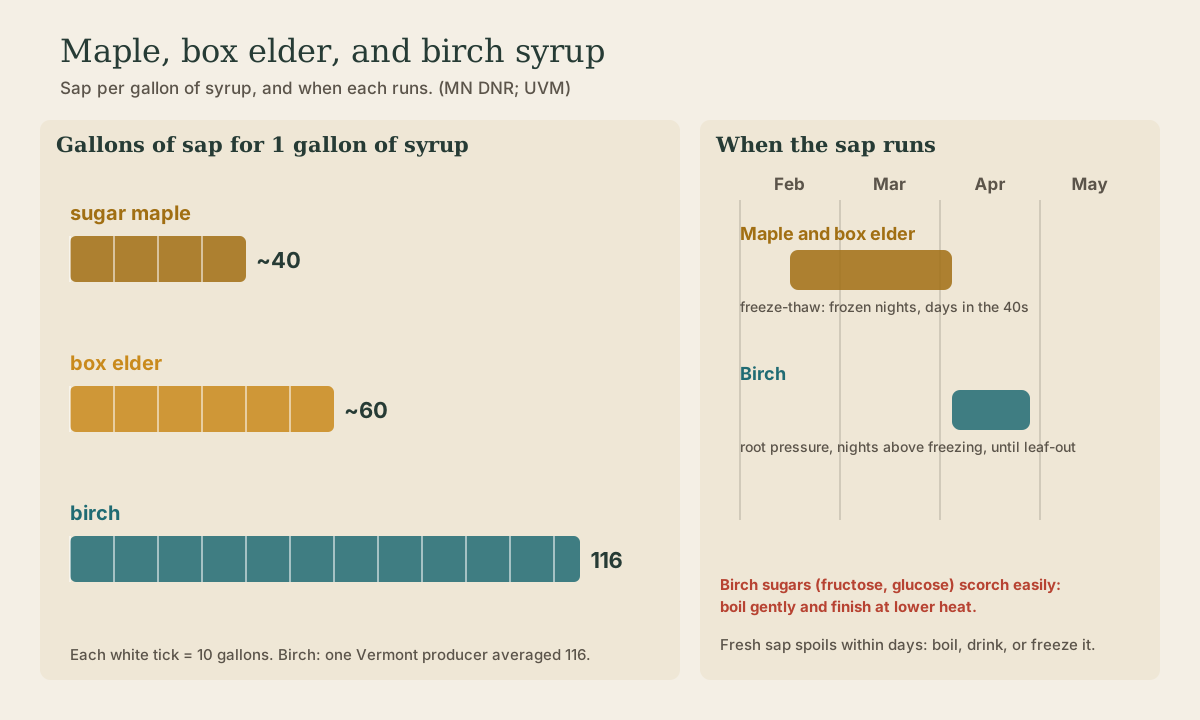
Box elder sap runs on the same freeze-thaw weather as other maples, from mid-February to early April 1. Its sap has less sugar, so it can take close to 60 gallons of box elder sap to make a gallon of syrup 1, versus about 40 for sugar maple.
Tap box elder exactly like a sugar maple: trees 10 inches and up, one tap at 10 to 14 inches, and so on 1. Many box elders are multi-trunked; treat each trunk by its own diameter.
The syrup is maple-like, sometimes with a slightly different, butterscotch-like flavor. It’s a good way to make syrup if your land has box elders but no sugar maples. Many people mix box elder sap with maple sap in the same pan.
Birch
Birch syrup is a different product. Paper birch and yellow birch both grow widely in northern Wisconsin, and birch syrup is made commercially in Alaska, Canada, and Scandinavia.

Season: birch sap is driven by root pressure rather than stem pressure, and it only starts to run once it stays above freezing in spring 2. That puts the birch season right after the maple season, usually a few weeks in April, ending when the leaves come out. A sugarmaker can pull maple taps and move to birch with the same equipment 2.
Sugar: birch sap is much less sweet than maple sap. Where maple takes 40 to 60 gallons per gallon of syrup, birch takes well over 100; one Vermont producer averaged 116 gallons of sap per gallon of syrup 2. Commercial producers concentrate the sap first with reverse osmosis 2; for a hobbyist, birch syrup is a small, special batch.
Tapping: same as maple. Birches are thinner-barked and many are smaller; follow the same diameter rules and drill shallowly. Birch sap often runs heavily, sometimes gallons per tap per day.
Boiling: birch sugars are mostly fructose and glucose rather than sucrose, which scorch at lower temperatures. Boil gently, don’t let the pan get shallow, and finish at lower heat.
Flavor: nothing like maple. It’s been described as fruity, tangy, or spicy 2, with a caramel, molasses-like depth. It’s better as a glaze, marinade, and dressing ingredient than as pancake syrup: try it on salmon, pork, or roasted roots, or in vinaigrette.
Quick check
Maple sap needs freeze-thaw cycles in the stem. Birch sap is driven by root pressure as the soil warms, so it starts as the maple season ends.
Quick check
It takes well over 100 gallons of sap per gallon, so a scorched batch is a big loss.
Drinking sap
Fresh birch and maple sap are good to drink cold, straight from the tree, as a faintly sweet spring tonic; birch sap is a traditional spring drink across Scandinavia, Russia, and the Baltic. It spoils within a few days, even refrigerated, so drink it fresh or freeze it.
What to take from this
Box elder is a maple with compound leaves; tap it like sugar maple in the same freeze-thaw season, at about 60 gallons of sap per gallon of syrup. Birch runs on root pressure once it stays above freezing, right after the maple season, and takes well over 100 gallons per gallon. Boil birch syrup gently because its sugars scorch easily, and use its tangy, caramel flavor as a glaze and seasoning.
Practice
Birch sap is much less sweet than maple sap; producers report well over 100 gallons, around 116, per gallon of syrup.
Lesson complete
Nice work.
Sources for this lesson
- 1How to Tap Maple Trees and Make Your Own Syrup. Minnesota State Parks and Trails (Minnesota DNR). verifiedAbout 40 gallons of sugar maple sap per gallon of syrup, close to 60 for box elder; freezing nights and 40s days; taps by diameter (none under 10 in); 7/16 or 3/8 in bit about 3 in deep; finish at 219 °F.
- 2Birch Syrup: A New Spin on an Old Practice. University of Vermont College of Agriculture and Life Sciences. verifiedBirch sap runs on root pressure once it stays above freezing, after the maple season; well over 100 gallons of sap per gallon of syrup.