Black Walnuts and Hickory Nuts
The richest wild nuts: black walnuts, hulled promptly and cured three weeks before cracking, and shagbark hickory nuts. How to gather, hull, cure, crack, and store them.
- 5 min
- 6 steps
- 3 questions
- Lesson 30 of 49
In this lesson
- Black walnuts
- Hulling and curing
- Cracking
- Storing
- Hickory nuts
- What to take from this
Picking up where you left off.
Black walnuts
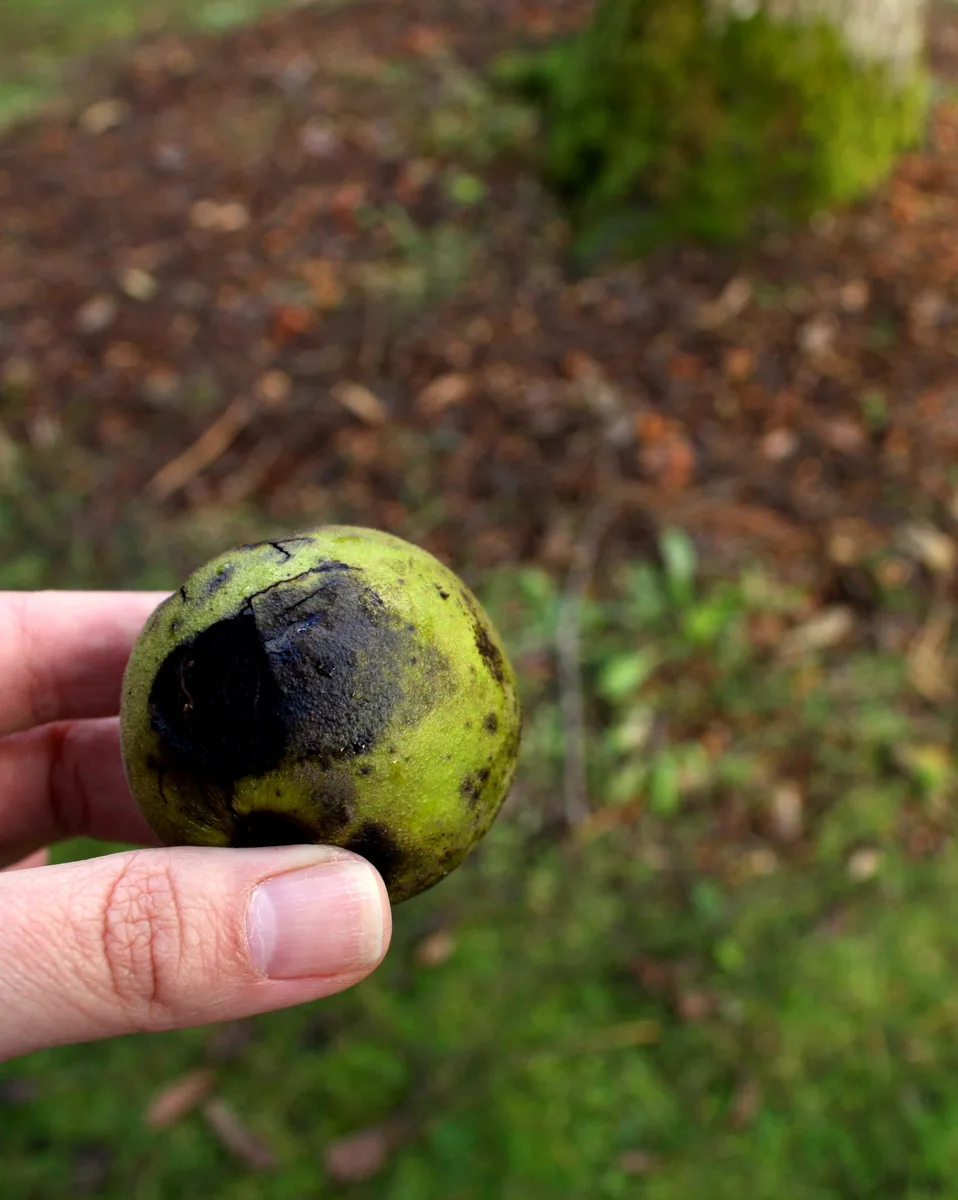
Black walnut (Juglans nigra) grows in rich bottomlands, woodlots, and fencerows across southern Wisconsin, and less often in the north. It’s a tall tree with dark, furrowed bark and long compound leaves of 15 to 23 leaflets that drop early in fall. The nuts come in round green hulls the size of a tennis ball, and they have a rich, strong flavor unlike English walnuts.
Butternut, or white walnut (Juglans cinerea), has elongated, sticky hulls and very good nuts, but it’s been devastated by butternut canker and is uncommon now; leave its nuts to seed new trees.
When: walnuts are mature when the hull dents under a thumb, typically mid- to late September in Iowa 1, and similar in southern Wisconsin. Gather them as they fall, before squirrels do; the hulls turn yellow-green, then black as they rot.
Nuts are allowed on DNR land for personal use 2.
.jpg)
Quick check
Iowa State Extension: walnuts are mature when the hull can be dented with your thumb, typically mid- to late September.
Hulling and curing
Hull promptly. A hull left on darkens the nut meat and makes it strong-tasting. Hull juice contains juglone and stains skin, clothes, and concrete brown-black for weeks, so wear rubber gloves and old clothes.
Ways to hull 1:
- Roll them underfoot on a hard surface, or pound with a hammer or mallet.
- Drive over them on a gravel driveway (a classic).
- Use a corn sheller, or a cement mixer with gravel and water for large batches.
- Commercial hulling stations in some areas buy walnuts by weight.
Then:
- Wash off hull remnants with a hose in a bucket or a wire basket.
- Sort by floating: filled nuts sink, empty nuts float. Discard floaters 1.
- Cure the nuts on a screen, no more than three deep, in a cool, dry, well-ventilated place out of the sun for two to three weeks 1, protected from squirrels and mice. A garage loft or a hanging mesh bag works.
Curing lets the kernels dry and firm up and the flavor mellow.
Quick check
Filled nuts sink and unfilled nuts float, an easy sort before curing.
Cracking
Black walnut shells are notoriously hard and thick.
- Soak the cured nuts in water for 1 to 2 hours before cracking to reduce shattering 1.
- Crack with a heavy hammer on the nut’s point, held on end on a hard block, or in a vise or a lever nutcracker made for black walnuts.
- Pick kernels from the shell with a nutpick and a pair of pliers 1. Expect the halves to come out in pieces.
A bushel of hulled nuts takes a long evening to crack. It’s good work for a winter night.
Storing
- Uncracked, cured nuts keep for months in a cool, dry place.
- Kernels go rancid at room temperature. Keep them in the refrigerator for the short term, or in a plastic bag in the freezer, where they keep almost indefinitely 1.
Black walnuts are bold: use them in cookies, fudge, cakes, ice cream, and with squash or greens.
Hickory nuts
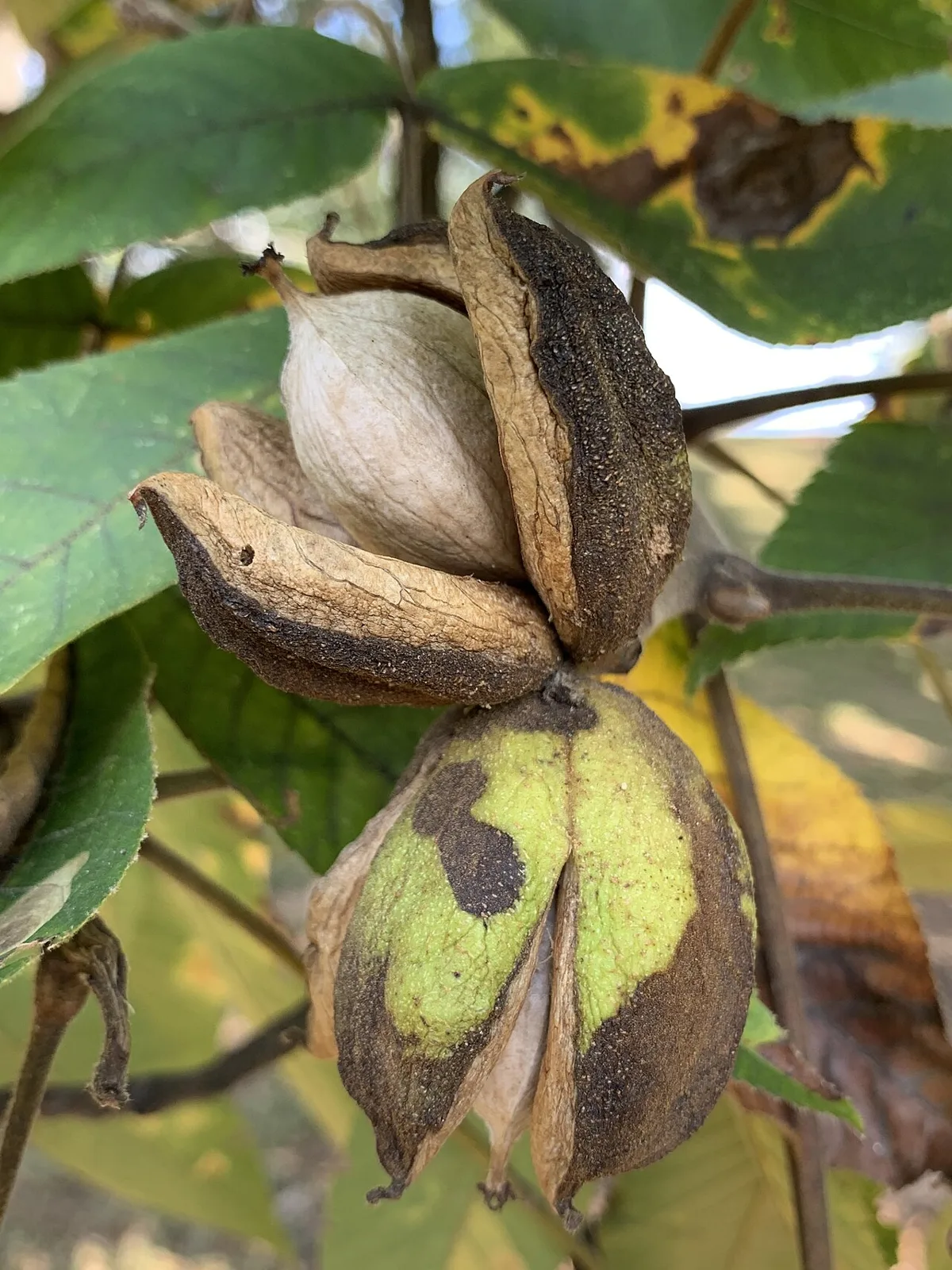
Shagbark hickory (Carya ovata) grows on dry slopes and in oak woods of southern and central Wisconsin. You know it by its bark, which peels in long, curling strips, and its compound leaves, usually with five leaflets. The nuts come in thick husks that split into four sections when ripe in September and October.
Shagbark nuts are sweet, buttery, and, to many, the best wild nut in the Midwest:
- Gather them as they fall, discard nuts with tiny weevil holes, and dry them like walnuts for a couple of weeks.
- Crack with a hammer on the edge or seam, and pick out the meats. The shells are thick with internal walls, so it’s slow work.
- Use in pies, cookies, and breads, or boil cracked nuts in water to make a rich, milky hickory broth (the shell pieces sink, and the oily “milk” can be skimmed), as many Native peoples did.
Bitternut hickory (Carya cordiformis), common in Wisconsin’s moist woods, has yellow buds and smooth, thin-husked nuts that are too bitter to eat. Squirrels leave them alone, and so should you.

Quick check
Shagbark’s peeling bark and four-part husks mark the sweet one.
What to take from this
Gather black walnuts when the hull dents under your thumb in late September. Hull promptly with gloves, wash, keep the sinkers, cure two to three weeks no more than three deep, soak before cracking, and freeze the kernels. Shagbark hickory, with peeling bark and four-part husks, gives sweet nuts in September and October; skip bitternut, with its yellow buds.
Lesson complete
Nice work.
Sources for this lesson
- 1How to Harvest, Crack, and Store Black Walnuts. Iowa State University Extension and Outreach. verifiedRipe when the hull dents under a thumb; hull promptly; filled nuts sink; cure 2-3 weeks no more than three deep; soak 1-2 hours before cracking; freeze kernels.
- 2Wis. Admin. Code NR 45.04: Protection of natural resources (department lands). Wisconsin Legislature. verifiedNR 45.04(1)(a) bars removing natural growth from DNR lands; (1s) allows collecting edible fruits, edible nuts, wild mushrooms, wild asparagus, and watercress by hand for personal consumption, and removing listed invasive herbaceous plants. Cited at: NR 45.04(1s).