Wild Rice (Manoomin): Culture and Law
Manoomin, the food that grows on water, is central to Ojibwe life and Wisconsin law. Learn the plant, the harvest rules - residents only, licensed, 10 a.m. to sunset, canoe and wooden knockers - and the work of finishing rice by hand.
- 6 min
- 7 steps
- 3 questions
- Lesson 36 of 49
In this lesson
- The food that grows on water
- The plant
- The law
- Ricing
- Finishing rice
- Respect
- What to take from this
Picking up where you left off.
The food that grows on water
Manoomin, the Ojibwe word usually translated as “good berry,” is wild rice: the grain of Zizania palustris, an annual aquatic grass of shallow lakes, flowages, and slow rivers across northern Wisconsin, Minnesota, Michigan, and Ontario.
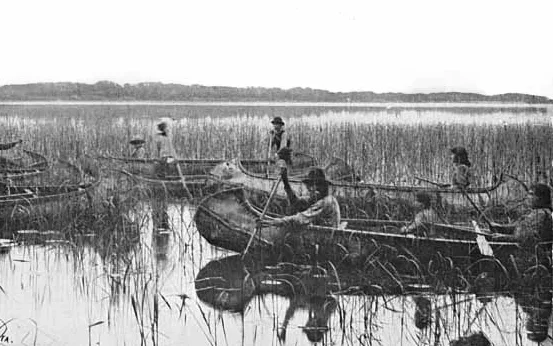
For the Ojibwe, manoomin is far more than a food. Oral tradition tells that the Anishinaabeg were told to travel west until they found “the place where the food grows on water” 1. They found it in the Great Lakes country, and manoomin has been at the center of life there since: a sacred food, a gift, a reason for gathering in ricing camps every fall. The Ojibwe bands of Wisconsin hold treaty rights to harvest rice off-reservation in the ceded territory of northern Wisconsin, and they co-manage the harvest with the state.
The plant
Wild rice germinates under water in spring from seed that fell the year before. By early summer it lies in a floating-leaf stage, ribbon-like leaves on the surface, and by midsummer it stands several feet above the water, with flower heads: female flowers on top, dangling male flowers below.
The grain ripens unevenly, a few kernels at a time on each head, over 10 to 14 days on a bed 2, and ricing on a lake can stretch four to five weeks as different parts of the bed come ripe 1. Ripe kernels fall at a touch, and those that fall uncaught seed next year’s crop.
Wild rice is fragile. Water level changes, boat wakes, invasive species, sulfate pollution, and warming all hurt it, and crops swing widely from year to year.
The law
Wisconsin’s rules protect the beds and the tradition 2:
- Residents only. Only Wisconsin residents may harvest wild rice in the state.
- License: a wild rice harvester license for ages 17 to 64, $8.25 a year; one license can cover a spouse and minor children in the same household, with free identification cards.
- Season: on date-regulated waters, popular lakes in the north, the DNR and representatives of the Ojibwe tribes jointly decide when rice is ripe, and openings are posted on GLIFWC’s website at least 24 hours ahead. Other lakes and all rivers can be harvested when the rice ripens.
- Hours: 10 a.m. to sunset only.
- Boats: no longer than 17 feet and no wider than 38 inches, propelled only by muscle power using a push-pole or canoe paddle.
- Knockers: harvest only with smooth, rounded, wooden rods or sticks no longer than 38 inches, held and operated by hand. Mechanical devices are illegal.
- Tribal land: on reservations, non-tribal harvesters need tribal permission 2.
Quick check
Wisconsin limits boats to 17 feet by 38 inches, muscle power only by push-pole or paddle, smooth rounded wooden rods up to 38 inches, and hours of 10 a.m. to sunset.
Ricing
Ricing takes two people 3:
- The poler stands in the stern and pushes the canoe slowly through the bed with a long push-pole, often forked at the end so it doesn’t sink into the mud.
- The knocker sits forward with two cedar knockers (bawa’iganaakoog). With one stick, they gently bend a handful of stalks over the canoe; with the other, they tap the heads so ripe kernels fall into the canoe. Then the other side.
Knock gently. Ripe rice falls easily; beating the stalks hard breaks them and knocks off unripe grain that would ripen in a few days, and harvesters return to the same bed several times over the season 2.

Finishing rice
Green rice spoils within a day or two if left in a pile, so it’s finished promptly:
- Drying: spread the green rice in the sun on tarps for a day, turning it.
- Parching: stir the rice in a big kettle or drum over a fire. Parching loosens the hulls, dries the kernel, and gives the rice its toasty flavor and long keeping quality.
- Hulling: traditionally, “dancing” or jigging: treading the parched rice in a lined pit or tub with clean moccasins to loosen the hulls. Hand-cranked or motorized hullers do this now.
- Winnowing: tossing the rice in a birchbark winnowing tray (nooshkaachinaagan) in the breeze so the chaff blows away.
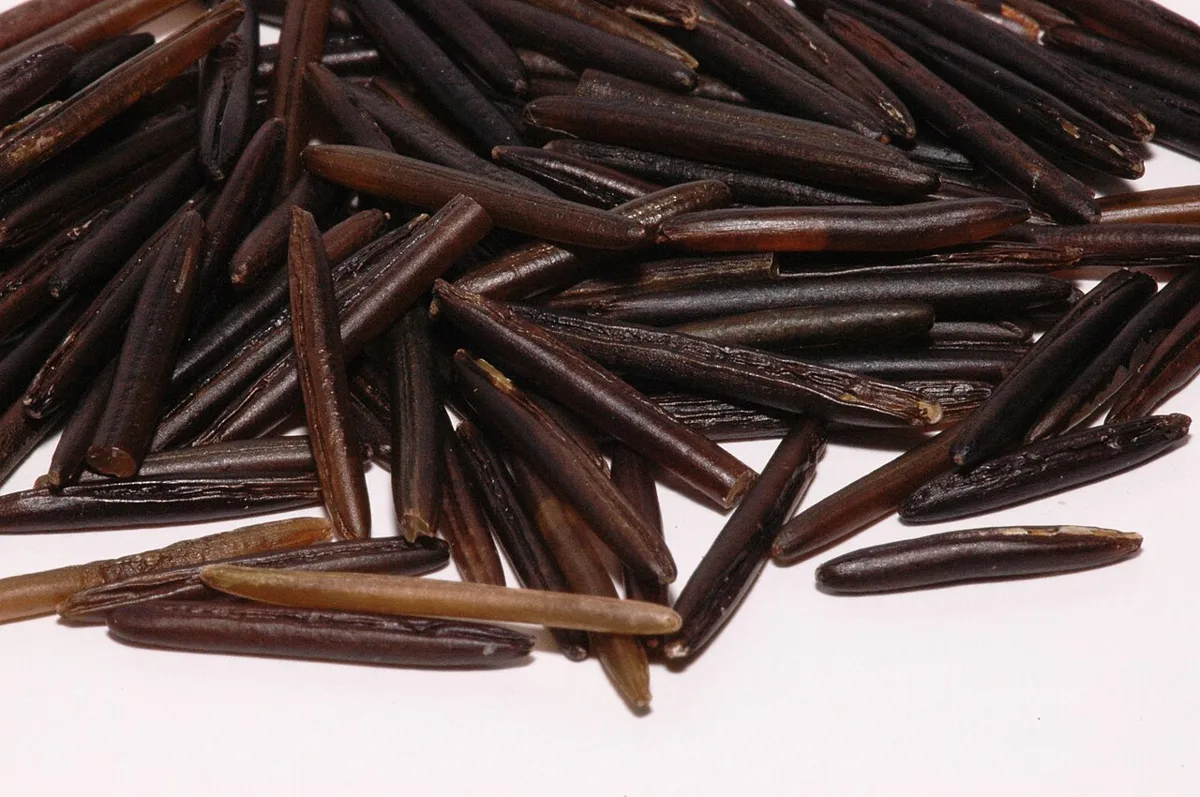
Hand-finished wild rice is mottled brown to olive, and it cooks in 15 to 25 minutes, much faster than black, cultivated “wild rice” from paddies. The St. Croix Chippewa direct readers to GLIFWC’s booklets for more on the ecology and culture of manoomin 1.

Quick check
Green rice spoils if it sits, so finish it soon after the harvest.
Respect
Wild rice is a public resource in Wisconsin law and a sacred one to the Ojibwe. If you rice, learn from experienced ricers, respect posted closures and the joint opening process, knock gently, and leave the beds whole. Buying hand-harvested, hand-finished rice from tribal and local producers supports the people who have kept the tradition going.
What to take from this
Manoomin, the food that grows on water, is sacred to the Ojibwe, whose migration story ended where it grows, and is co-managed by the DNR and the tribes. Only Wisconsin residents may rice, licensed at ages 17 to 64, from 10 a.m. to sunset, in a canoe no longer than 17 feet pushed by pole or paddle, with wooden knockers up to 38 inches. Knock gently, and finish rice promptly by drying, parching, hulling, and winnowing.
Practice
On date-regulated lakes, the DNR and tribal representatives check ripeness together, and openings are posted at least 24 hours ahead.
Lesson complete
Nice work.
Sources for this lesson
- 1Manoomin. St. Croix Chippewa Indians of Wisconsin. verifiedManoomin, the good berry; the migration prophecy of the place where food grows on water; harvest rules; four to five weeks of ricing as beds ripen in turn.
- 2Wild rice harvesting. Wisconsin Department of Natural Resources. verifiedResidents only; license for ages 17-64 ($8.25); date-regulated lakes opened jointly with Ojibwe tribes and posted by GLIFWC; harvest 10 a.m. to sunset; boats at most 17 ft by 38 in, push-pole or paddle; smooth rounded wooden knockers at most 38 in.
- 3Samuel Thayer. The Forager's Harvest: A Guide to Identifying, Harvesting, and Preparing Edible Wild Plants. Forager's Harvest Press. 2006. verifiedWisconsin forager's in-depth plant chapters, with sections on identification, safety, conservation, and harvest methods.