Building Fires in Any Weather
Making fire reliably: the fire triangle, tinder, kindling, and fuel, finding dry material in wet woods, four fire lays and when to use each, lighting from upwind with matches, ferro rod, or bow drill, a log platform on snow, Wisconsin's firewood rule, and putting it out.
- 6 min
- 8 steps
- 3 questions
- Lesson 40 of 49
In this lesson
- The fire triangle
- Tinder, kindling, fuel
- Pick and prepare a site
- Four ways to lay it
- Lighting it
- Wisconsin firewood and putting it out
- Try it
- What to take from this
Picking up where you left off.
The fire triangle
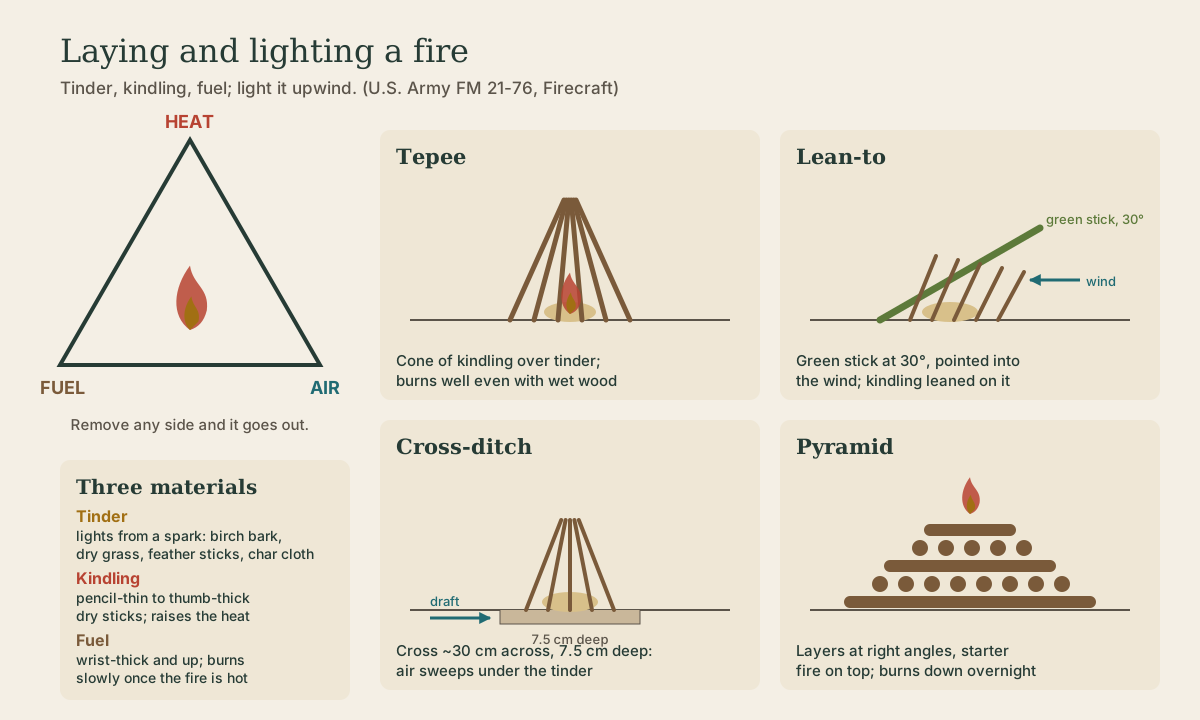
Wood doesn’t burn directly. Heat drives gas out of the fuel, and that gas burns with oxygen in the air. The Army’s survival manual calls this the fire triangle: heat, fuel, and air. Take away any one and the fire goes out 1. Every fire problem is one of the three: not enough heat (wet wood, too-big pieces too soon), not enough fuel ready, or smothered (packed too tight, or no draft).
Quick check
Fuel doesn’t burn directly: heat turns it to gas, which burns with oxygen.
Tinder, kindling, fuel
You need three materials, gathered before you strike anything 1:
- Tinder: dry material that lights from a spark or a match. It has to be absolutely dry. Birch bark (from dead or downed trees; it burns even when damp because of its oils), dry grass, cattail fluff, shavings, and feather sticks carved from the dry inside of a split stick. Char cloth (cotton heated until it turns black but doesn’t burn) holds a spark long enough to blow it into flame 1.
- Kindling: dry sticks from pencil-lead to thumb thickness. It raises the heat enough to light bigger wood 1.
- Fuel: wrist-thick and larger. It burns slowly and steadily once the fire is hot 1.
Gather two big handfuls of each size of kindling, more than seems necessary. Most failed fires run out of small stuff.
In wet woods: dead twigs still on standing trees (the lower branches of spruce and pine) stay drier than anything on the ground; snap one, and if it cracks cleanly it’s dry. Split wrist-thick dead wood to reach the dry core. Wood lying on the ground may look dry but usually isn’t; the Army manual warns against it for bow-drill parts 1.
Pick and prepare a site
Look for a dry spot out of the wind, close to your fuel and shelter 1. Clear a circle at least 1 meter across down to mineral soil so the fire can’t creep 1. A wall of logs or rocks behind the fire reflects heat toward you and cuts the wind, but don’t use wet or porous rocks: they can explode when heated 1. River rocks are the usual culprits.
On snow, build a platform of green logs laid side by side, with another layer crosswise on top, so the fire doesn’t melt down into a hole and drown 1.
Four ways to lay it
From the Army manual 1:
- Tepee: tinder in the center, kindling leaned into a cone over it. Light the center; as the outside sticks burn they fall inward. It burns well even with wet wood.
- Lean-to: push a green stick into the ground at about 30 degrees, pointing into the wind. Tuck tinder under it and lean kindling against it.
- Cross-ditch: scratch a cross about 30 cm across and 7.5 cm deep, put tinder in the middle, and build a kindling pyramid over it. Air sweeps through the ditch under the tinder.
- Pyramid (log cabin): two logs parallel, a layer across them, then three or four more layers, each smaller and at right angles. Build a starter fire on top. It burns downward and needs little attention overnight.
Quick check
The tepee lights easily, even with wet wood, but needs feeding.
Lighting it
Always light from the upwind side, so the wind pushes the flame into the fuel 1.
- Matches: waterproof ones, in a waterproof container with a striker 1. A lighter is simpler and better; carry both.
- Ferro rod (metal match): set it on a dry leaf in the tinder and scrape a knife spine down it to throw sparks 1.
- Flint and steel: strike a sharp edge of hard rock with carbon steel; stainless won’t spark well 1. Catch the spark on char cloth.
- Bow drill: a seasoned hardwood drill about 2 cm thick and 25 cm long, spun by a bow on a seasoned softwood fireboard about 2.5 cm thick, with a V-notch cut into the edge of a socket. Work it until a coal forms in the notch, then tip it into tinder and blow 1. It takes practice and effort.
Once the tinder flames, feed kindling from small to large without smothering it, then fuel. Dry damp wood near the fire, and bank the coals under ash overnight to keep them alive 1.
Playback is optional. If the player is unavailable, open the video at its source.
Wisconsin firewood and putting it out
Since June 1, 2014, firewood brought onto Wisconsin state parks, forests, and other DNR-managed land has to come from within 10 miles of the property, or from a vendor certified by DATCP, to keep emerald ash borer and other pests and diseases from riding along 2. Buy it at the campground or close by.
Be sure the fire is out before you leave 1: drown it, stir the ashes, drown it again, and feel for heat with the back of your hand.
Quick check
The rule, in place since 2014, slows the spread of emerald ash borer and other pests.
Try it
On a wet day, make a fire from what’s in your woodlot using one match. Collect tinder (birch bark from a downed tree, feather sticks), three sizes of kindling, and fuel; lay a tepee on a cleared spot, light it from upwind, and time how long until it’s self-sustaining. Then do the same with a ferro rod and char cloth you made in a tin.
What to take from this
Fire needs heat, fuel, and air. Gather tinder, plenty of kindling in sizes, and fuel before lighting. In wet woods, use dead twigs from standing trees and the split insides of dead wood. Clear a 1-meter circle, skip wet rocks, and build a green-log platform on snow. A tepee lights easily even with wet wood; a pyramid burns all night. Light from upwind. In Wisconsin state parks, firewood must come from within 10 miles or be certified. Drown, stir, and feel before leaving.
Lesson complete
Nice work.
Sources for this lesson
- 1Department of the Army. FM 21-76 Survival. U.S. Department of the Army. 1992. verifiedFirecraft: fire triangle of air, heat, and fuel; clear a circle at least 1 m across; no wet or porous rocks (they can explode); green-log platform on snow; tinder, kindling, fuel; char cloth; tepee, lean-to (green stick at 30 degrees pointed into the wind), cross-ditch (about 30 cm across, 7.5 cm deep), and pyramid lays; light from the upwind side; metal match, flint and steel with carbon steel; bow drill dimensions; bank the fire overnight. Shelters: most common error is building too big; avoid dead trees and sites below the high-water mark; poncho lean-to with drip sticks, back to the wind, round turn and two half hitches; up to 80 percent of body heat lost to the ground at rest; field-expedient lean-to with a fire reflector wall; debris hut with at least 1 m of debris and a 30 cm bed.
- 2Firewood and Invasive Species. Wisconsin Department of Natural Resources. verifiedSince June 1, 2014, firewood brought onto Wisconsin state parks, forests, and other DNR-managed lands must come from within 10 miles of the property or be certified by DATCP, to keep emerald ash borer and other pests and diseases from spreading.