Dressing for Cold
Staying warm by staying dry: base, insulating, and shell layers, a stop parka, why cotton fails, managing sweat by venting and shedding layers, mittens, hats, and boots, and reading wind chill.
- 4 min
- 7 steps
- 3 questions
- Lesson 45 of 49
In this lesson
- Stay dry first
- The layers
- Extremities
- Managing sweat
- Wind chill
- Try it
- What to take from this
Picking up where you left off.
Stay dry first
Cold-weather clothing has one job: keep a layer of still, dry air around you. Water ruins that. The Minnesota DNR’s advice for Boundary Waters winter campers sums it up: the key to staying warm is staying dry, so peel off clothing when you’re hot to avoid sweating 1.
The layers
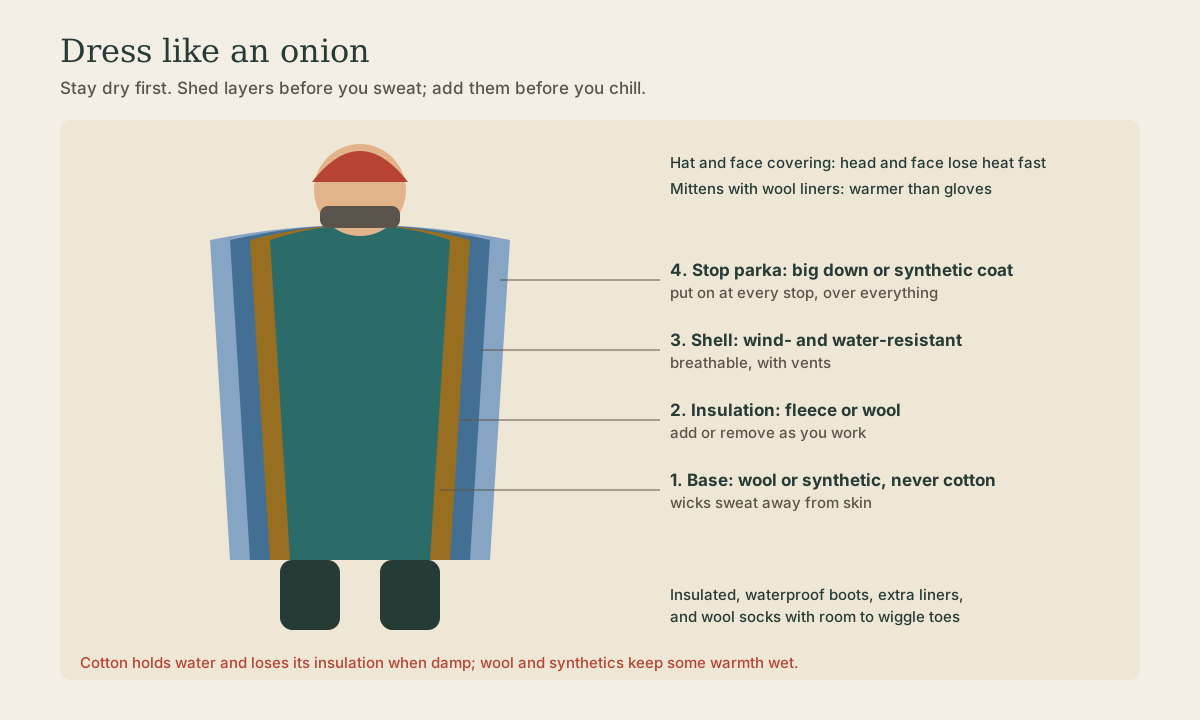
- Base layer: wool or a wicking synthetic against the skin, never cotton, which holds moisture 1. Merino is comfortable and resists odor; synthetics dry faster.
- Insulation: fleece or wool mid-layers, added or removed as your work rate changes 1. Several thin layers adjust better than one thick one.
- Shell: waterproof, breathable pants and coat block wind and wet snow 1. Pit zips and front zippers let heat out without stopping.
- Stop parka: a big insulated coat, down for dry cold or synthetic if it may get wet, pulled on over everything the moment you stop moving 1.
CDC’s list for extreme cold is the same idea for everyday use: a hat, a scarf or knit mask over the face and mouth, mittens or gloves, a water-resistant coat and boots, and several layers of loose-fitting clothing 2. Loose matters: tight boots and layers squeeze out the warm air and cut circulation.
Quick check
Wool and synthetics wick sweat and keep some warmth when wet.
Extremities
- Hands: mittens with wool liners are warmer than gloves 1, since fingers share heat. Carry a spare pair; wet mittens are useless. Thin liner gloves let you work for a minute without bare skin on metal.
- Head and face: a warm hat, plus a balaclava or neck gaiter and face covering in wind; cover nose, ears, cheeks, and chin 2.
- Feet: insulated, waterproof boots with extra liners and wool socks 1. Leave room to wiggle your toes; a tight boot is a cold boot. Dry the liners every night, in your sleeping bag if you must.
Managing sweat
The classic winter mistake is overdressing for the start of a hike or ski. Start a little cold, because you’ll warm up within minutes. Open zippers before you’re hot, take off the hat on a climb, and shed a layer before a long uphill haul. At a stop, put the parka on immediately, before you cool. Change into a dry base layer at camp.
Eat and drink: your body makes heat from food. Keep snacks in a pocket and drink often; dehydration and an empty stomach make you colder.
Quick check
Sweat-soaked layers chill you fast when you stop; staying dry is the first rule.
Wind chill
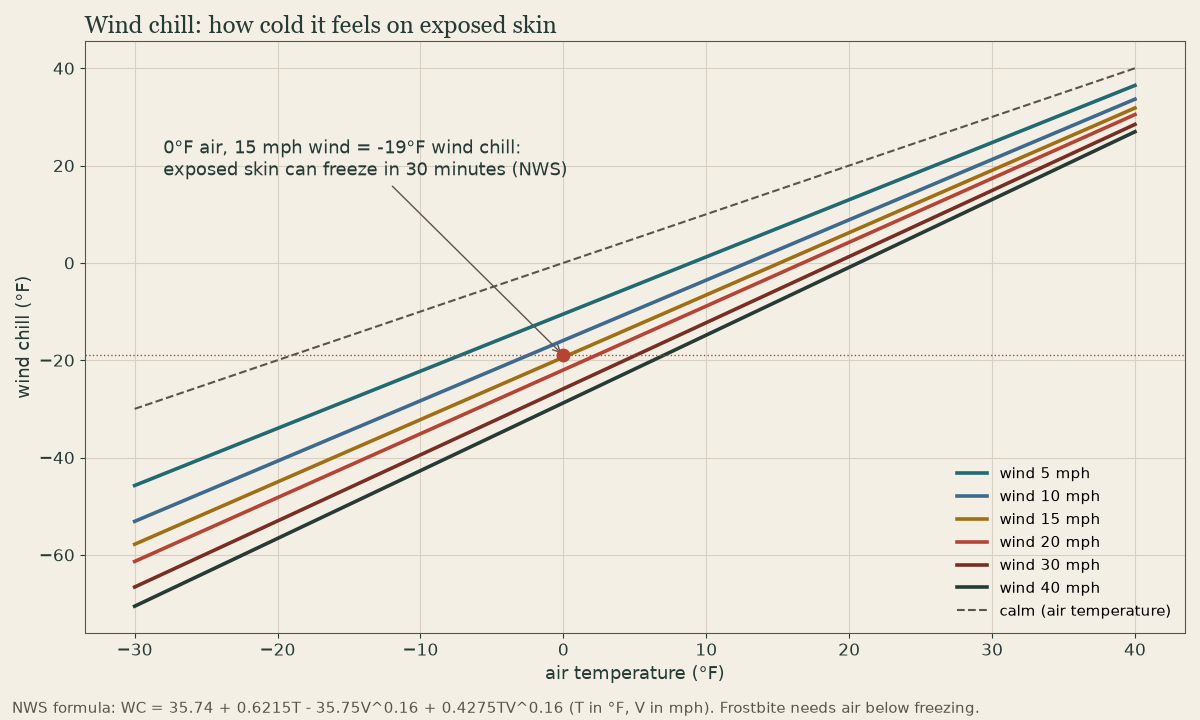
Wind strips heat from exposed skin, so it feels colder than the thermometer says. The National Weather Service’s formula combines air temperature and wind speed: at 0 °F with a 15 mph wind, the wind chill is -19 °F, and exposed skin can freeze in 30 minutes 3. Frostbite needs air below freezing, but wind makes it come much faster 3.
Playback is optional. If the player is unavailable, open the video at its source.
Quick check
Wind chill measures heat loss from exposed skin; the air must be below freezing for frostbite.
Try it
On the next cold morning, go out in your planned layers for a brisk 30-minute walk. Note the minute you first feel warm and the minute you start to sweat. Next time, start with one layer fewer and vent earlier. Check the wind chill before you go.
What to take from this
Stay dry: a wool or synthetic base, adjustable fleece or wool insulation, a breathable shell, and a parka for stops; no cotton. Start slightly cold, vent and shed layers before you sweat, and add the parka before you chill. Cover hands with mittens and liners, head and face, and feet in roomy insulated boots, and respect wind chill: at -19 °F, exposed skin can freeze in 30 minutes.
Lesson complete
Nice work.
Sources for this lesson
- 1Blane Klemek. When Heaven Freezes Over. Minnesota Conservation Volunteer. 2018. verifiedFree self-issued Boundary Waters permits October 1-April 30; days below zero and nights to -30 °F, 50-60 in. of snow; wool or synthetic base layers, no cotton; shed layers to avoid sweat; nylon tents versus canvas tents with wood stoves; bags rated to -40 °F; pulks pulled on skis or snowshoes; melt snow or filter water from holes, keeping filters from freezing.
- 2Preventing Hypothermia. Centers for Disease Control and Prevention. verifiedSigns of hypothermia (shivering, exhaustion, confusion, fumbling hands, memory loss, slurred speech, drowsiness); below 95 °F get medical care; move to shelter, remove wet clothing, warm the core first, warm drinks if conscious; dress in loose layers with hat, face covering, mittens, water-resistant coat and boots.
- 3Wind Chill Chart. National Weather Service. verifiedWind chill formula in °F and mph; at 0 °F and 15 mph the wind chill is -19 °F and exposed skin can freeze in 30 minutes; air must be below freezing for frostbite.