Snowshoes and Skis
Getting around on deep snow: how snowshoes float, the traditional bearpaw, Michigan, Ojibwe, and Alaskan shapes and their terrain, ash and rawhide construction, sizing modern snowshoes, walking, turning, and getting up, and classic cross-country skis for winter travel.
- 5 min
- 7 steps
- 3 questions
- Lesson 49 of 49
In this lesson
- How snowshoes work
- Traditional shapes
- Modern snowshoes
- Walking
- Cross-country skis
- Try it
- What to take from this
Picking up where you left off.
How snowshoes work
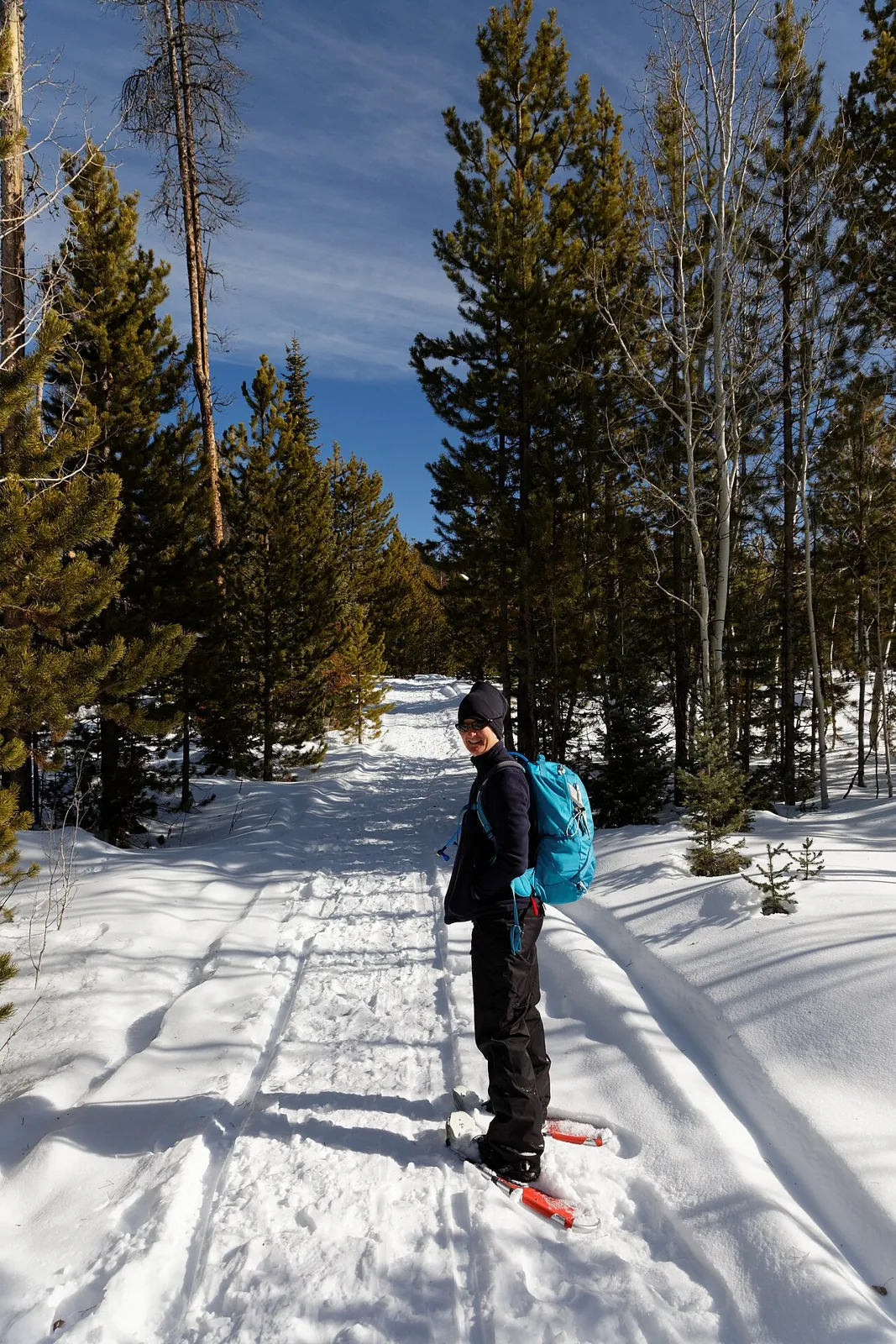
A snowshoe spreads your weight over a much larger area so you stay near the surface instead of post-holing, sinking with every step, which is slow and exhausting 1. Animals like the snowshoe hare, lynx, and wolf have the same adaptation built into their feet 1.
Laced-frame snowshoes are a North American development. Early European explorers described Native peoples using webbed, wood-framed snowshoes very like today’s Ojibwe and Michigan styles, with designs varying from nation to nation to suit local snow and terrain 1: shorter, compact shoes for forest, and Cree shoes up to six feet long for deep snow in open country 1.
Traditional shapes
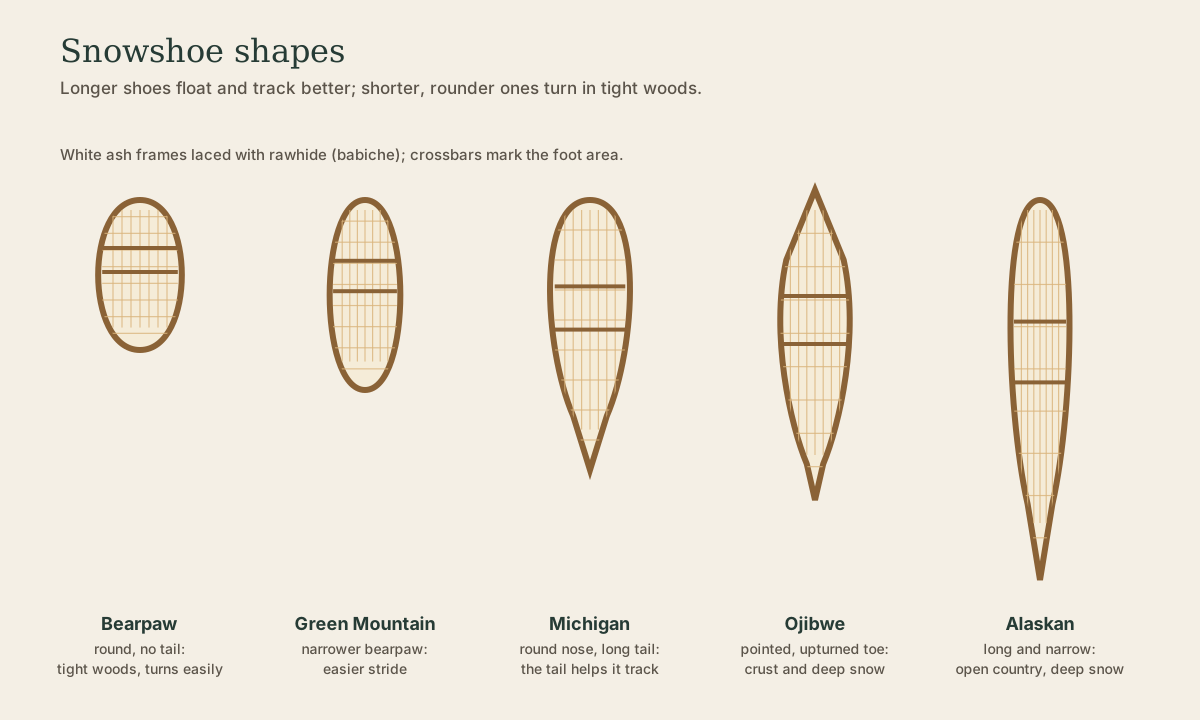
| Style | Shape | Best for |
|---|---|---|
| Bearpaw | round or oval, no tail | thick woods and hills; turns easily, slower 1 2 |
| Green Mountain bearpaw | a narrower, longer bearpaw | easier stride, the shoes don’t clash 1 |
| Michigan (beavertail) | round nose, long tail | the most common traditional style; the tail drags and helps it track straight; varied Great Lakes terrain 1 2 |
| Ojibwe | pointed at both ends, often from two pieces of wood | open country and drifts; the point sheds snow 2 |
| Alaskan | long and narrow, upturned toe | deep snow and sparse trees; floats well, hard to turn 1 2 |
Construction: frames of a strong, bendable wood, especially ash, steam-bent and joined with crossbars, laced with animal hide or sinew 1. The center section under the foot is laced heavier than the toe and heel. North House and other folk schools teach making them, and it’s a good winter shop project after the woodworking and green-wood courses.
Playback is optional. If the player is unavailable, open the video at its source.
Quick check
Long shoes like the Alaskan float and track well in open, deep snow but turn poorly.
Modern snowshoes
Aluminum frames and plastic or fabric decks with crampons under the binding have mostly replaced wood for recreation in the last few decades 1. They’re lighter and grip ice and hardpack better; wood shoes are quieter, float beautifully in powder, and can be repaired in the field.
Sizing: choose by your weight plus your pack. Manufacturers list a load range for each length. Pick the smallest shoe that floats your loaded weight for everyday packed trails, and a larger one for deep, light powder or heavy loads like a winter camping pack.
Bindings: snug but not tight over insulated boots; you should be able to pivot at the toe.
Quick check
Pick the smallest size that floats your loaded weight; go bigger for powder.
Walking
- Walk normally with a slightly wider stance and longer stride so you don’t step on your own shoes 1.
- Don’t bridge: never stand on a snowshoe supported only at the ends with a gap under the middle, the surest way to snap one 1. Walk around logs and stumps or side-step over them 1.
- Turn by walking around in a circle, or by flipping one foot and then the other 180 degrees 1.
- Climb by kicking the toes in; descend with knees bent and weight back; traverse by edging the uphill side.
- Get up from a fall by rolling onto your back, getting your shoes under you, rolling onto your knees, and pushing up with your hands 1. In deep snow, lay a pole flat to push against.
- Keep shoes cold before you start: warm snowshoes stick to snow and ice up 1.
- Poles help with balance, climbing, and getting up.
.jpg)
Playback is optional. If the player is unavailable, open the video at its source.
Quick check
Walk around or side-step over logs and stumps.
Cross-country skis
Where trails or lakes allow, skis cover ground far faster than snowshoes, and pulling a pulk on skis is the classic way to travel the Boundary Waters in winter.
- Classic skis move in a stride and glide, kicking down to grip the snow under the middle of the ski. Grip comes from fish-scale patterns, synthetic skins, or kick wax chosen for the snow temperature.
- Skate skis push off the edges on groomed trails; fast, but not for backcountry or pulling loads.
- Backcountry touring skis are wider and metal-edged, with sturdier boots, for ungroomed trails and lakes.
Wisconsin is rich in groomed trails, from county forests to the American Birkebeiner trail at Cable-Hayward, which is a good place to learn before a trip.
Try it
Rent or borrow snowshoes for an afternoon. Walk a packed trail, then go off trail into deep snow and compare. Practice falling and getting up, side-stepping a log, and a kick turn. If you get hooked, build a pair of Michigan-style snowshoes from ash.
What to take from this
Snowshoes spread your weight to stop post-holing. Bearpaws turn easily in thick woods, Michigans track on varied terrain, Ojibwe and Alaskan shoes float in open, deep snow; traditional frames are ash laced with hide. Size modern snowshoes by loaded weight and snow type. Walk wide, never bridge, side-step obstacles, and roll to your knees to get up. Classic or touring skis move faster where trails or lakes allow.
Lesson complete
Nice work.
Sources for this lesson
- 1Snowshoeing Lesson Plan. Upham Woods 4-H Environmental Education Center, University of Wisconsin-Madison Extension. 2014. verifiedSnowshoes spread weight to prevent post-holing; Michigan (beavertail), Alaskan, bearpaw, and Green Mountain styles; ash frames and hide webbing; don't bridge a snowshoe across a gap; side-step logs; get up from a fall by rolling to the knees; warm snowshoes stick and ice up.
- 2History of Snowshoes (lesson plan). U.S. Fish and Wildlife Service, White Horse Hill National Game Preserve. 2024. verifiedTraditional styles and their terrain; Alaskan with turned-up toe and long tail for open country; Ojibwe pointed at both ends, built of two pieces of wood; bearpaw wide and tailless for woods; Michigan shaped like a tennis racket for varied Great Lakes terrain.