Amphibians and Reptiles
Wisconsin's herps: 7 salamanders and 12 frogs and toads, 21 snakes (14 of them rare, 2 rattlesnakes), 4 lizards, and 11 turtles. How to tell the frogs apart by ear through the season, from wood frogs quacking in late March to green frogs twanging in August; how a wood frog survives the winter frozen solid; and why turtles that take 12 to 20 years to start breeding can't afford to lose a female on the road each June.
- 8 min
- 8 steps
- 4 questions
- Lesson 11 of 49
In this lesson
- The short version
- Listening through the season
- The frog that freezes
- Salamanders
- Snakes and lizards
- Turtles and roads
- In short
Picking up where you left off.
The short version
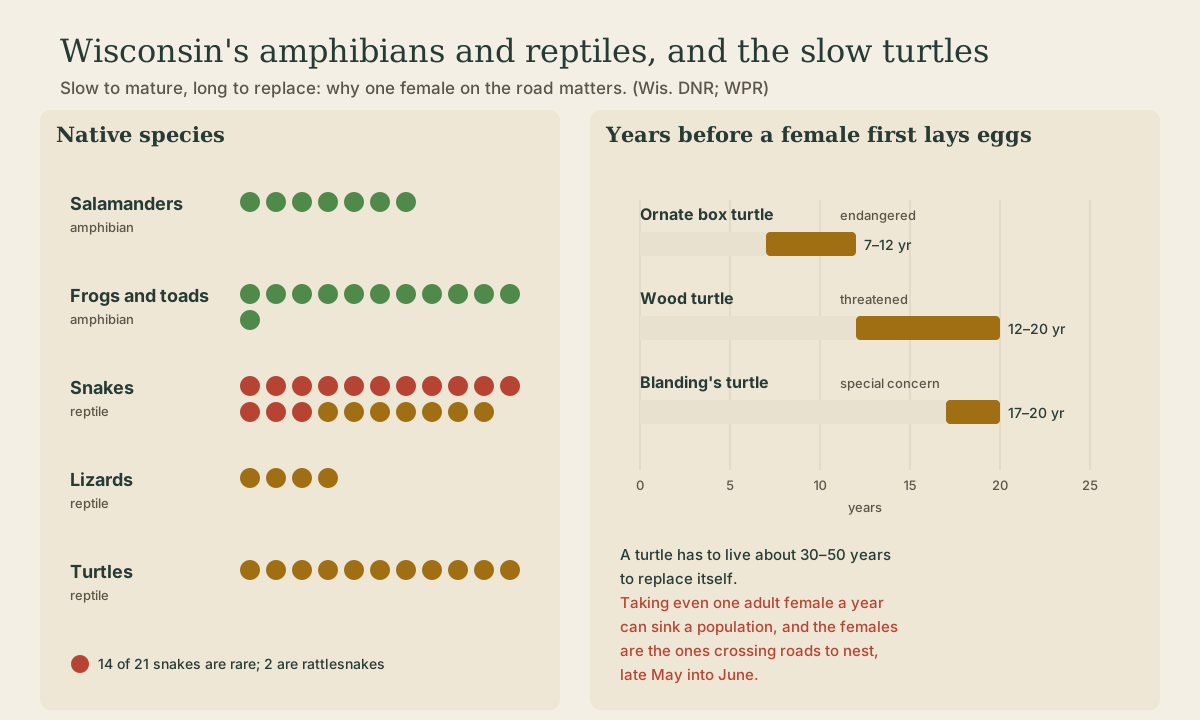
Wisconsin has 7 salamanders and 12 frogs and toads (the amphibians), plus 21 snakes, 4 lizards, and 11 turtles (the reptiles) 1. Together they’re called herps. The frogs are the easiest to find, because in spring and summer you can identify every one of them by ear. The reptiles are harder: 14 of the 21 snakes are rare, and the rarest turtles take 12 to 20 years to start breeding 1 2.
Listening through the season
All 12 frogs call to attract mates, each with its own sound, and each in its own part of the year 3. The DNR’s Frog and Toad Survey has been tracking them since 1981, when leopard frogs, cricket frogs, pickerel frogs, and bullfrogs were declining. Volunteers drive a route of 10 wetlands at night during three windows (April 8–30, May 20–June 5, and July 1–15), listen five minutes at each stop, and score each species they hear 3.
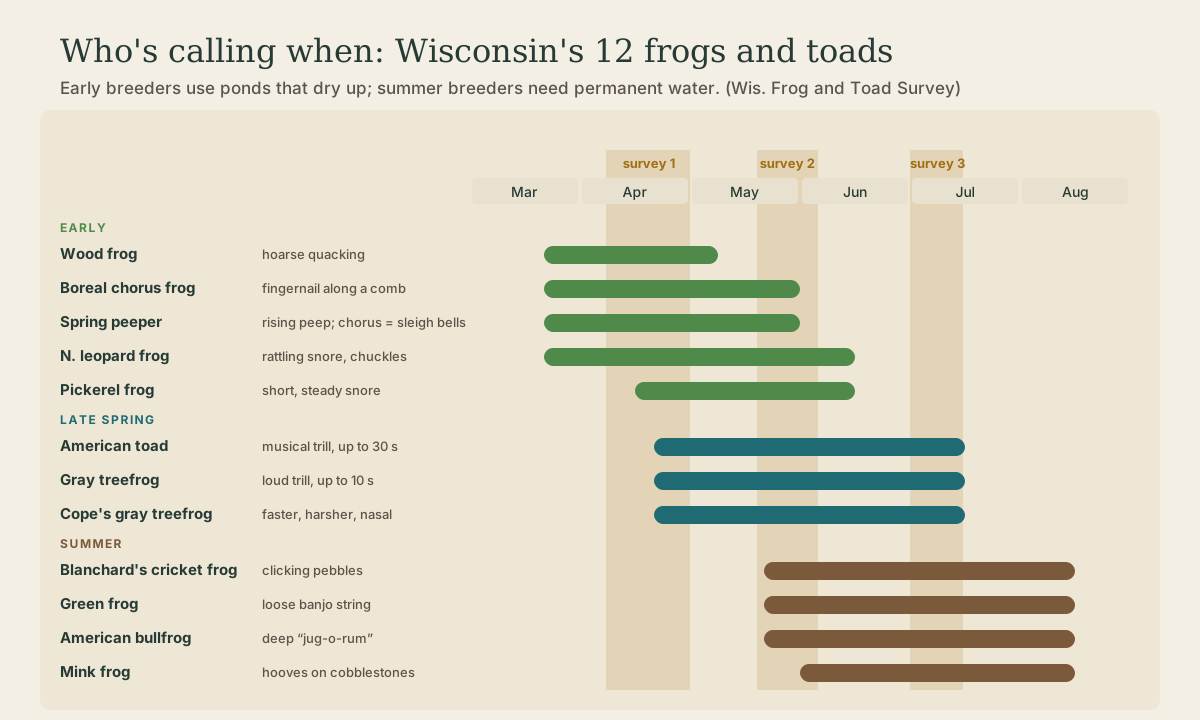
The calls, in the order they start 3:
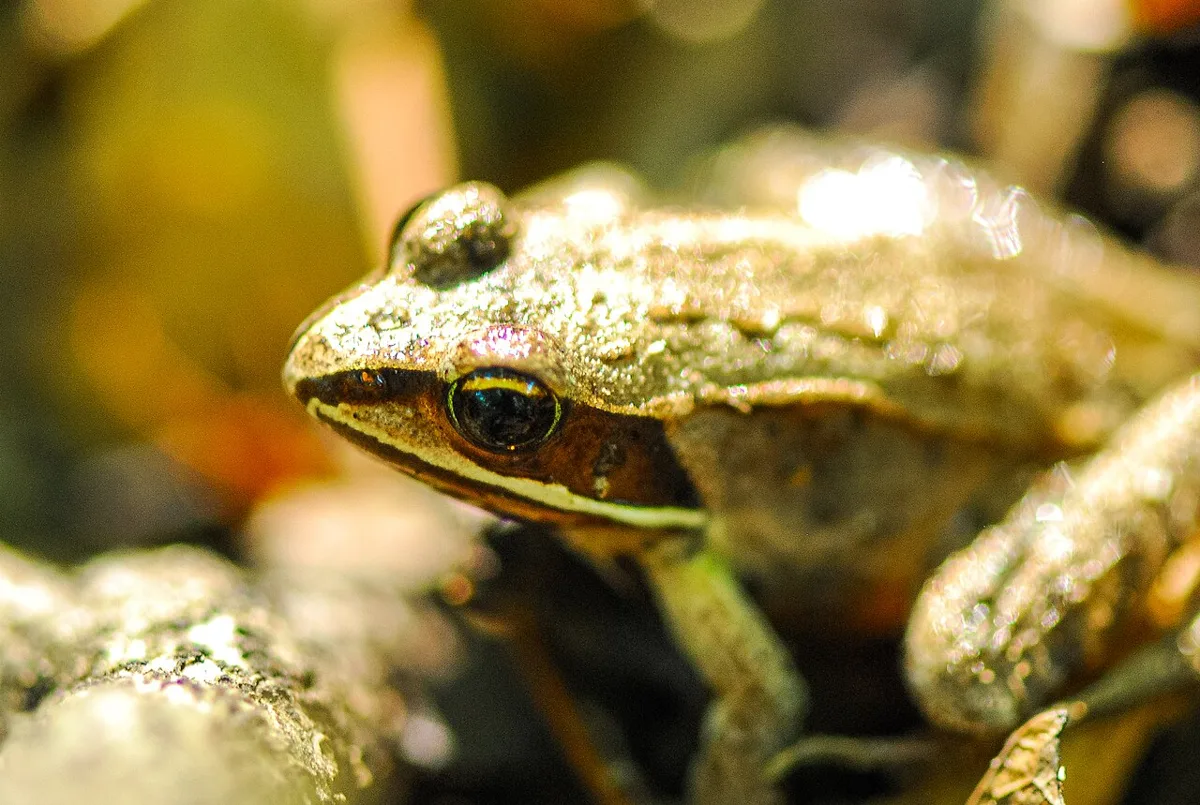
- Late March: the wood frog, a hoarse, quiet quacking like ducks feeding. The boreal chorus frog, a rising creeek like running a fingernail along a fine-toothed comb. The spring peeper, a high rising peep; a full chorus sounds like sleigh bells and is deafening close up. The northern leopard frog, a rattling snore with chuckles, like a thumb rubbed on a balloon.
- Mid-April: the pickerel frog, a short, steady, low snore.
- Late April: the American toad, a long musical trill up to 30 seconds. The gray treefrog, a loud, melodic trill up to 10 seconds. Cope’s gray treefrog, a faster, harsher, nasal waaaa. The two treefrogs look nearly identical; the call is how you tell them apart.
- Late May into summer: the green frog, one twang like a loose banjo string. The bullfrog, a deep foghorn jug-o-rum. Blanchard’s cricket frog, like pebbles or steel marbles clicking together, speeding up and then dropping off; it’s the one endangered frog in the state 1. The mink frog of the northern bogs, like horses’ hooves trotting on cobblestones, and it calls during the day too.
Playback is optional. If the player is unavailable, open the video at its source.
Quick check
A hoarse, quiet quacking in a temporary woods pond, early in spring, is a wood frog chorus. They call for only about two weeks.
Why the timing
Every Wisconsin frog lays its eggs in water, but not the same kind of water 1 3. The early breeders (wood frogs, peepers, chorus frogs) use woodland pools and flooded spots that dry up by midsummer. Those pools have no fish to eat the eggs, but the tadpoles have to turn into frogs before the water disappears. The summer breeders (green frogs, bullfrogs, mink frogs) use permanent ponds, lakes, and bogs, and their tadpoles may not change until their second year 3.
That’s also why the frogs make good indicator species: a wetland with a full chorus in all three windows has temporary pools, permanent water, and clean conditions in both 3.
Quick check
Every Wisconsin frog lays eggs in water. The question is whether the water lasts.
The frog that freezes
_-_Flickr_-_wackybadger.jpg)
Most frogs spend the winter on the bottom of a pond, where the water stays around 39 °F. The wood frog doesn’t. It burrows into the leaves on the forest floor and freezes solid: its heart stops and it stops breathing 4. As the temperature drops, its liver floods every cell with glucose. The sugar works as antifreeze, holding water inside the cells so they don’t dry out and die as ice fills the space around the organs 4.
In spring it thaws from the inside out, its heart starts again, and it heads for a pond. That’s why wood frogs are among the first frogs calling, sometimes while there’s still ice around the edges 4.
Playback is optional. If the player is unavailable, open the video at its source.
Quick check
Most frogs overwinter in pond bottoms near 39 °F. The wood frog lets ice fill its body and thaws in spring.
Salamanders
The seven salamanders are the herps you’re least likely to see. Most adults live on land under logs, leaves, and rocks and only go back to water to breed 1. Tiger, spotted, and blue-spotted salamanders all belong to the same mole salamander group and migrate to woodland pools on rainy nights in early spring. The red-backed salamander lives entirely in the woods. The mudpuppy is the exception: it stays in lakes and rivers its whole life and keeps its feathery red gills. The four-toed salamander of bogs and mossy seeps is the only one listed as special concern 1.
Snakes and lizards
Of the 21 snakes, 14 are listed as endangered, threatened, or special concern, mostly because of habitat loss and people killing them 1. The ones you’ll actually see in a yard or garden are the common gartersnake, DeKay’s brownsnake, and the red-bellied snake. All three are harmless.
Only two are venomous: the timber rattlesnake of the bluffs along the Mississippi and the Driftless, and the eastern massasauga of a few wetlands, which is endangered and extremely rare 1. Several harmless snakes, like the foxsnake and the gophersnake, vibrate their tails when cornered. In dry leaves or gravel that sounds almost exactly like a rattle, which is why the DNR publishes a guide to rattlesnake look-alikes 1.
The four lizards all need sandy soil to burrow and hibernate in, so they’re found only in patches, mostly on the sand country of the central plain and the river terraces 1. They’re active only from late April or May to early September, the shortest season of any herp. The five-lined skink is the common one; its young have bright blue tails. A lizard can drop its tail when grabbed and grow a new one 1.
Turtles and roads
Wisconsin has 11 turtles: ten that live in or near water, from painted and snapping turtles to map turtles and softshells, and one strictly land turtle, the endangered ornate box turtle of the sand prairies 1. All of them lay their eggs in nests on dry upland ground, often well away from the water they live in 1.
That’s where the trouble starts. From late May into June, females leave the water to find sunny, well-drained ground to dig a nest, and many of those routes cross roads 2. Being hit by cars is one of the main causes of turtle deaths in the state. The rare ones mature extremely slowly 2:
- Ornate box turtle: 7–12 years before it breeds.
- Wood turtle: 12–20 years.
- Blanding’s turtle: 17–20 years, the slowest of any Wisconsin turtle.
A turtle needs to live roughly 30 to 50 years to replace itself, and a population needs only a few males but every female it has. Losing even one adult female a year can drag a population down 2. Poaching for the illegal pet trade adds to the losses.
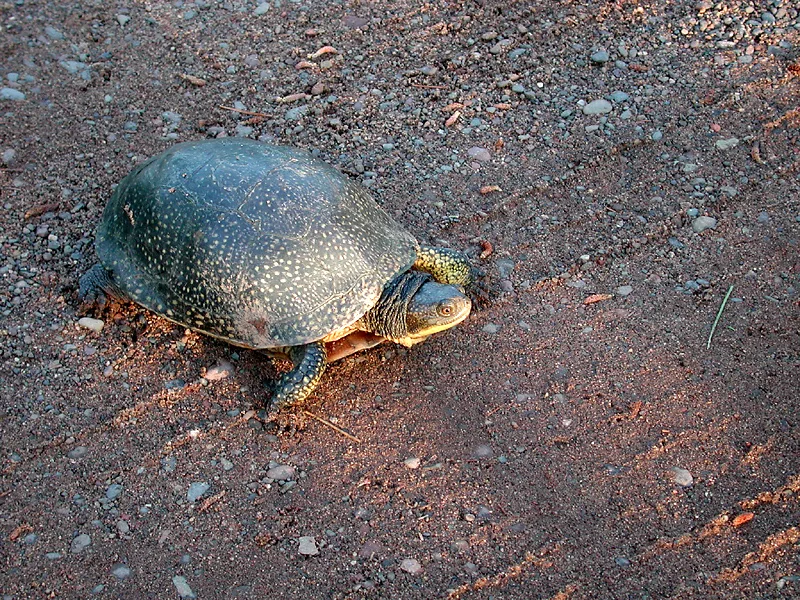

If you find a turtle on the road and it’s safe to stop, pull over with your hazards on and move it across in the direction it was facing. Put it back where it came from and it will just try to cross again 2. Be careful with snapping turtles. The DNR’s Wisconsin Turtle Conservation Program collects reports and photos of turtle sightings and crossings to find the worst stretches of road; it has more than 7,500 reports so far 2.
Quick check
It’s most likely a female heading to an upland nest site. Put her down on the wrong side and she’ll just cross again.
In short
You can identify all 12 frogs by ear across the season, from wood frogs quacking in late March to green frogs twanging in August. The early breeders use pools that dry up; the summer breeders need permanent water. Wood frogs survive winter frozen solid. Most snakes are rare and only two are venomous, both of them rare as well. The rarest turtles take a decade or two to start breeding, so every nesting female on a June road matters.
Lesson complete
Nice work.
Sources for this lesson
- 1Reptiles and amphibians. Wisconsin Department of Natural Resources. verifiedSpecies lists and status: 7 salamanders (four-toed special concern), 12 frogs including the American toad (Blanchard's cricket frog endangered; mink and pickerel frogs special concern); all frogs lay eggs in water; most adult salamanders live on land and return to water only to breed. 21 snakes, 14 rare; two rattlesnakes (timber rattlesnake, eastern massasauga), many harmless mimics that vibrate their tails. 4 lizards, all needing sandy soil, active only from late April or May to early September, can drop and regrow tails. 11 turtles, ten aquatic or semi-aquatic, one terrestrial (ornate box); all nest in uplands.
- 2Wisconsin DNR warns of turtle road crossings during nesting season. Wisconsin Public Radio. verifiedRoad mortality is a leading cause of turtle deaths; 11 native species; focus on ornate box, wood, and Blanding's turtles. Maturity: wood turtle 12-20 years, Blanding's 17-20 (slowest), ornate box 7-12. A turtle must live roughly 30-50 years to replace itself; removing even one female a year hurts a population. Females nest from late May into June.
- 3Wisconsin Frog and Toad Survey: brochure and natural history. Wisconsin DNR and UW-Stevens Point. 2025. verifiedSurvey begun 1981 over declines (leopard, cricket, pickerel frogs, bullfrogs), statewide 1984; three listening windows, April 8-30, May 20-June 5, July 1-15, 5 minutes at 10 sites with a call index; phenology surveys since 2014, mink frog surveys since 2018 (peak June 6-July 15, also calls by day). Natural history PDF (WFTS_nathistory.pdf) gives breeding seasons and call descriptions for all 12 species.
- 4Is it true that some frogs can survive being frozen?. Lake Champlain Basin Program. 2024. verifiedMost frogs overwinter at the bottom of ponds near 39 F; the wood frog burrows under forest leaves and freezes solid, heart and breathing stopped; the liver floods cells with glucose as antifreeze, keeping water in cells as ice fills the body cavity; thaws from the inside out in spring and is one of the first frogs to breed.