Birds Through the Year
The Wisconsin bird year: migration beginning in late January, sandhill cranes back from mid-February, robins and the first ducks on open water in March, the mid-May peak of warblers, tanagers, orioles, and hummingbirds (many fresh from a 600-mile nonstop flight across the Gulf of Mexico), 226 species confirmed nesting in the second breeding bird atlas, fall migration in reverse, and winter visitors from the north. Plus comeback stories (cranes, pelicans, bluebirds) and how to start watching.
- 4 min
- 7 steps
- 3 questions
- Lesson 10 of 49
In this lesson
- The calendar
- Spring arrivals
- The Gulf crossing
- Summer nesters
- Comebacks
- Fall and winter
- What to take from this
Picking up where you left off.
The calendar
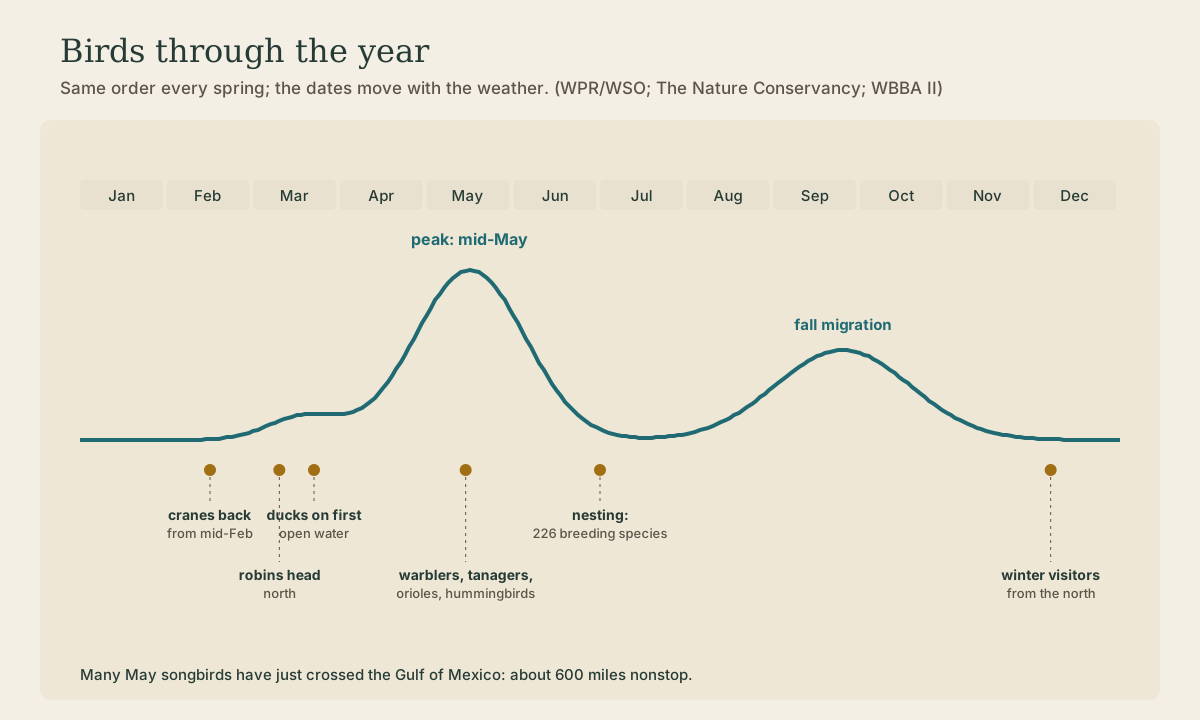
Wisconsin’s bird year runs on a predictable order. Spring migration begins at the end of January and builds to a peak around mid-May 1; nesting fills June and July; fall migration runs from August into November; winter brings a smaller set of hardy visitors from the north. The order stays the same each year, while the exact dates slide with each spring’s weather.
Spring arrivals
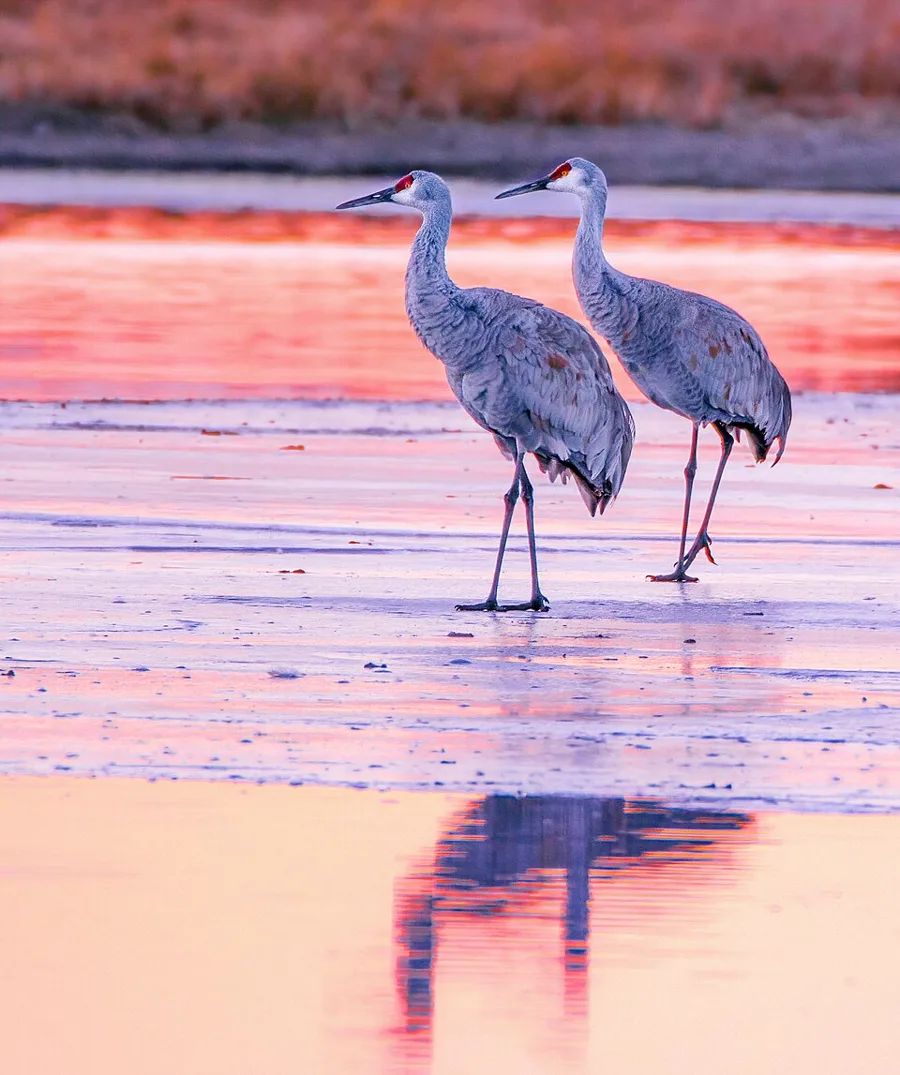
- Sandhill cranes start showing up in mid-February, and their rattling calls over a still-frozen marsh are the first real sign of spring 1.
- Robins head north in early March; some spend the whole winter in southern Wisconsin eating berries 1.
- Ducks and geese are among the earliest migrants 2, piling onto the first open water as the ice goes out.
- May: the peak, when the woods fill with warblers, vireos, orioles, tanagers, flycatchers, and hummingbirds, sometimes dozens of species on a single morning walk.
.jpg)
Quick check
It starts in late January and builds through spring.
The Gulf crossing
Many of the birds that arrive in May have just done something remarkable. Ruby-throated hummingbirds, scarlet tanagers, and indigo buntings cross the Gulf of Mexico in spring, roughly 600 miles nonstop 2. A hummingbird weighing about as much as a penny flies through the night over open water. They land in Texas or Louisiana hungry and depleted, then work north through stopover woods and wetlands to Wisconsin, which is why protecting the habitat in between matters as much as protecting nesting grounds.
Quick check
That’s why good stopover habitat matters.
Summer nesters
From 2015 to 2019, more than 2,000 volunteers surveyed thousands of 3-by-3-mile blocks for the Wisconsin Breeding Bird Atlas II and confirmed 226 species nesting in the state, 13 of them new since the first atlas in 2000, including a Glossy Ibis at Horicon Marsh 3. Breeding birds range from common loons on northern lakes to grassland birds like bobolinks in hayfields, so the date you mow a hayfield matters to them.
Quick check
More than 2,000 volunteers surveyed from 2015 to 2019.
Comebacks
Some of Wisconsin’s most visible birds were rare within living memory:
- Sandhill cranes were hard to find until the last 30 to 40 years; now they’re statewide, a true recovery story 1.
- American white pelicans, one of North America’s largest birds, have come back strongly and pass through in flocks of hundreds 1.
- Bluebirds became far more common over the last 20 years, largely because people put up nest boxes for them 1.
Playback is optional. If the player is unavailable, open the video at its source.
Fall and winter
Fall migration is slower and more spread out. Shorebirds start moving in July and August, warblers drift south in September in duller fall plumage, and waterfowl and cranes stage in big flocks before freeze-up. In winter, the birds at a Wisconsin feeder are the year-round residents (chickadees, nuthatches, cardinals, woodpeckers, blue jays) plus visitors from farther north, like juncos and, in some years, redpolls and other finches.
What to take from this
Migration starts in late January, cranes return from mid-February, robins and ducks come in March, and the peak is mid-May, when many songbirds have just crossed the Gulf of Mexico nonstop. The second breeding bird atlas confirmed 226 nesting species. Cranes, pelicans, and bluebirds are comeback stories. Learn the order of arrivals and you’ll know what to look for in any week of the year.
Lesson complete
Nice work.
Sources for this lesson
- 1A guide to Wisconsin springtime bird migration. Wisconsin Public Radio. verifiedSpring migration generally begins at the end of January and accelerates to a peak around mid-May (Tom Schultz, former WSO president). Sandhill cranes return from mid-February and have recovered over the past 30-40 years to be found statewide; robins head north in early March, some wintering in the south on berries; bluebirds increased with nest boxes; American white pelicans have come back strongly, in flocks of hundreds during migration.
- 2Must-See Spring Migratory Birds. The Nature Conservancy in Wisconsin. 2021. verifiedMany of Wisconsin's summer birds, including ruby-throated hummingbird, scarlet tanager, and indigo bunting, make a roughly 600-mile nonstop crossing of the Gulf of Mexico in spring; blue-winged teal and spotted sandpipers migrate over or around the Gulf; ducks and geese are among the earliest spring migrants.
- 3Five years of atlas data yields 226 species. Wisconsin Society for Ornithology. verifiedThe Wisconsin Breeding Bird Atlas II (2015-2019), coordinated by WSO, the DNR, and partners, confirmed 226 species breeding in Wisconsin, 13 of them new since the first atlas completed in 2000 (including a Glossy Ibis at Horicon Marsh); more than 2,000 volunteers submitted more than 2 million records from 3-by-3-mile survey blocks.