Insects and Pollinators
Wisconsin's roughly 400 bee species, most of which live alone and underground; the 20 bumble bees, including the federally endangered rusty patched; the monarch's milkweed diet and 2,000-mile flight to Mexico, and its stalled listing (now due by June 2030); the Karner blue, which eats only wild lupine and has its world stronghold in Wisconsin's sand country; the emerald ash borer, in all 72 counties since 2024; and what a yard or woodlot can do for them.
- 7 min
- 8 steps
- 4 questions
- Lesson 12 of 49
In this lesson
- Bees that live alone
- Bumble bees
- The monarch
- The Karner blue
- The emerald ash borer
- What helps
- In short
Picking up where you left off.
Most of Wisconsin’s animal life, by count of species, is insects, and the ones people notice most are the pollinators. This lesson covers the bees, which outnumber the birds; three insects whose stories say a lot about Wisconsin’s landscapes; and the practical things that help.
Bees that live alone
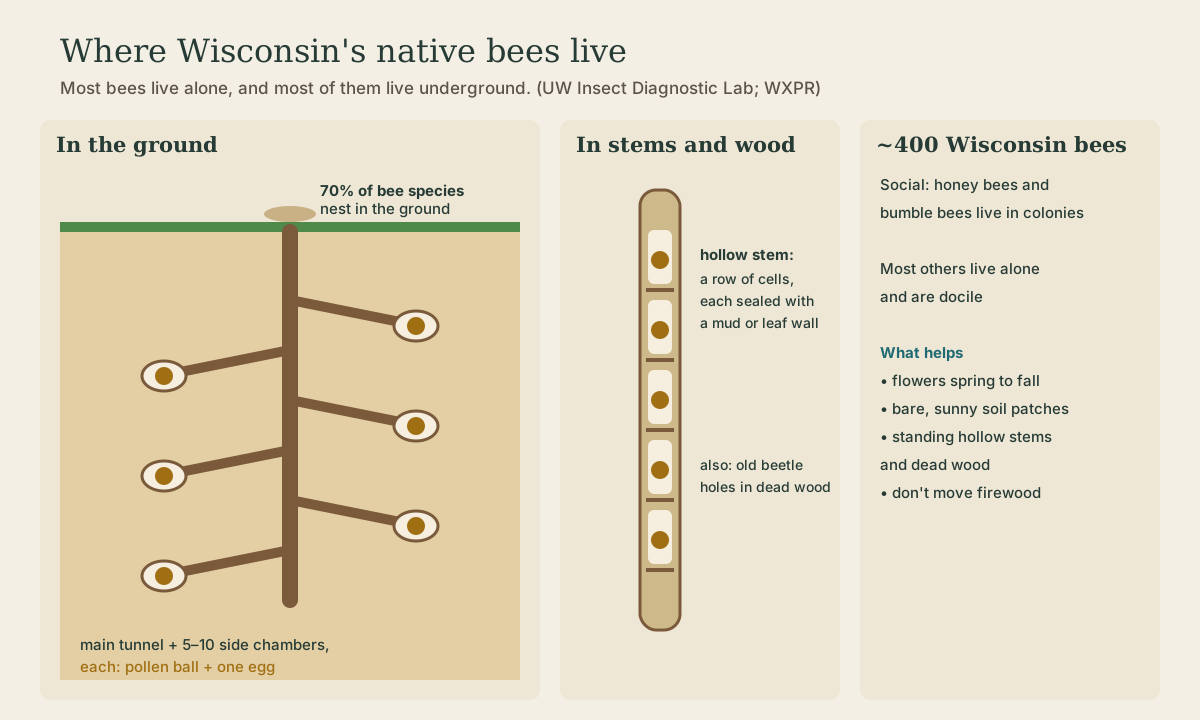
There are about 400 bee species known from Wisconsin 1. Two kinds live in colonies: honey bees, which were brought from Europe and are kept like livestock, and the native bumble bees. Nearly all the rest are solitary: each female builds and stocks her own nest, with no colony to defend, which is why they’re docile 1. Some native bees pollinate particular crops and wildflowers better than honey bees do 1.
Most of them nest underground. About 70% of the world’s bee species dig their nests in soil 2. In early spring, look on a sunny, south-facing slope of sandy soil with thin grass: mining bees and cellophane bees can nest there by the thousands, each hole a little bigger than an ant hill’s with a fuzzy face sometimes peeking out 2. Each female digs a main tunnel and 5 to 10 side chambers, stocks each with pollen and nectar, and lays one egg in it. The males emerge about a week before the females and patrol the nesting area; males can’t sting, and the females rarely do 2.
The rest nest in hollow chambers: old beetle tunnels in dead wood or the pithy, hollow stems of last year’s plants 1.
Quick check
About 70% of bee species nest in the ground. Honey bees and bumble bees are the social exceptions.
Bumble bees
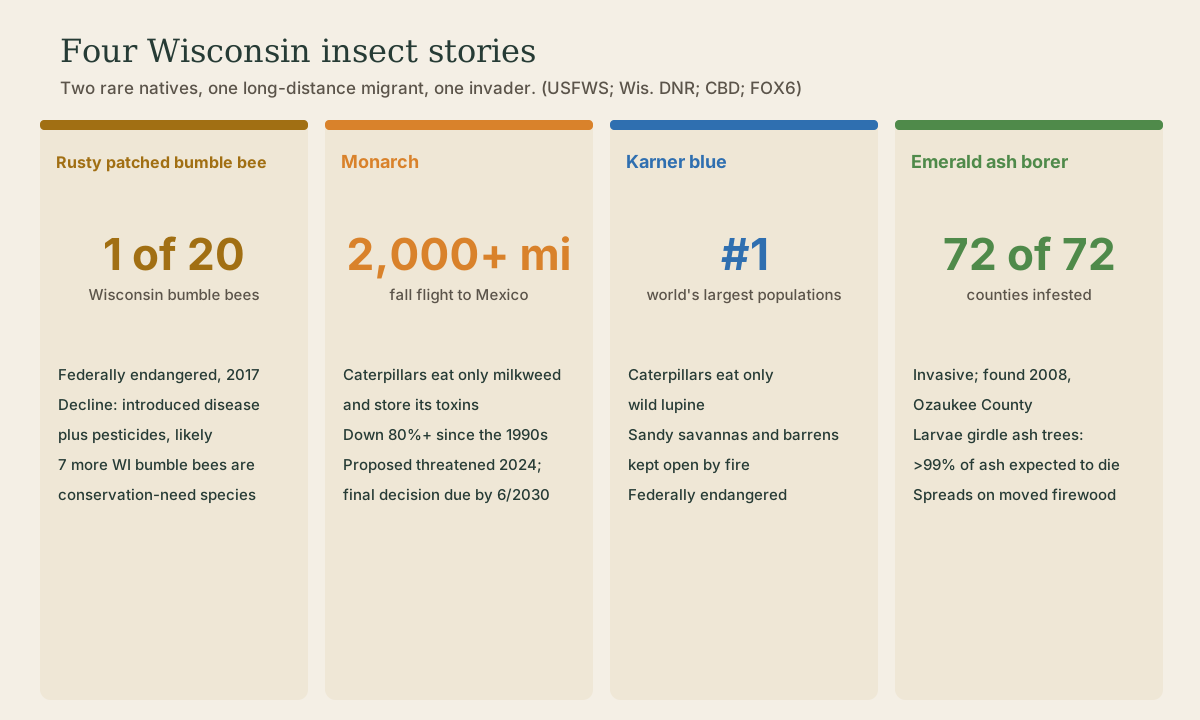
Twenty bumble bee species have been found in Wisconsin, now or historically. One is federally endangered, seven more are state species of greatest conservation need, and three more are flagged because too little is known about them 3.
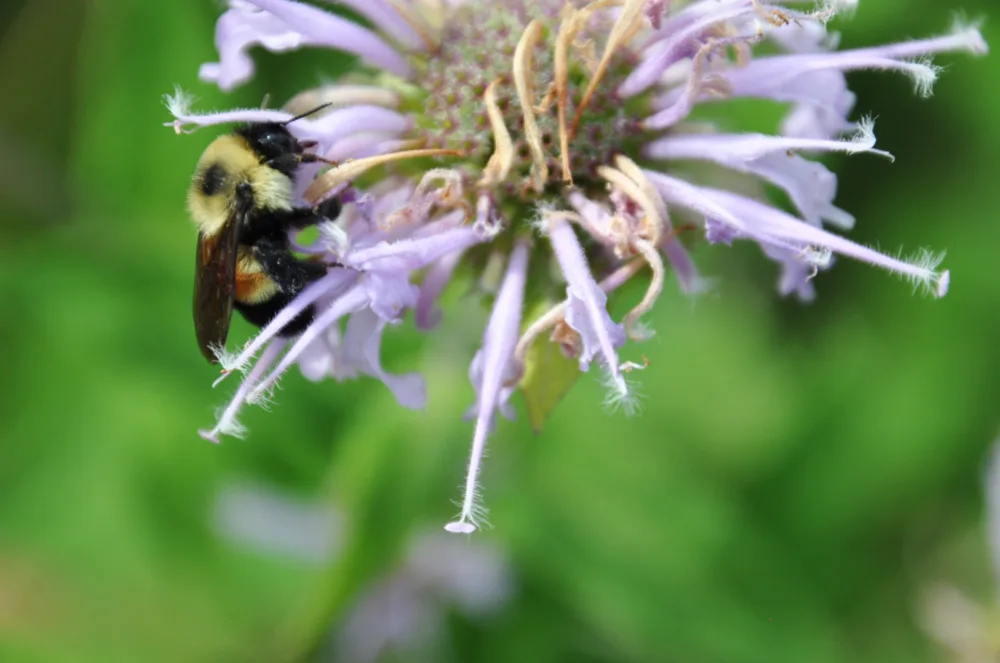
The endangered one is the rusty patched bumble bee. It was once common across the eastern U.S. and upper Midwest, then crashed so steeply that it was listed in 2017 4. The cause isn’t certain, but the evidence points to an introduced disease combined with pesticide exposure, on top of habitat loss 4. Workers have a small rusty-brown patch in the middle of the abdomen.

Because so much is still unknown, including where the bees spend the winter, the DNR runs the Wisconsin Bumble Bee Brigade: volunteers catch, photograph, and release bumble bees on regular surveys to map the species and track their trends 3.
Playback is optional. If the player is unavailable, open the video at its source.
The monarch
Monarch caterpillars eat only milkweed. The plant’s toxins build up in their bodies and make both caterpillars and adults taste bad to predators, which is what the bold orange and black advertise 5. Adults need nectar from a long run of flowers from spring through fall.
The eastern population, the one that breeds in Wisconsin, makes the famous migration: each fall they fly more than 2,000 miles to overwintering forests in the mountains of Mexico 5.
Monarchs have declined more than 80% since the 1990s 6. The Fish and Wildlife Service proposed listing them as threatened in December 2024, but the decision was delayed. Under a settlement reached on September 30, 2026, the final decision is now due by June 6, 2030 6. Milkweed in a yard, field edge, or road ditch matters in the meantime.
Quick check
Milkweed is the only food for monarch caterpillars, and its toxins make them taste bad.
The Karner blue
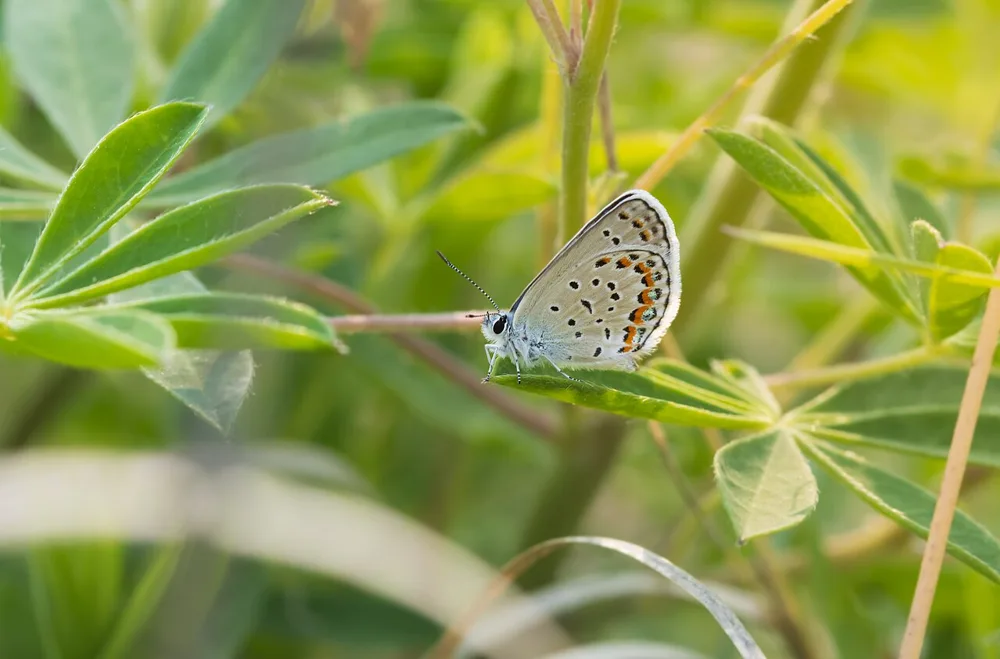
The Karner blue is a small butterfly, an inch across, and Wisconsin has the largest populations in the world 7. Its caterpillars eat only wild lupine 7, a blue-flowered plant of sandy oak savannas and pine barrens, so the butterfly lives where lupine lives, mostly in the sandy country of central and northwestern Wisconsin.
Lupine needs open, sunny ground. Those savannas and barrens were kept open by fire. When fire is kept out, shrubs and trees move in, shade out the lupine, and the butterflies are left in small, isolated patches that can blink out 7. That’s why Karner blue habitat is managed with prescribed burns and brush cutting, and why the DNR runs a statewide Habitat Conservation Plan partnership with landowners and land managers to keep lupine growing in sunny openings 7.
.jpg)
Quick check
When fire is kept out, brush shades out the lupine and the butterfly disappears with it.
The emerald ash borer
Not every insect story is about losing a native. The emerald ash borer is a metallic green beetle from Asia. It was first found in Wisconsin in Ozaukee County in 2008, and by 2024 it had been confirmed in all 72 counties 8. Its larvae carve winding S-shaped tunnels under ash bark, cutting off the tree’s water and food. The canopy thins from the top down, woodpeckers flake off the outer bark hunting larvae, and the tree dies. More than 99% of Wisconsin’s white, black, and green ash are expected to die 8.
It spreads on its own only slowly; it gets around mainly on firewood 8. That’s the simplest rule for all forest pests: buy or cut firewood near where you’ll burn it.
Quick check
The beetle usually reaches new areas by hitching a ride on firewood.
What helps
Every one of these stories comes back to a few things you can do on any yard, field edge, or woodlot:
- Flowers from April through October, so something is blooming whenever bees are flying. Natives like wild bergamot, asters, goldenrods, and milkweed carry a lot.
- Bare, sunny ground. Leave a patch of sandy soil unmulched and unmowed-down for ground nesters.
- Stems and dead wood. Leave last year’s hollow stems standing until late spring and keep a snag or log pile.
- Lupine and fire where the soil is sandy, and milkweed wherever it’ll grow.
- Local firewood, always.
In short
Wisconsin’s 400-odd bees mostly live alone and underground. The rusty patched bumble bee is endangered and the Bumble Bee Brigade is mapping the rest. Monarchs need milkweed and fly 2,000 miles to Mexico, with a federal decision now due by 2030. The Karner blue needs lupine kept open by fire, and Wisconsin holds its biggest populations. And the emerald ash borer, in every county now, is a reminder of why firewood shouldn’t travel.
Lesson complete
Nice work.
Sources for this lesson
- 1Busy as a (Native) Bee and Know Your Bee identification guide. UW-Madison Insect Diagnostic Lab (PJ Liesch). 2015. verifiedAbout 400 bee species are known from Wisconsin (Liesch, eCALS); honey bees and bumble bees are social, while most wild bees nest alone and are docile; native bees nest in the ground (females dig tunnels) or in hollow chambers such as tunnels in wood or hollow stems, stocking nests with pollen and nectar; some native bees pollinate certain plants more effectively than honey bees; help by providing flowers and nesting habitat.
- 2Ground nesting bees in Wisconsin. WXPR (Field Notes, Gretchen Gerrish). 2020. verifiedOf 20,000 bee species, about 70% nest in the ground. Mining and cellophane bees nest in aggregations of thousands in dry sandy soil with sparse grass on sunny south-facing slopes in early spring; each female digs a main tunnel with 5-10 side chambers for eggs; solitary, non-aggressive; males cannot sting and emerge about a week before females.
- 3Wisconsin Bumble Bee Brigade: About Us. Wisconsin DNR (Wisconsin Aquatic and Terrestrial Resources Inventory). verifiedCitizen-based monitoring of native bumble bees coordinated by the DNR. Of the 20 bumble bee species found now or historically in Wisconsin, one is federally endangered, seven are state species of greatest conservation need, and three are species with information needs; much is unknown about distribution, overwintering habitat, and population status.
- 4Rusty patched bumble bee (Bombus affinis). U.S. Fish and Wildlife Service. verifiedOne of about 21 bumble bee species in the eastern U.S.; listed as federally endangered in 2017 after a widespread, steep decline. Historically broadly distributed across the eastern U.S. and upper Midwest. Cause unknown but evidence suggests an introduced pathogen interacting with pesticide exposure (insecticides and fungicides); remaining populations face pathogens, pesticides, habitat loss, non-native and managed bees, and climate change.
- 5Monarch butterfly (Danaus plexippus). U.S. Fish and Wildlife Service. verifiedMonarchs need milkweed to lay eggs on and as caterpillar food; by eating milkweed they acquire cardenolide toxins that defend against predators; adults need a variety of nectar flowers through breeding, migration, and overwintering. The eastern migratory population, the largest, covers over 70% of the North American range and may fly more than 2,000 miles in fall to overwintering sites in Mexico.
- 6Endangered Species Act Protection for Monarch Butterfly Delayed Until 2030. Center for Biological Diversity. 2026. verifiedSeptember 30, 2026: USFWS agreed in a settlement to issue a final listing determination for monarchs by June 6, 2030. Monarchs were proposed as threatened in December 2024 and were due to be protected in December 2025, but the decision was delayed as a 'long-term action.' Monarchs have declined more than 80% since the 1990s.
- 7Karner blue butterfly (Lycaeides melissa samuelis). U.S. Fish and Wildlife Service. verifiedWild lupine (Lupinus perennis) is the only plant Karner blue caterpillars can eat. Decline driven mainly by habitat loss from fire suppression, farming, and development; without fire and grazing, shrubs and trees shade out lupine in open savannas and barrens, leaving small isolated populations; also sensitive to climate change. Recovery plan 2003. Wisconsin DNR: Wisconsin supports the world's largest populations, with a statewide Habitat Conservation Plan partnership.
- 8Wisconsin DNR: Emerald ash borer confirmed in all of state's counties. FOX6 News Milwaukee. 2024. verifiedDetection in Burnett County confirmed all 72 Wisconsin counties; first confirmed in Ozaukee County in July 2008; usually transported on firewood; larvae carve S-shaped galleries under bark, cutting off water and nutrients, causing dieback and death; expected to kill more than 99% of Wisconsin's white, black, and green ash; woodpecker 'flecking' is a sign.