Mammals of Wisconsin
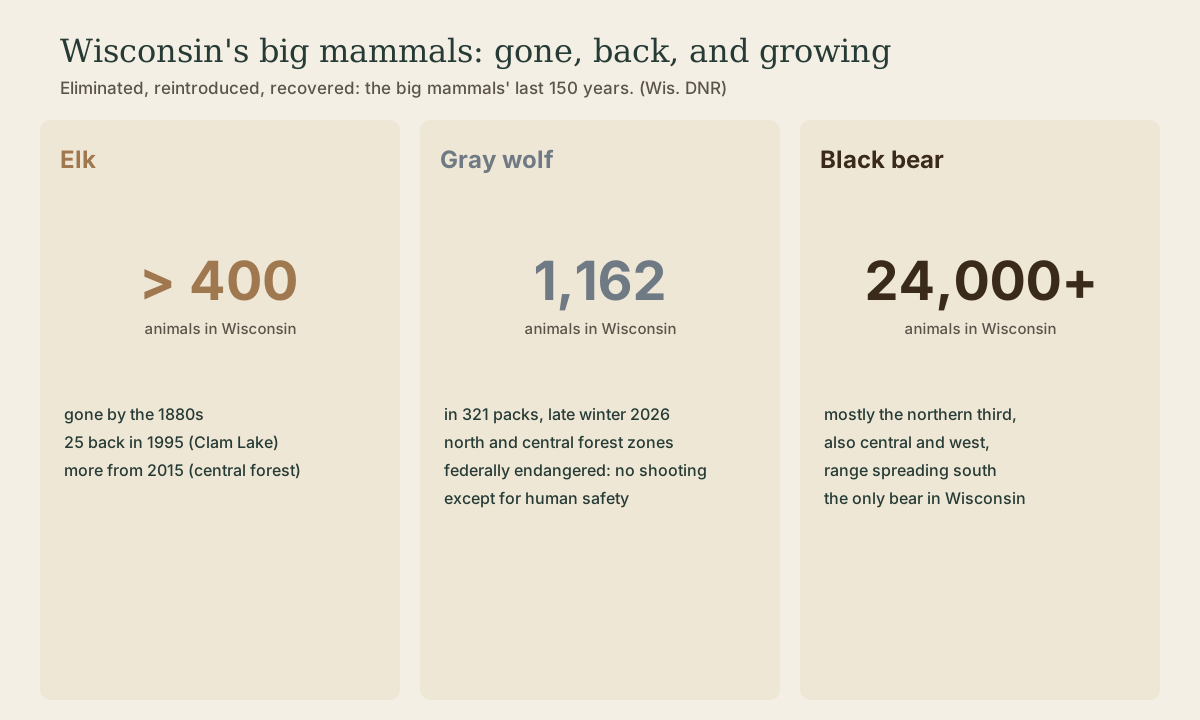
Wisconsin's big mammals over 150 years: elk eliminated in the 1880s and reintroduced from 25 animals in 1995 to more than 400; gray wolves back to about 1,162 in 321 packs in 2026, at what the DNR calls carrying capacity, and still federally endangered; black bears at more than 24,000 and spreading south; white-tailed deer everywhere and reshaping the forest understory. Plus the deer family, where to look, and what each animal's return or abundance means for the land.
- 5 min
- 7 steps
- 3 questions
- Lesson 9 of 49
In this lesson
- Lost and found
- Elk
- Gray wolves
- Black bears
- White-tailed deer
- The smaller cast
- What to take from this
Picking up where you left off.
Lost and found
In the early 1800s Wisconsin still had elk, wolves, cougars, and even a few bison. Unregulated hunting, logging, and the plow took them within decades. The last 150 years of the state’s mammal story is about what came back, what was brought back, and what grew beyond its old numbers.
Elk
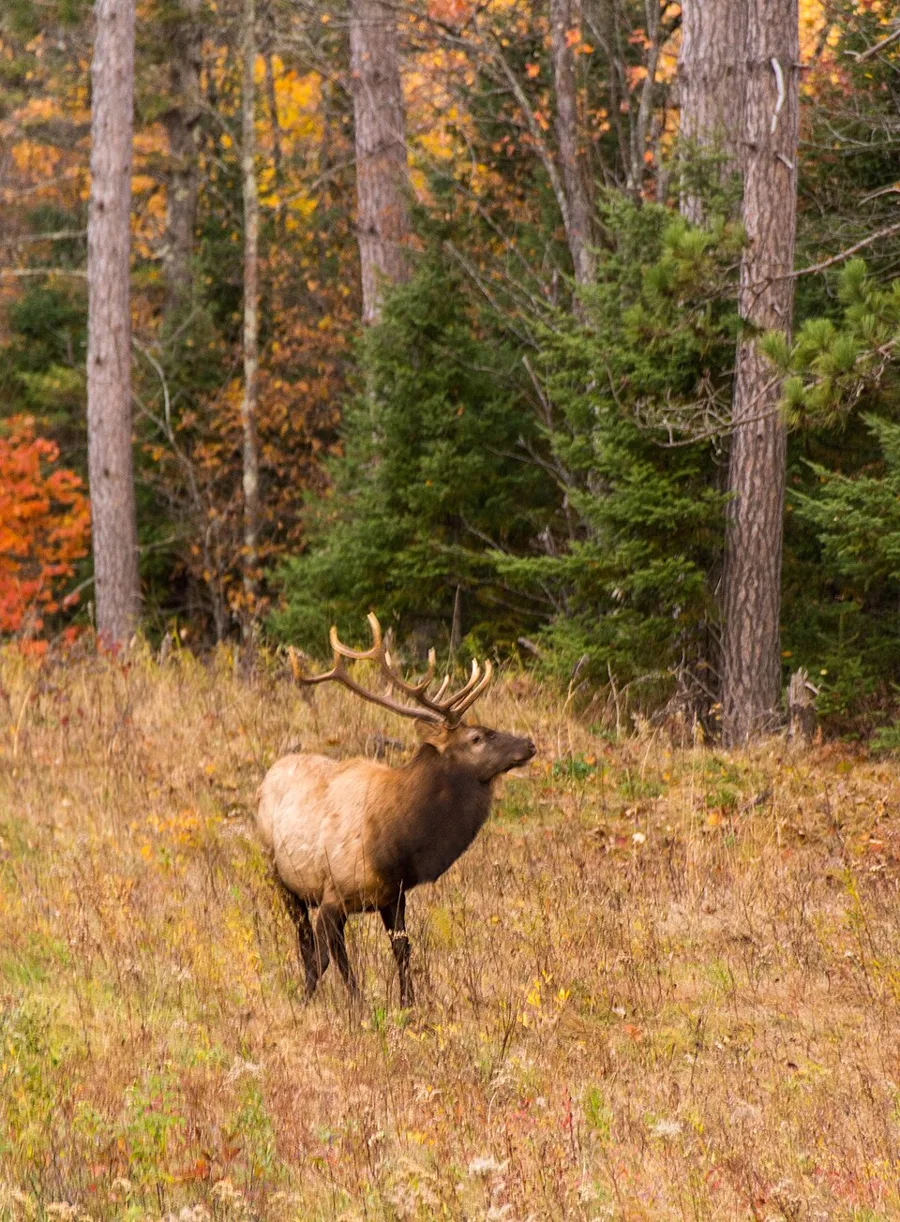
Elk were eliminated in the 1880s by unregulated hunting and habitat loss 1. In 1995, 25 elk were reintroduced near Clam Lake in the north, and a second reintroduction beginning in 2015 started a herd in the central forest near Black River Falls. Together they’ve grown to more than 400 1. The native Eastern subspecies went extinct in the late 1800s, so the reintroduced animals are Rocky Mountain elk 1.
Elk are about three times the size of a deer; a mature bull stands 5 feet at the shoulder and weighs 600 to 900 pounds 1. In September, bulls bugle during the rut 1, and the Clam Lake area’s forest openings are the place to hear them. Elk are one of three deer-family members in Wisconsin, with white-tailed deer and the occasional moose that wanders in from the north 1.
.jpg)
Quick check
They’d been eliminated by unregulated hunting and habitat loss in the 1880s.
Gray wolves
Wolves were wiped out of Wisconsin by the 1950s and recolonized on their own from Minnesota starting in the 1970s. The DNR estimated about 1,162 wolves in 321 packs in late winter 2026, mostly in the far north and northwest and in the central forest 2. That was a 5 percent dip from the year before and close to the five-year average, which the DNR reads as a population that has reached carrying capacity, the number the habitat can support 2.
Legally, wolves are federally listed as endangered in Wisconsin. Hunting and lethal control of problem wolves are prohibited, and it’s unlawful to shoot a wolf except when there’s an immediate threat to human safety; suspected attacks on livestock or dogs go to USDA Wildlife Services 3. Federal status has changed several times, so check the DNR’s current rules.
Quick check
The DNR says the population appears to have reached carrying capacity.
Quick check
Status can change with federal listing decisions; check the DNR’s current rules.
Black bears
Wisconsin’s black bears number more than 24,000 4. Their main range is the northern third of the state, but there are healthy populations in central and western Wisconsin, and the range keeps spreading south 4. They’re the only bear here; adult males usually weigh 125 to 550 pounds and females 90 to 375 4. For a homestead in bear country, that means bird feeders taken down in spring, garbage and livestock feed locked up, electric fence around beehives and chicken runs.
White-tailed deer
Deer are the one big mammal that’s more common now than when settlers arrived: logging opened the forest, farms fed them, and wolves and cougars were gone. Their numbers reshape the woods. In UW–Madison research on northern forest sites, plants like trillium, orchids, and lobelias declined outside deer fences while grasses, sedges, and ferns increased, with at least 40 percent of 60 years of understory change traced to deer 5. (The Spring Wildflowers lesson has the details.) Deer hunting is, among other things, forest management.
Playback is optional. If the player is unavailable, open the video at its source.
The smaller cast
Most of Wisconsin’s mammals are small and easy to miss: beavers rebuilding wetlands one dam at a time, river otters, fishers and martens in the north woods, bobcats, coyotes and red and gray foxes, porcupines, flying squirrels that most people never see, and bats, several of which have been hit hard by the fungal disease white-nose syndrome. The Tracks and Sign lessons later in this course are how you find them.
What to take from this
Elk were gone by the 1880s and came back from 25 animals in 1995 to more than 400. Wolves recolonized on their own and number about 1,162 in 321 packs (2026), at carrying capacity, and are federally endangered: no shooting except for human safety. Black bears are over 24,000 and spreading south. Deer are more abundant than ever and reshape the forest understory.
Lesson complete
Nice work.
Sources for this lesson
- 1Elk in Wisconsin. Wisconsin Department of Natural Resources. verifiedElk were eliminated from Wisconsin in the 1880s by unregulated hunting and habitat loss. From 25 elk reintroduced in 1995, plus a second reintroduction beginning in 2015, the population has passed 400 in the central and northern forests. The native Eastern elk subspecies went extinct in the late 1800s; Rocky Mountain elk were used. Elk, white-tailed deer, and moose are the deer family members living in Wisconsin; elk are about three times the size of deer; bulls 600-900 pounds; September rut bugling.
- 2What's the Wisconsin wolf population? DNR issues latest estimate. Wausau Pilot & Review (USA TODAY Network). 2026. verifiedThe DNR estimated 1,162 gray wolves in 321 packs in late winter 2026 (range 1,026-1,307), a 5 percent decline from the year before and 3 percent below the five-year average, which the DNR says suggests the population has reached carrying capacity; Zone 1 in the far north and northwest held 511 wolves and Zone 5 in the central forest 191.
- 3Gray Wolf in Wisconsin. Wisconsin Department of Natural Resources. verifiedGray wolves are federally listed as endangered in the lower 48 states outside the northern Rockies; harvest and lethal depredation control are prohibited, and it's unlawful to shoot a wolf except for an immediate threat to human safety. Wisconsin's population is healthy and monitored under the Wisconsin Wolf Management Plan 2023; suspected depredation goes to USDA Wildlife Services.
- 4DNR asks public to report black bear dens for new study. Wisconsin Department of Natural Resources. verifiedWisconsin's black bear population is estimated at more than 24,000; the primary range is the northern third of the state, with healthy populations in central and western Wisconsin, and the range continues to expand south. The black bear is the only bear species in Wisconsin; boars typically weigh 125-550 pounds and sows 90-375.
- 5Study Finds Deer Have Caused Extreme Changes to Wisconsin Ecosystem. Wisconsin Public Radio. verifiedUW–Madison botanist Don Waller's team revisited 62 northern Wisconsin and Michigan forest sites first studied in the 1950s and compared plants inside and outside 17 deer exclosures: outside the fences, trillium, orchids, and lobelias declined while grasses, sedges, ferns, and weedy plants increased; at least 40 percent of the region's 60-year change in understory species was attributed directly to deer.