Genotyping, Resistance, and Molecular Epidemiology
Sequencing a pathogen to choose drugs and track spread: HIV resistance genotyping, HCV genotypes, carbapenemase and vancomycin resistance genes, and whole genome sequencing for outbreaks.
- 4 min
- 7 steps
- 3 questions
- Lesson 48 of 60
In this lesson
- Genotype to choose treatment
- HIV drug resistance
- Hepatitis C genotype
- Bacterial resistance genes
- Mycobacteria
- Molecular epidemiology
- What to take from this
Picking up where you left off.
Genotype to choose treatment
Detecting an organism tells you what’s there. Genotyping tells you which strain and whether it carries resistance, so the drugs can be chosen before (or instead of) slow culture-based susceptibility testing.
HIV drug resistance
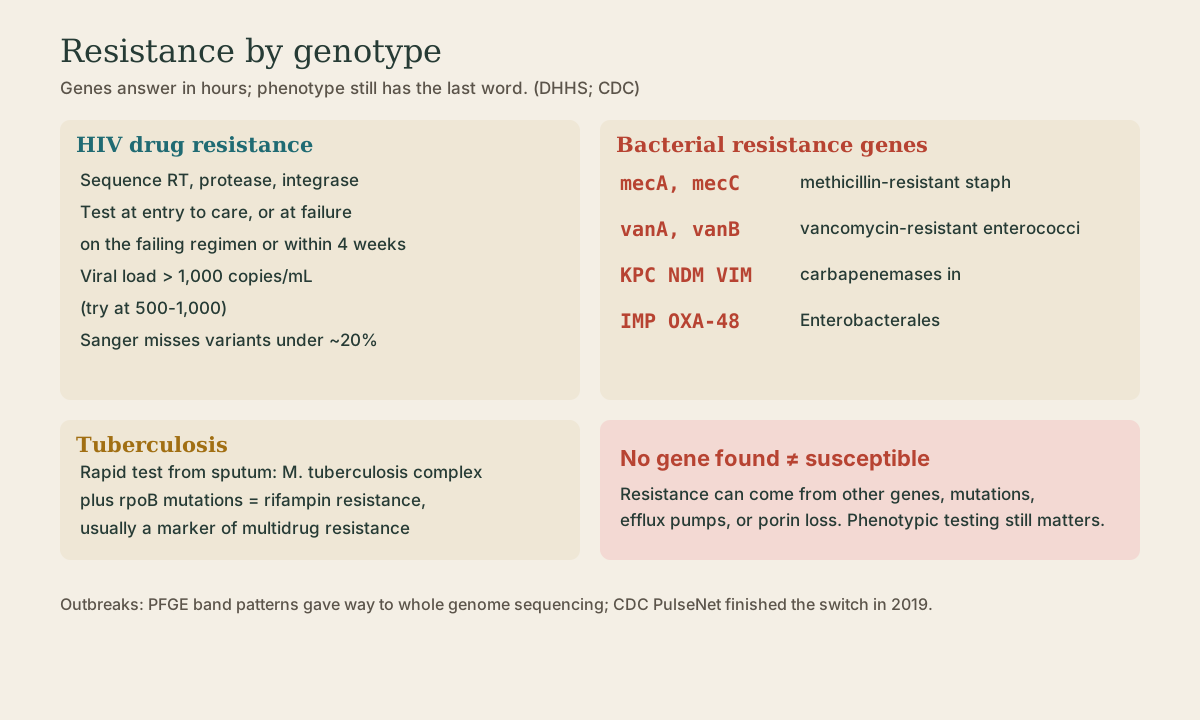
HIV’s reverse transcriptase makes errors constantly, and under drug pressure resistant variants take over. Genotypic resistance testing amplifies and sequences the HIV genes for drug targets - reverse transcriptase, protease, and integrase - and reports mutations linked to resistance (for example, M184V in reverse transcriptase reduces susceptibility to lamivudine and emtricitabine, and K103N causes high-level resistance to efavirenz and nevirapine).
When and how 1:
- At entry into care, to detect transmitted resistance.
- At virologic failure, while the patient is still taking the failing regimen or within 4 weeks of stopping it. Off drugs, the wild-type virus regrows and resistant variants fall below detection.
- The viral load must be high enough: recommended above 1,000 copies/mL, and worth attempting at 500 to 1,000 1.
Standard Sanger-based genotyping detects variants making up roughly 20% or more of the viral population; minor variants can be missed.
Phenotypic testing (measuring viral growth in drug) exists but is slower and costlier, used mainly for complex resistance.
Quick check
Genotyping needs enough RNA to amplify and sequence the target genes. Below 500 copies/mL, standard tests often fail.
Hepatitis C genotype
HCV has several genotypes (1 through 6 are common, with subtypes such as 1a and 1b). Genotype once dictated drug choice and duration. Modern pangenotypic regimens work across genotypes, so genotyping is now needed mostly for patients with prior treatment failure, cirrhosis, or regimens that require it. HCV resistance-associated substitution testing is used in selected cases.
Bacterial resistance genes
Molecular detection of resistance genes gives answers in hours:
- mecA / mecC: methicillin resistance in staphylococci 2.
- vanA / vanB: vancomycin resistance in enterococci (VRE).
- Carbapenemases: the five most common mobile carbapenemase genes in Enterobacterales are KPC, NDM, VIM, IMP, and OXA-48 3. Carbapenemase-producing organisms resist nearly all beta-lactams and spread between species on plasmids, so detecting them triggers infection control action.
The limit: a gene panel only finds the genes it looks for. Absence of a gene doesn’t prove susceptibility, because resistance can come from other genes, mutations, efflux pumps, or porin loss. Phenotypic susceptibility testing still matters.
Quick check
These five mobile carbapenemase genes cause most carbapenem resistance in Enterobacterales. mecA is MRSA, vanA/vanB are VRE, tcdA/tcdB are C. difficile toxins.
Mycobacteria
Rapid molecular tests detect Mycobacterium tuberculosis complex directly from sputum and simultaneously detect rifampin resistance from mutations in the rpoB gene. Because rifampin resistance usually accompanies isoniazid resistance, it’s a marker for multidrug-resistant TB.
Molecular epidemiology
Genotyping also answers: are these cases connected?
- Pulsed-field gel electrophoresis (PFGE) cut bacterial genomes with a rare-cutting restriction enzyme and compared band patterns. It was the standard for decades.
- Whole genome sequencing (WGS) compares entire genomes, down to single-nucleotide differences. In 2019, CDC’s PulseNet, the national foodborne outbreak network of public health labs, completed its transition from PFGE to WGS 4. In a 2018 Salmonella outbreak linked to ground beef, WGS showed that some cases sharing the outbreak PFGE pattern weren’t actually part of it 4.
Hospitals use the same approach to investigate clusters of MRSA, VRE, CRE, and C. difficile: closely related genomes suggest transmission; distant ones point to separate introductions.
What to take from this
HIV genotyping sequences reverse transcriptase, protease, and integrase, needs about 1,000 copies/mL, and should be done on the failing regimen or within 4 weeks of stopping. HCV genotyping matters less with pangenotypic drugs. Resistance gene tests (mecA, vanA/B, KPC, NDM, VIM, IMP, OXA-48, rpoB) give fast answers, but a missing gene doesn’t prove susceptibility. Whole genome sequencing has replaced PFGE for outbreak investigation.
Practice
PFGE compares band patterns from a few cut sites; WGS compares entire genomes, resolving outbreaks that look identical by PFGE.
Lesson complete
Nice work.
Sources for this lesson
- 1Guidelines for the Use of Antiretroviral Agents in Adults and Adolescents with HIV. U.S. Department of Health and Human Services. verifiedVirologic failure is HIV RNA of 200 copies/mL or more; resistance testing at more than 1,000 copies/mL (consider at 500-1,000) while on the failing regimen or within 4 weeks of stopping.
- 2Methicillin-resistant Staphylococcus aureus - mecA, SCCmec, and the mecC homologue (review). PubMed Central (PMC4131778). verifiedmecA (2.1 kb, carried on SCCmec) encodes PBP2a; mecC shares only 69% DNA identity with mecA and is missed by mecA assays and PBP2a tests.
- 3Multi-centre evaluation of real-time multiplex PCR for detection of carbapenemase genes OXA-48, VIM, IMP, NDM and KPC. PubMed Central (PMC3897903). verifiedThe five most prevalent mobile carbapenemase genes, blaKPC, blaNDM, blaVIM, blaIMP, and blaOXA-48, detected by multiplex real-time PCR.
- 42019: PulseNet laboratories transition to whole genome sequencing. CDC. 2019. verifiedPulseNet moved from PFGE to whole genome sequencing in 2019 for foodborne outbreak detection.