Chemical and Biological Safety in the Molecular Lab
The hazards particular to molecular work - guanidine lysis buffers that release cyanide with bleach, phenol-chloroform, ethidium bromide, UV - and the biosafety rules for human specimens under BSL-2 and OSHA's bloodborne pathogens standard.
- 4 min
- 6 steps
- 3 questions
- Lesson 45 of 60
In this lesson
- Guanidine and bleach
- Organic extraction
- Stains and UV
- Biological hazards
- Everyday rules
- What to take from this
Picking up where you left off.
Guanidine and bleach
Most extraction kits use chaotropic guanidine salts - guanidine thiocyanate or guanidine hydrochloride - in their lysis and wash buffers, because they dissolve cells, denature proteins (including RNases), and help nucleic acid bind silica.
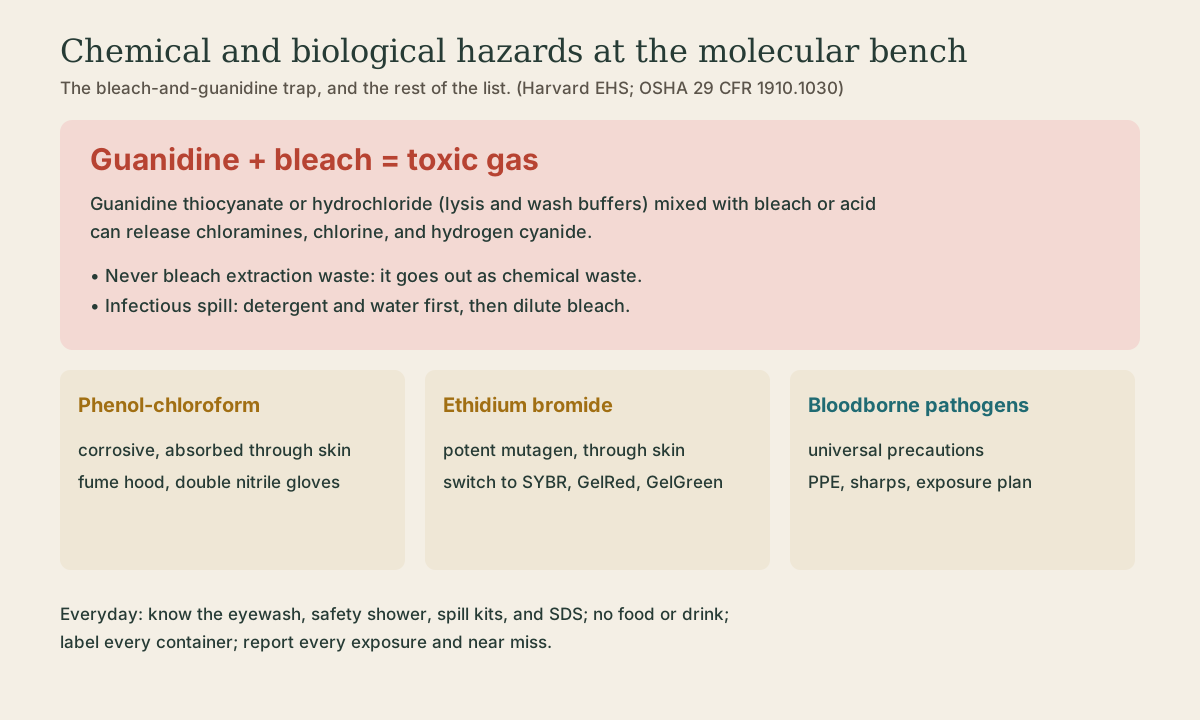
The hazard: guanidine salts mixed with bleach (or strong acids) can release chloramines, chlorine, and hydrogen cyanide 1. Harvard EHS issued its guidance after incidents in which researchers added bleach to RNA extraction waste 1.
Rules:
- Never add bleach or acids to extraction waste 1. Guanidine and phenol-based lysis reagents already inactivate organisms, so the waste doesn’t need bleach; dispose of it as chemical waste per the lab’s waste program 1.
- For a spill containing potentially infectious material, clean first with laboratory detergent and water, then with dilute bleach 1.
- Read the Safety Data Sheet (sections on handling, stability, and reactivity) for every reagent, and know which buffers in your kits contain guanidine 1.
This is a classic exam and real-world trap, because molecular labs use bleach constantly for decontamination.
Quick check
Guanidine thiocyanate and guanidine hydrochloride, found in many lysis and wash buffers, release chloramines, chlorine, and hydrogen cyanide with hypochlorite. Guanidine already inactivates organisms; dispose of the waste as chemical waste.
Quick check
Remove the guanidine with detergent and water first, then disinfect with dilute bleach, so bleach never meets concentrated guanidine.
Organic extraction
Phenol-chloroform extraction (and reagents such as TRIzol, which combine phenol with guanidine thiocyanate) is hazardous:
- Phenol is corrosive and absorbed through skin, causing severe burns and systemic toxicity, sometimes with little pain at first because it numbs nerves.
- Chloroform is toxic and a suspected carcinogen.
Work in a chemical fume hood, wear eye protection and a lab coat, and use double nitrile gloves for phenol-containing reagents 1. Never mix them with bleach.
Stains and UV
- Ethidium bromide, the classic gel stain, intercalates into DNA and is a potent mutagen, absorbed through skin 2. Many labs have switched to safer stains such as SYBR dyes, GelRed, and GelGreen 2. Where EtBr is still used, confine it to a marked area with dedicated gloves and follow the institution’s disposal rules.
- UV transilluminators and workstation UV lamps burn eyes and skin. Use a face shield or UV-blocking eyewear, cover skin, and never look at an unshielded lamp 2.
- Formamide (used in capillary electrophoresis and some hybridization buffers) is a reproductive toxin; handle it with gloves in a ventilated space.
Biological hazards
Patient specimens may carry HIV, hepatitis B and C, and other pathogens.
OSHA’s bloodborne pathogens standard (29 CFR 1910.1030) requires 3:
- Universal precautions: treat all human blood and certain body fluids as if infectious for HIV, HBV, and other bloodborne pathogens.
- A written exposure control plan, reviewed and updated at least annually.
- Hepatitis B vaccination offered at no cost within 10 working days of initial assignment.
- Training at no cost, during working hours, at assignment and at least annually.
- PPE, sharps containers, and post-exposure evaluation.
Clinical specimens are handled at biosafety level 2 (BSL-2) under CDC/NIH Biosafety in Microbiological and Biomedical Laboratories: restricted access, biohazard signs, PPE, and a certified class II biosafety cabinet for procedures that make splashes or aerosols, such as opening specimen tubes, vortexing, and pipetting specimens into lysis buffer.
Everyday rules
- Know where the eyewash, safety shower, spill kits, and SDS are.
- No food, drink, or cosmetics in the lab.
- Label every container with contents and hazards.
- Report every exposure and near miss.
What to take from this
Guanidine buffers plus bleach release cyanide and chlorine gases: never bleach extraction waste, and clean spills with detergent and water before dilute bleach. Handle phenol-chloroform in a fume hood with double nitrile gloves. Ethidium bromide is a mutagen with safer alternatives, and UV burns eyes and skin. Treat every specimen under universal precautions and BSL-2, with OSHA’s exposure plan, free hepatitis B vaccination within 10 working days, and annual training.
Practice
29 CFR 1910.1030(f): vaccination is made available after training, within 10 working days of initial assignment, free to the employee.
Lesson complete
Nice work.
Sources for this lesson
- 1Laboratory Safety Guideline: Qiagen Kits. Harvard University Environmental Health and Safety. 2018. verifiedGuanidine salts in lysis and wash buffers release chloramines, chlorine, and hydrogen cyanide with bleach; never add bleach to extraction waste; clean spills with detergent first, then dilute bleach.
- 2Ethidium Bromide Alternatives. UC San Diego Biological Sciences Safety. verifiedEthidium bromide is a potent mutagen; SYBR, GelRed/GelGreen, and similar stains are safer alternatives.
- 329 CFR 1910.1030 - Bloodborne pathogens. Occupational Safety and Health Administration. verifiedUniversal precautions; exposure control plan reviewed annually; hepatitis B vaccine offered free within 10 working days; annual training.