Qualitative Pathogen Detection
Yes-or-no molecular tests for infection - C. difficile toxin genes, MRSA's mecA, chlamydia and gonorrhea NAATs, multiplex respiratory panels - and the trap they share: detecting DNA isn't the same as detecting disease.
- 4 min
- 7 steps
- 3 questions
- Lesson 46 of 60
In this lesson
- Molecular versus culture
- Clostridioides difficile
- MRSA
- Chlamydia and gonorrhea
- Multiplex panels
- Positive predictive value
- What to take from this
Picking up where you left off.
Molecular versus culture
Qualitative molecular tests answer one question: is this organism’s nucleic acid present? They’re faster than culture (hours instead of days), more sensitive, and detect organisms that grow poorly or not at all. Their shared weakness: nucleic acid can be present without active disease - from colonization, from dead organisms after treatment, or from contamination.
Clostridioides difficile
C. difficile causes diarrhea and colitis through toxins A and B, encoded by tcdA and tcdB. Molecular tests target the toxin genes (usually tcdB) to detect toxigenic strains.
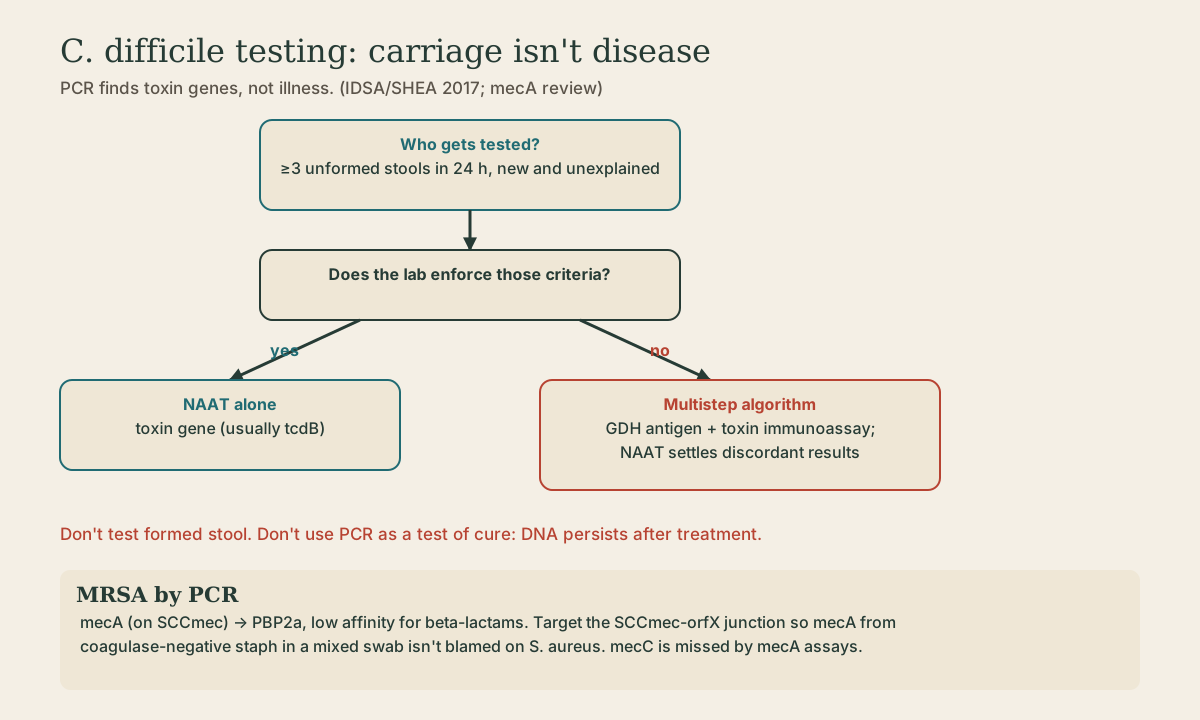
The catch is colonization: many hospitalized patients carry toxigenic C. difficile without disease, and a PCR can’t tell carriage from infection. So the IDSA/SHEA guideline says 1:
- Test only patients with 3 or more unformed stools in 24 hours of unexplained, new-onset diarrhea.
- If the institution enforces those criteria, NAAT alone is acceptable.
- If not, use a multistep algorithm that includes a toxin test (for example, glutamate dehydrogenase antigen plus toxin immunoassay, with NAAT to arbitrate discordant results).
Don’t test formed stool, and don’t use PCR as a test of cure - DNA persists after successful treatment.
Quick check
NAAT detects the toxin B gene, not toxin itself. Many hospitalized patients carry toxigenic C. difficile without disease, so guidelines restrict testing to patients with 3 or more unformed stools in 24 hours.
MRSA
Methicillin resistance in Staphylococcus aureus comes from mecA, a 2.1-kb gene carried on a mobile cassette, SCCmec. It encodes PBP2a, a penicillin-binding protein with low affinity for beta-lactams 2.
Molecular MRSA tests are used for:
- Nasal surveillance to find carriers for isolation or decolonization before surgery.
- Rapid identification from positive blood cultures: S. aureus versus coagulase-negative staphylococci, and mecA present or absent, hours before susceptibility testing finishes.
Pitfalls:
- mecA is also carried by coagulase-negative staphylococci, so a mixed specimen can pair S. aureus DNA with someone else’s mecA. Assays that target the SCCmec-orfX junction link the cassette to S. aureus itself.
- mecC, a homologue found in some human and animal MRSA, is only 69% identical to mecA at the DNA level and is missed by mecA assays and PBP2a tests 2.
Quick check
mecA, carried on the SCCmec cassette, encodes PBP2a, which keeps building cell wall when methicillin and other beta-lactams have bound the normal PBPs.
Chlamydia and gonorrhea
Nucleic acid amplification tests (NAATs) are the standard for Chlamydia trachomatis and Neisseria gonorrhoeae: more sensitive and specific than any other test, and they don’t need viable organisms, which makes transport easy 3.
Specimens 3:
- Women: vaginal swab (clinician- or self-collected) is best.
- Men: first-catch urine is best.
- Rectal and pharyngeal swabs for people with those exposures.
NAATs aren’t a test of cure soon after treatment, because nucleic acid from dead organisms can persist for weeks. Gonorrhea culture is still needed for antimicrobial susceptibility testing, since resistance is a growing problem.
Multiplex panels
Syndromic panels test one specimen for many pathogens at once:
- Respiratory: influenza A and B, RSV, SARS-CoV-2, rhinovirus/enterovirus, adenovirus, human metapneumovirus, parainfluenza, and some bacteria (Mycoplasma pneumoniae, Bordetella pertussis).
- Gastrointestinal: bacteria, viruses, and parasites.
- Meningitis/encephalitis and blood culture identification panels.
They’re fast and broad, but they find things that don’t matter (rhinovirus in a healthy child, viral shedding after recovery) and cost far more than a targeted test. Results need clinical interpretation, and many labs limit who can order them.
Positive predictive value
A test’s positive predictive value depends on how common the condition is in the people tested. A 99%-specific test used where only 1% of patients have the infection produces about as many false positives as true positives. This is why testing criteria (the C. difficile stool rule, ordering restrictions on panels) matter as much as the assay’s performance.
What to take from this
Qualitative molecular tests detect nucleic acid, which can mean infection, colonization, dead organisms, or contamination. C. difficile PCR targets toxin genes and belongs only on unformed stool from patients with real diarrhea. MRSA tests target mecA on SCCmec (or the SCCmec-orfX junction) and miss mecC. CT/NG NAATs use vaginal swabs in women and first-catch urine in men. Multiplex panels are broad and fast but need clinical judgment, and low prevalence erodes positive predictive value.
Practice
CDC: vaginal swabs are the best NAAT specimen in women, first-catch urine in men.
Lesson complete
Nice work.
Sources for this lesson
- 1L. Clifford McDonald, et al.. Clinical Practice Guidelines for Clostridium difficile Infection in Adults and Children: 2017 Update by IDSA and SHEA. Clinical Infectious Diseases 66(7). 2018. verifiedTest only patients with 3 or more unformed stools in 24 hours of unexplained new-onset diarrhea; NAAT alone where stool-submission criteria are enforced, otherwise a multistep algorithm including a toxin test.
- 2Methicillin-resistant Staphylococcus aureus - mecA, SCCmec, and the mecC homologue (review). PubMed Central (PMC4131778). verifiedmecA (2.1 kb, carried on SCCmec) encodes PBP2a; mecC shares only 69% DNA identity with mecA and is missed by mecA assays and PBP2a tests.
- 3Recommendations for the Laboratory-Based Detection of Chlamydia trachomatis and Neisseria gonorrhoeae - 2014. CDC, MMWR Recommendations and Reports 63(RR-2). 2014. verifiedNAATs outperform other tests; vaginal swabs are the best specimen in women and first-catch urine in men.
Previous: Chemical and Biological Safety in the Molecular Lab