Linen: From Stem to Shirt
Linen from flax plant to cloth: pulling and retting, breaking and scutching, hackling, wet and dry spinning, what slubs, wrinkles, luster, and weight do and don't prove, and an inspection for anything sold as 'premium linen.'
- 6 min
- 6 steps
- 3 questions
- Lesson 7 of 49
In this lesson
- The stem-to-shirt chain
- What the familiar linen signs do—and do not—prove
- The LINE inspection
- A five-minute comparison
- Rule of thumb
Open alongside this lesson
-
All linen is the same right? Then how can two linen products be priced so differently...? (opens in a new tab)
Use the episode as the opening puzzle; use the process map and inspection method below to test the explanation.
-
Mapping of Processes for European Flax-Linen (opens in a new tab)
Trace long and short fibres through scutching, hackling, spinning, weaving or knitting, dyeing, and finishing.
-
Textile Fiber Rule (opens in a new tab)
A fibre percentage identifies composition, not fibre length, yarn route, construction, finish, or sewing quality.
Picking up where you left off.
Linen begins as flax, a bast-fibre plant. The useful textile fibres run in bundles through the stem, around a woody core. Turning that biological composite into a shirt requires a chain of separation, alignment, spinning, construction, wet processing, cutting, and sewing. “100% linen” names the fibre family. It does not tell you how carefully that chain was managed.
Fineas Jackson’s comparison starts with the right surprise: two objects can truthfully carry the same linen label and still differ greatly in feel, appearance, labour, yield, and durability 1. The mistake would be converting one attractive production detail into a universal ranking. Linen is not a ladder with “rustic” at the bottom and “smooth” at the top. It is a set of specifications matched to a job.
Playback is optional. If the player is unavailable, open the video at its source.
The stem-to-shirt chain
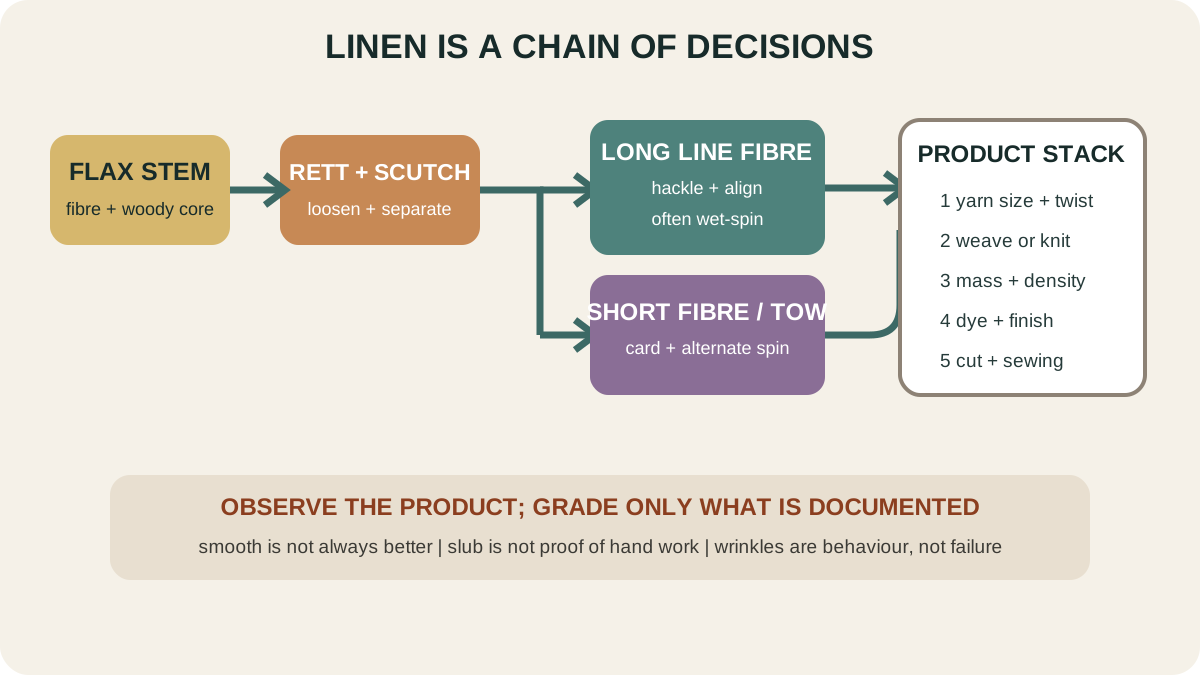
The Alliance for European Flax-Linen & Hemp maps distinct products and routes: retted straw, mechanically scutched long and short fibre, hackled long-fibre sliver, several spinning systems, weaving or knitting, dyeing, and finishing 2. Each stage answers a different question.

1. Pulling and retting: release the bundles
Flax may be pulled rather than cut so more stem length remains available. During retting, moisture and microorganisms help loosen the pectins binding fibre bundles to surrounding tissues. Too little retting makes separation difficult; too much can weaken fibre. The final cloth does not disclose the farmer’s exact retting control by appearance alone.
Retting is not tanning, bleaching, or softening. It is an early biological separation step.
2. Breaking and scutching: remove the woody core
Mechanical breaking fractures the woody interior. Scutching beats or scrapes away woody fragments and separates usable fibre. The process yields long fibre and shorter fibre rather than one perfectly uniform stream. Yield matters: selecting only a narrow portion of the output can increase material cost even before spinning begins.
3. Hackling: align and sort
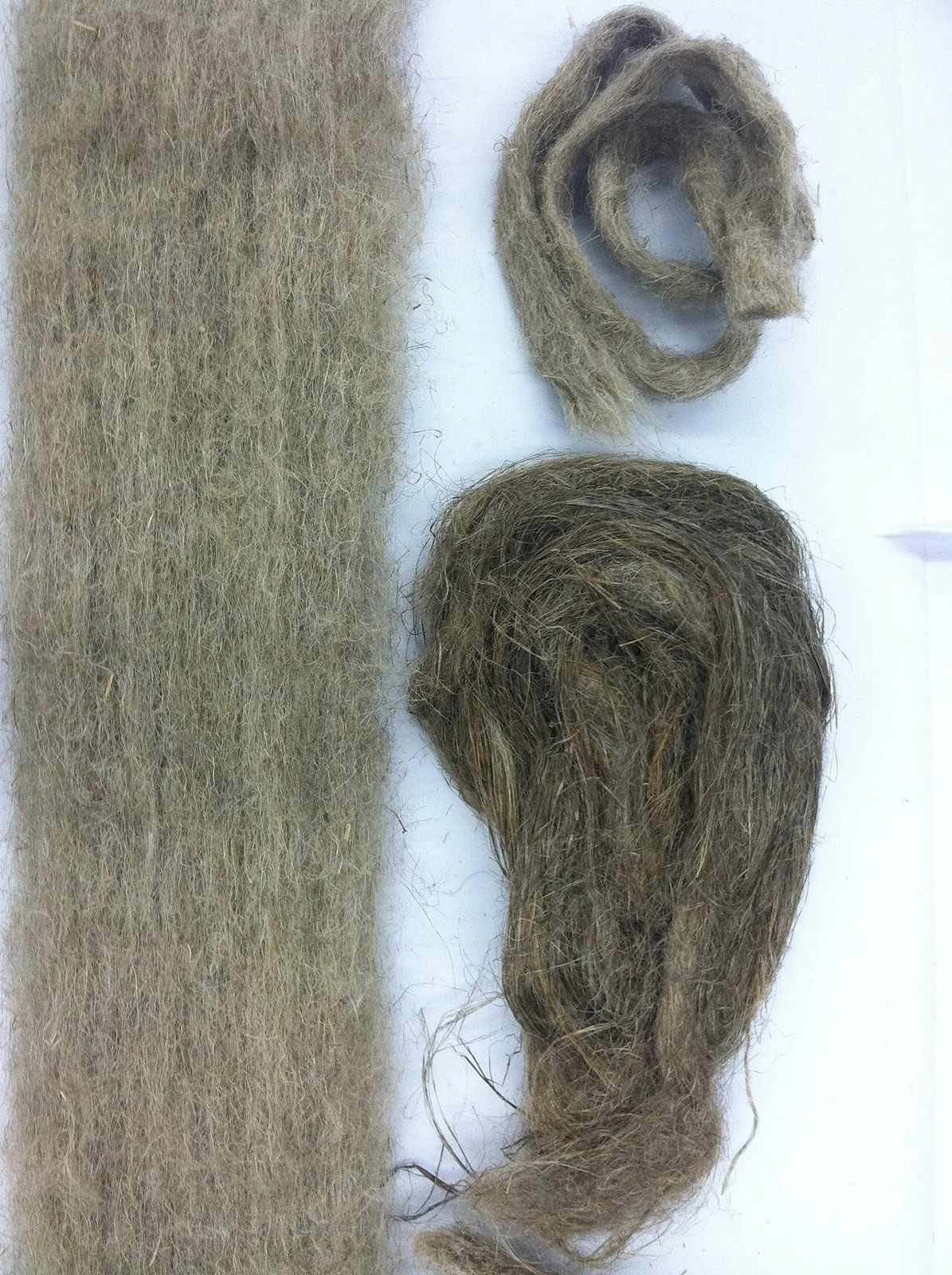
Hackling draws long fibres through progressively finer combs. It aligns bundles, removes remaining woody matter, and separates shorter fibres called tow. Long, well-aligned fibre can support a smoother, more even yarn. Tow is not waste or fake linen. It can be carded and spun into useful, hairier, bulkier, or more irregular yarns appropriate for different fabrics.
4. Spinning: choose a yarn route
Long flax can be wet-spun: sliver or roving passes through warm water before twisting, helping the fibre bundles separate and lie smoothly. Wet spinning can produce relatively fine linen yarn. Dry and semi-wet routes can produce coarser yarns with a different surface. Short fibre can also be processed on cotton- or wool-type systems, especially in blends 2.
The consequence is concrete. Two “linen” fabrics may begin with different fibre-length distributions, alignment, yarn size, twist, evenness, and hairiness.
What the familiar linen signs do—and do not—prove
Slubs
A slub is a thicker place in yarn or fabric. It can arise from variation in fibre preparation and spinning, or be deliberately engineered for texture. Visible slubs do not independently prove hand spinning, long fibre, authenticity, or poor quality. Ask whether the variation suits the fabric and whether it creates weak spots.
Wrinkles
Linen wrinkles because the fibre and fabric do not recover from bending exactly like a highly elastic textile. Wrinkling can be part of the desired relaxed surface. It can also be reduced or reshaped by construction, blend, resin treatment, garment design, and pressing. “Wrinkles easily” is a behaviour, not a complete verdict.
Lustre
Aligned fibres, smoother yarns, long surface floats, calendering, and other finishing can increase directional reflection. Lustre therefore belongs to a system. A shiny cloth is not automatically made from longer fibre; a matte cloth is not automatically inferior.
Weight
Fabric mass per area affects opacity, drape, thermal load, drying time, and abrasion reserve. A heavier linen may serve trousers or upholstery; a light open construction may serve a summer shirt or sheer curtain. Compare weight only after naming the intended job.
The LINE inspection
Use LINE when a product description stops at “premium linen.”
- L — Label and lineage: Record fibre percentages, country statements, certifications, and whether fibre origin or processing location is actually documented. The FTC rule makes fibre content meaningful but does not turn it into a construction grade 3.
- I — Internal structure: Identify woven or knit, then plain, twill, herringbone, gauze, jersey, or unknown. Record mass if available and examine yarn evenness with a magnifier.
- N — Nature of yarn and finish: Look for ply, hairiness, deliberate slub, surface coating, garment wash, resin treatment, calendered shine, or softened hand. Mark claims such as “long staple” or “wet spun” as unverified unless documented.
- E — Execution and end use: Inspect seams, hems, reinforcement, pattern alignment, spare cloth, care instructions, and whether the fabric weight and openness fit the job.
A five-minute comparison
Lay two owned linen items over the same dark-and-light boundary. Photograph them from the same height.
- Record fibre label and care label.
- Count visible yarns across a fixed distance if practical; do not call this a laboratory thread count.
- Compare opacity, surface hairiness, slub frequency, and reflection at the same angle.
- Drape equal-size sections over the same cylinder.
- Inspect a high-stress seam and the hem interior.
- Write one sentence for each LINE heading, including
unknownwhere evidence ends.
A defensible conclusion sounds like this: “Both are labeled linen. A uses a finer, more even yarn and denser plain weave with cleaner seam finishing; B uses a coarser, more open, deliberately irregular construction that may dry quickly and suit casual wear. Fibre length and spinning route are not documented.”
That is more useful than “A feels expensive.”
Rule of thumb
Read linen as a chain, not a prestige word. Fibre length, preparation, spinning, construction, finishing, and sewing can each change the result. Pay for a documented difference that serves the use—not for a production story the product cannot support.
Practice
Long-fibre preparation and wet spinning can support finer, smoother yarns; the common fibre label alone cannot establish this.
Practice
Tow is shorter flax fibre. It can make useful yarn and fabric, but it follows different preparation and spinning routes from long line fibre.
Practice
Observable construction and documented specifications strengthen a comparison; price, wrinkles, and slubs do not independently prove a production story.
Lesson complete
Nice work.
Sources for this lesson
- 1Fineas Jackson. All linen is the same right? Then how can two linen products be priced so differently...?. Fineas Jackson on YouTube. 2026. verifiedChasing Beauty episode 60; 2:57. Used as a case or observation prompt, not as the sole authority for technical claims. Cited at: episode 60.
- 2Mapping of Processes for European Flax-Linen. Alliance for European Flax-Linen & Hemp. 2023. verifiedIndustry process map distinguishing retted straw, scutched long and short fibre, hackling, wet or dry spinning, weaving or knitting, dyeing, and finishing. Cited at: process map; spinning routes.
- 3Textile Fiber Rule. U.S. Federal Trade Commission. verifiedOfficial summary of U.S. disclosure requirements for generic fiber names, percentages by weight, responsible company, and country of processing or manufacture. Cited at: label scope.
Further reading
- Fineas Jackson. What’s so special about linen? How is it made? Episode 2 of “Chasing Beauty” #linen #fashion #style. Fineas Jackson on YouTube. 2026. verifiedChasing Beauty episode 2; 2:21. Used as a case or observation prompt, not as the sole authority for technical claims.