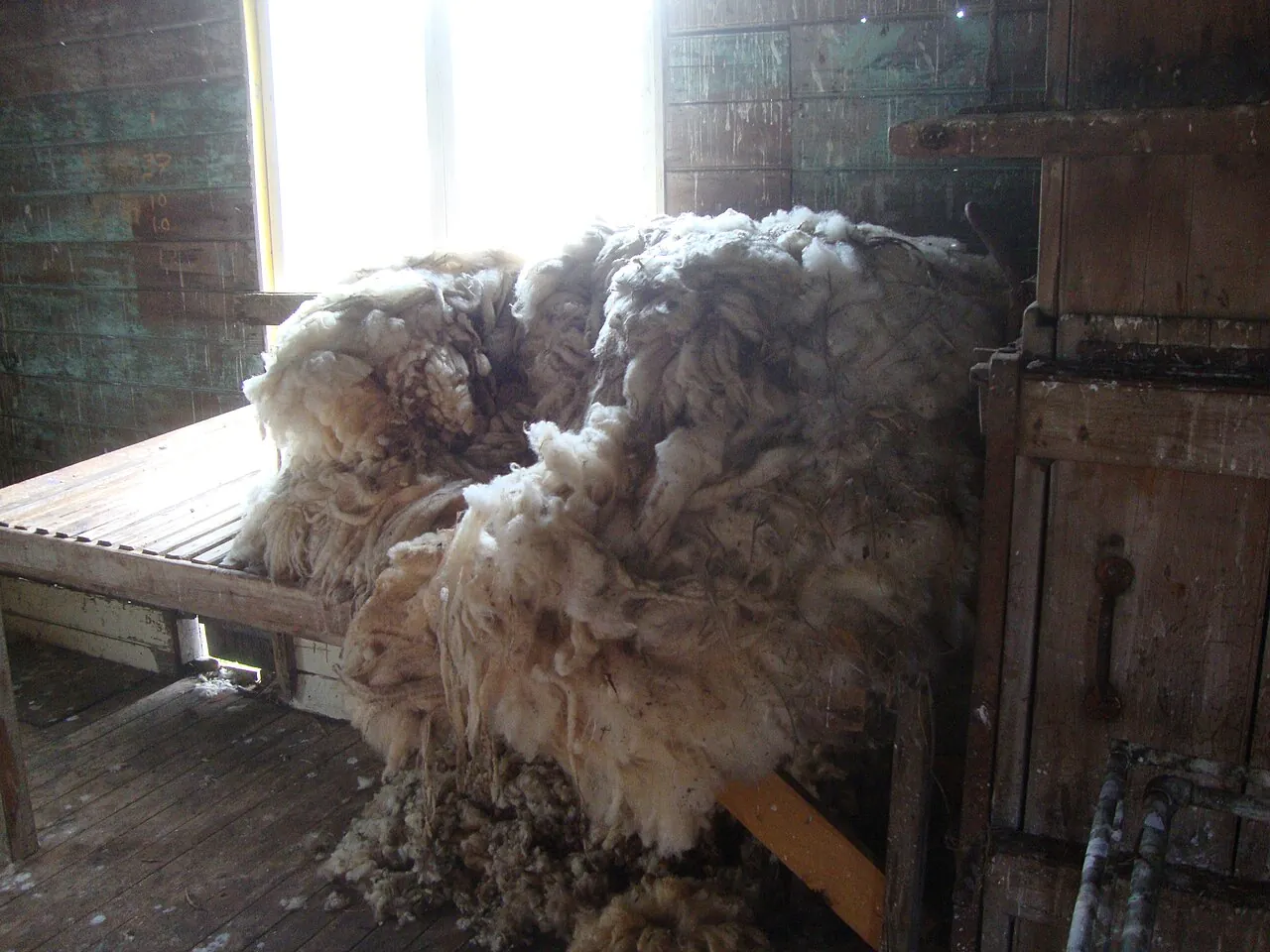
Wool: Microns Are Not a Suit
Wool from fiber to suit: diameter in microns, length, strength, crimp, and scales, woollen and worsted as routes rather than ranks, what Super 100s and 150s labels mean, summer wool as a system, and comparing two wool garments.
- 6 min
- 8 steps
- 3 questions
- Lesson 8 of 49
In this lesson
- Begin at the fibre—but do not stop there
- Woollen and worsted are routes, not value ranks
- What Super S tells you
- Summer wool is a system
- The WOOL card
- Hands-on comparison
- Rule of thumb
Open alongside this lesson
-
All wool suits are the same right? Then how can one fall apart while the other gets better with age? (opens in a new tab)
Use the episode to separate fibre fineness from yarn, cloth, tailoring, wear pattern, and maintenance.
-
How Wool Is Made — Processing & Manufacturing (opens in a new tab)
Follow scouring, carding, combing, spinning, fabric formation, dyeing, and finishing.
-
Wool Fibre Quality — Super S Mean Fibre Diameter Limits (opens in a new tab)
Learn exactly what the familiar tailoring number constrains—and everything it does not.
Picking up where you left off.
Wool is not one texture. It is a family of animal fibres whose diameter, length, crimp, strength, contamination, colour, and uniformity vary before anyone spins a yarn. Then preparation, spinning, cloth construction, wet finishing, tailoring, and care transform those fibres again.
Fineas Jackson’s wool-suit comparison makes the central warning vivid: “100% wool” cannot predict how a suit will drape, shine, pill, crease, abrade, or recover 1. Nor can the softest hand in a showroom. Softness is one requirement among several.
Playback is optional. If the player is unavailable, open the video at its source.
Begin at the fibre—but do not stop there
Diameter
Wool diameter is measured in micrometres, usually called microns in trade language. Fine fibres bend more readily against skin and can be spun into finer yarns; coarser fibres resist bending and can suit robust outerwear, rugs, or carpets. Woolmark identifies diameter as a major determinant of softness and end use 2.

Fineas’s episodes about cashmere and exceptionally soft animal fibres use softness to unsettle a familiar hierarchy 3 4. The transferable lesson is not “find the smallest micron at any cost.” It is to ask what the number predicts, whether the claim is verified, and which performance may be traded away.
Length and strength
Longer, sound fibres can be easier to align and spin into smooth, strong yarns. Short or tender fibres can increase fly, hairiness, irregularity, and pilling risk depending on the system. Mean diameter alone does not report fibre length, staple strength, or the distribution around the mean.
Crimp and scales
Natural crimp helps fibres form an airy structure. Overlapping cuticle scales contribute to felting when moisture, heat, chemistry, and agitation allow fibres to migrate and lock. These features help explain loft, insulation, fulling, shrinkage risk, and finish; they are not a promise that every wool garment behaves identically 2.
Woollen and worsted are routes, not value ranks
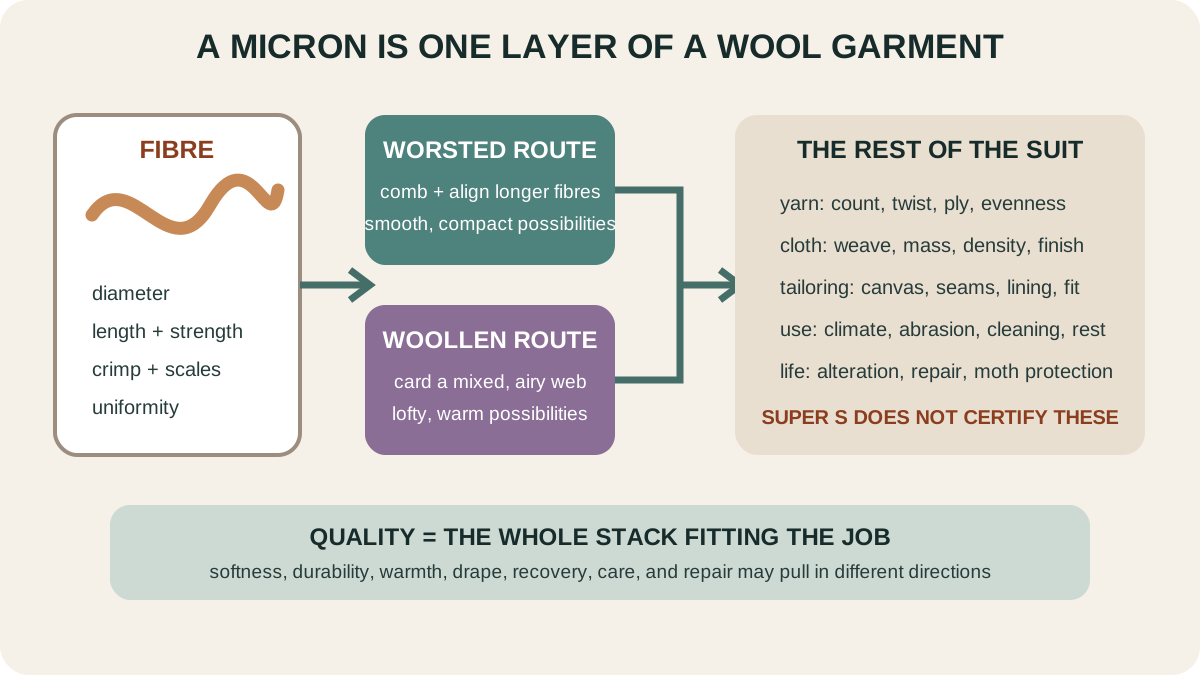
In worsted processing, longer fibres are carded, gilled, and combed so they lie more parallel; short fibres and residual contamination are removed. The resulting yarn can be smooth, compact, and suitable for clear-faced tailoring cloth.
In woollen processing, carding creates a more mixed fibre arrangement that traps air. The yarn can be loftier, hairier, and warmer for its mass. It may suit flannel, tweed, blankets, or knitwear. Woolmark’s process guide distinguishes the routes and notes that worsted yarn commonly uses longer, more uniform fleece fibre 5.
Neither system is universally superior. A lofty coat and a crisp summer suit need different structures.
What Super S tells you
Suiting labels such as Super 100s or Super 150s refer to fibre-fineness categories. In the cited specification, each higher category has a lower maximum mean fibre diameter—for example, Super 100s at 18.75 μm and Super 150s at 16.25 μm 6.
That is real information. It is not a total quality score.
The number does not by itself specify:
- fibre length, strength, or diameter variation;
- woollen or worsted preparation;
- yarn twist, ply, evenness, or strength;
- cloth weight, weave, density, or finishing;
- resistance to seam slippage, pilling, snagging, or trouser-seat abrasion;
- canvas, lining, interlining, seam allowance, pressing, or fit;
- whether the garment can be altered or repaired.
An extremely fine, light cloth may feel exquisite and drape beautifully. It may also be less forgiving of hard daily wear than a heavier cloth using somewhat coarser, stronger fibre. “Better” must finish the sentence: better for what schedule, climate, body, and maintenance practice?
Summer wool is a system
Jackson’s summer-wool episode is useful because it breaks the equation wool = heavy winter cloth 7. Fibre can buffer moisture vapour, but thermal comfort also depends on yarn bulk, fabric mass, openness, colour, lining, fit, air movement, humidity, and activity. The International Wool Textile Organisation discusses wool’s moisture-vapour buffering and breathability, but it is an industry source; treat its mechanism as one input and inspect the actual cloth 8.
A dark, tightly woven, fully lined wool suit can be hot in sun. A light, open, unlined tropical wool can move air. Fibre identity did not reverse physics; construction changed the system.
The WOOL card
Use WOOL for a garment or swatch.
- W — What fibre evidence? Record percentage, claimed breed or origin, micron or Super S statement, certification, and unknowns.
- O — Organization of fibre and yarn: Woollen or worsted? Single or plied yarn? Smooth, hairy, tightly twisted, lofty, or irregular?
- O — Object construction: Weave or knit, mass, density, lining, seams, canvas, reinforcement, allowance, and high-wear zones.
- L — Life in use: Climate, frequency, rubbing points, cleaning, rest between wears, storage, moth protection, repair, and observed change.
Hands-on comparison
Compare two owned wool garments without pulling or abrading them destructively.
- Photograph labels and record mass.
- Use a magnifier to examine yarn hairiness and weave or knit geometry.
- Hold each over the same light source to compare openness.
- Compress an inconspicuous section for ten seconds and observe recovery.
- Inspect cuffs, elbows, pocket edges, trouser seat, hem, and seam allowance.
- Distinguish surface change (nap flattening, polish, pills) from structural damage (broken yarn, seam failure, thinning).
Write a job-specific conclusion: “A is softer and finer; B is heavier, more open, and shows more cloth at alteration points. A may suit occasional formal wear; B supplies stronger evidence for frequent use.”
Rule of thumb
A micron measures a fibre, not a finished garment. Follow diameter through fibre length, preparation, yarn, cloth, finish, tailoring, and use. Pay for fineness when fineness serves the job—and never ask one number to certify the whole suit.
Practice
Super S categories constrain mean fibre diameter. They do not certify cloth weight, yarn quality, finishing, tailoring, or service life.
Practice
Combing and alignment are central to the worsted route, while woollen spinning typically preserves a loftier, less parallel fibre arrangement.
Practice
Material quality is fitness for requirements. Fineness is valuable, but cloth structure, mass, finish, tailoring, and use intensity also govern performance.
Lesson complete
Nice work.
Sources for this lesson
- 1Fineas Jackson. All wool suits are the same right? Then how can one fall apart while the other gets better with age?. Fineas Jackson on YouTube. 2026. verifiedChasing Beauty episode 64; 2:50. Used as a case or observation prompt, not as the sole authority for technical claims. Cited at: episode 64.
- 2Wool Fibre — Properties, Facts & Benefits. The Woolmark Company. verifiedFibre-level overview of diameter, crimp, cuticle scales, moisture behaviour, and the relationship between fibre dimensions and end use. Woolmark is an industry organization, so product claims are paired with processing and test sources. Cited at: fibre properties; crimp and scales.
- 3Fineas Jackson. Cashmere isn’t the softest wool. So what is? Hint: the softest wool fiber is actually illegal #wool. Fineas Jackson on YouTube. 2026. verifiedChasing Beauty episode 3; 2:53. Used as a case or observation prompt, not as the sole authority for technical claims. Cited at: episode 3.
- 4Fineas Jackson. The softest wool is not cashmere...? So what is it? #cashmere #soft #education. Fineas Jackson on YouTube. 2026. verifiedChasing Beauty episode 16; 2:50. Used as a case or observation prompt, not as the sole authority for technical claims. Cited at: episode 16.
- 5How Wool Is Made — Processing & Manufacturing. The Woolmark Company. verifiedTechnical overview of scouring, carding, combing, woollen and worsted spinning, fabric formation, dyeing, and finishing. Cited at: processing overview.
- 6Wool Fibre Quality — Super S Mean Fibre Diameter Limits. The Woolmark Company. 2014. verifiedSpecification table connecting Super S designations with maximum mean fibre diameter; useful for explaining what the number measures and what it leaves unspecified. Cited at: diameter limits.
- 7Fineas Jackson. The best summer fabric is…wool? #summer #wool #education. Fineas Jackson on YouTube. 2026. verifiedChasing Beauty episode 22; 2:16. Used as a case or observation prompt, not as the sole authority for technical claims. Cited at: episode 22.
- 8Breathability and Wool. International Wool Textile Organisation. verifiedWool-industry overview of humidity buffering and thermal comfort, with links to underlying research; useful evidence with the publisher's industry role kept visible. Cited at: industry overview.