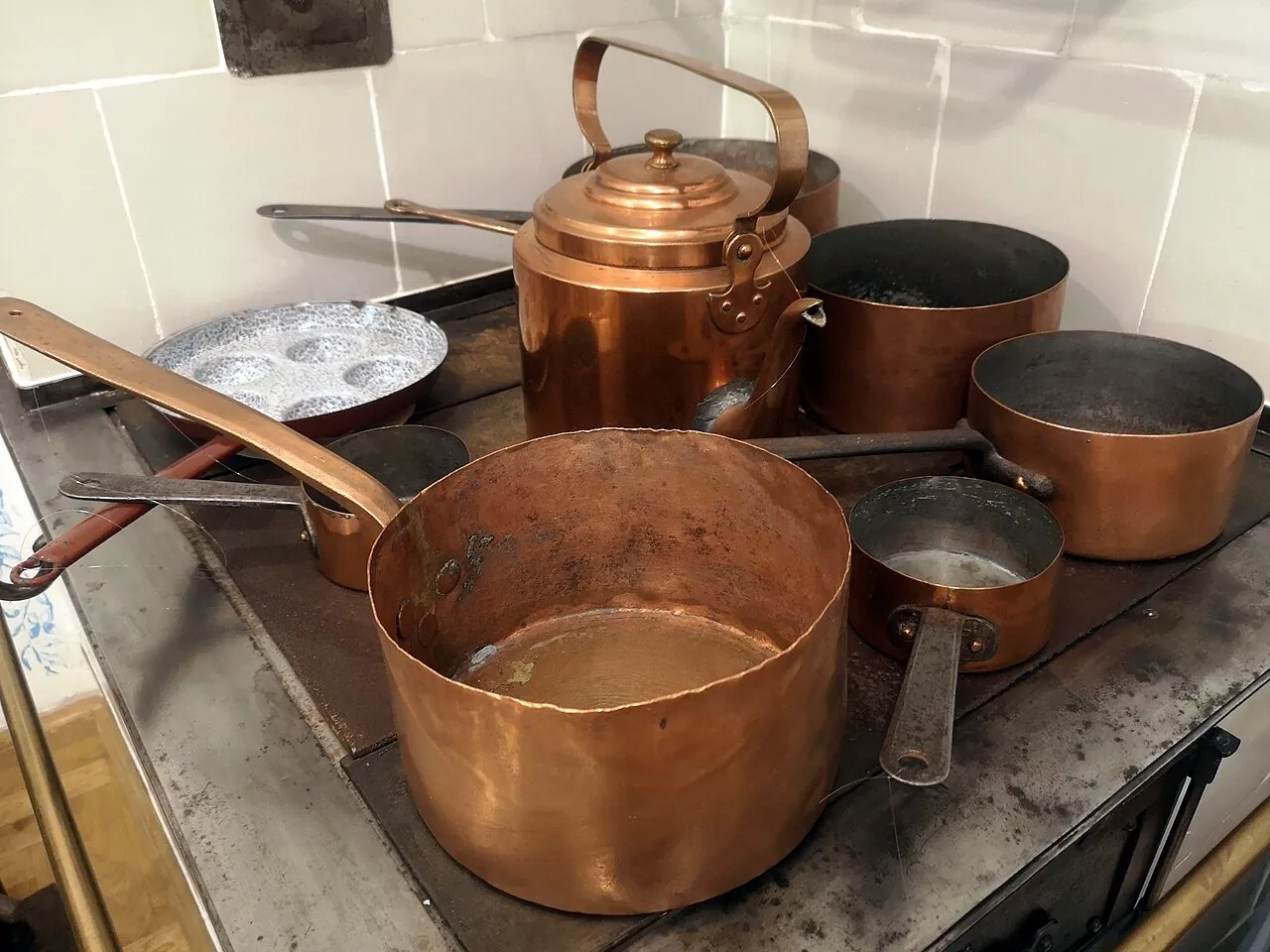
Cookware: Layers, Thickness, and Control
Reading cookware as an assembly: conductivity, heat capacity, thickness, and evenness, clad and disc-bottom construction, why 'five-ply' isn't a thickness, a NIST-sponsored pan study, and comparing two pans without false precision.
- 6 min
- 8 steps
- 3 questions
- Lesson 14 of 49
In this lesson
- Four thermal ideas
- Read the construction
- Layer count is not thickness
- What an experiment reveals
- Use PANS
- A kitchen comparison without false precision
- Rule of thumb
Open alongside this lesson
-
They've been lying to you about cookware #education #pan (opens in a new tab)
Use the episode to replace material-name rankings with layer, thickness, geometry, burner, food, handle, coating, care, and test questions.
-
Development of Standardized Cooking Fires for Evaluation of Prevention Technologies (opens in a new tab)
See base diameter, mass, specific heat, conductivity, flatness, tilt, element contact, oil depth, and heating time interact.
-
The Safe Use of Cookware and Bakeware (opens in a new tab)
Compare conductivity, reactivity, coatings, corrosion, scratching, acidic food, and maintenance limits.
Picking up where you left off.
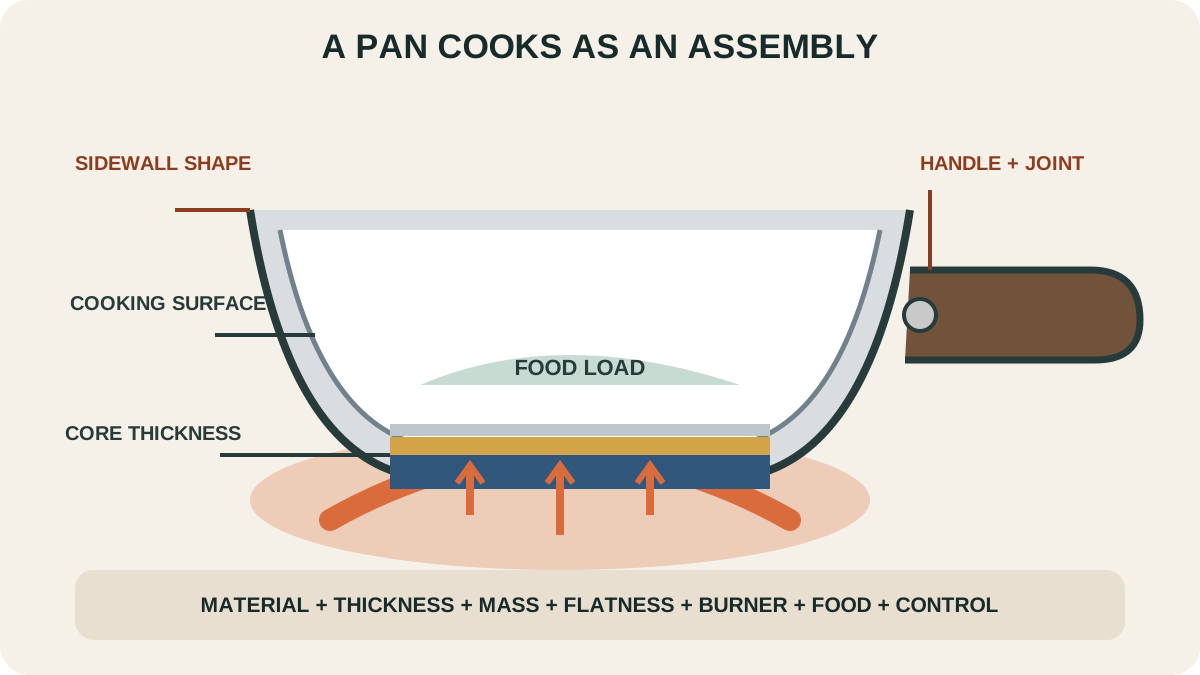
Cookware arguments often begin with a table of thermal conductivity: copper high, aluminum high, cast iron and stainless lower. The numbers are real material properties. The ranking becomes misleading when it jumps directly from a bulk material to a finished pan.
A pan has thickness, mass, diameter, curvature, layers, joints, walls, a surface, a handle, and a burner interface. It contains food with its own mass, water, fat, geometry, and phase changes. Fineas Jackson’s cookware episode is best read as a warning against one-variable verdicts 1.
Playback is optional. If the player is unavailable, open the video at its source.
Four thermal ideas
Conductivity: how readily heat moves through material
High conductivity can spread a localized heat input laterally and reduce hot spots. Copper and aluminum conduct far better than typical stainless steel. That is why stainless cookware often bonds a conductive core or base to a durable, corrosion-resistant cooking surface.

Conductivity alone does not disclose thickness. A very thin high-conductivity sheet may respond quickly but contain little energy and deform easily. A thicker core can spread heat across distance and add stiffness at the cost of mass and response time.
Heat capacity: how much energy changes temperature
The relevant product quantity is approximately mass × specific heat capacity. A heavy pan can absorb more energy before its temperature changes sharply. That can reduce temperature drop when food is added and smooth burner cycling. It also takes more energy and time to heat and cool.
“Responsive” and “holds heat” are partly opposing goals. A sauce pan benefits from control; a searing surface may benefit from thermal reserve. Neither is universally premium.
Diffusivity and geometry: how quickly temperature differences relax
Heat-spreading performance depends on conductivity relative to stored heat and on distance. Thick material can spread heat farther before it reaches food. Sidewall shape influences evaporation and tossing; a large flat cooking area may matter more than nominal rim diameter.
Contact: whether heat reaches the pan
On an electric coil or glass surface, base flatness and contact area matter. On induction, magnetic coupling, coil size, pan position, and ferromagnetic layer matter. On gas, flame diameter, plume, and sidewall exposure change the heat path.
Read the construction
Fully clad
Layers extend through base and sidewalls. This can improve sidewall conduction and create a consistent structure, especially in saucepans. It can also add cost and mass where a frying task may not need it.
Disc bottom
A conductive disc is bonded to the base of a stainless vessel. It can put material where heat enters while keeping sidewalls lighter and less costly. Inspect whether the disc covers the useful base, remains flat, and is well bonded. “Disc” is not automatically budget or inferior.
Cast iron and carbon steel
Cast iron is relatively thick and massive; carbon-steel cookware is usually thinner and lighter at a given size. Both need seasoning or another surface strategy to manage sticking and corrosion. Heat distribution depends on geometry and burner. A cast-iron pan can hold temperature well yet show large surface gradients during uneven heating.
Copper and aluminum
Both spread heat well. Copper cookware generally needs a food-contact lining; Health Canada warns against cooking in scratched or uncoated copper because reactive metal can transfer to food 2. Aluminum may be bare, anodized, coated, or captured inside clad construction. Anodizing hardens and stabilizes the surface but is not invulnerable.
Coatings
Nonstick coatings reduce adhesion and cleaning force but have temperature, utensil, wear, and replacement limits. Enamel separates iron from food and corrosion but can chip or craze. A coating is a functional layer with a service life—not evidence that the substrate no longer matters.
Layer count is not thickness
“Five-ply” counts layers under a seller’s convention. It does not tell you the conductive-core thickness, alloy, bond, coverage, flatness, or performance. Two very thin layers can increase the count without adding useful spreading. Ask for a cross-section drawing with dimensions or measured total thickness and mass.
The same caution applies to “18/10 stainless.” It is a composition shorthand for a stainless alloy family, not a heat-distribution score, thickness, surface-finish grade, or guarantee that every layer uses that composition.
What an experiment reveals
A NIST-sponsored cooking-fire study compared pans while recording mass, base diameter, specific heat, estimated conductivity, base curvature, tilt, and heating time. A low-end stainless pan heated fastest in one condition partly because it had low mass, a large flat contact area, and very little tilt. Two aluminum pans heated more slowly despite aluminum’s high conductivity; pan geometry, mass, and contact changed the system 3.
The study concerned ignition scenarios, not a consumer recommendation. Its transferable lesson is methodological: measure the assembled object under a defined heat input before crediting one material property.
Use PANS
- P — Purpose and power: Sauce, sear, simmer, eggs, oven, induction, gas, coil, batch size, maximum temperature, response versus reserve.
- A — Architecture: Materials, layer thickness, coverage, base diameter, sidewall shape, mass, flatness, coating, rim, lid.
- N — Nodes and handling: Handle geometry and temperature, rivets or welds, helper handle, balance, lid fit, pouring, storage, cleaning.
- S — Surface and service life: Reactivity, seasoning, coating limit, scratches, warping, delamination, replacement, warranty, recycling, cost per use.
A kitchen comparison without false precision
Use two pans of similar useful base diameter.
- Record mass, total dimensions, flat cooking diameter, bottom flatness, materials, layers, and induction compatibility.
- On the same burner from a cold start, heat equal masses of water at the same power. Record time to defined temperatures with the same thermometer position. Do not leave heating cookware unattended.
- Repeat trials and report spread, not one heroic time.
- For evenness, use an infrared camera only with attention to emissivity; shiny metal can give misleading readings. A thin flour layer or other internet “hack” can scorch and is not a standard test.
- Cook the actual food task and record control, sticking, recovery after loading, handle comfort, pouring, and cleanup.
- Include maintenance and replacement in lifecycle cost. DOE lifecycle categories include purchase, operation, maintenance, replacement, and disposal 4.
Rule of thumb
A pan cooks as an assembly, not an element from the periodic table. Read material, layer thickness, geometry, mass, flatness, surface, joints, burner, food, and maintenance together. Pay for control you can use—not for layer count, weight, or thermal-conductivity trivia alone.
Practice
Layered construction combines properties. Actual core material, thickness, coverage, bonding, base geometry, and burner still need specification.
Practice
The experiment tracked multiple interacting variables, showing why isolated material-property rankings can mislead at product level.
Practice
Fitness for use depends on the assembled system and its maintenance, not one material or marketing count.
Lesson complete
Nice work.
Sources for this lesson
- 1Fineas Jackson. They've been lying to you about cookware #education #pan. Fineas Jackson on YouTube. 2026. verifiedChasing Beauty episode 29; 2:53. Used as a case or observation prompt, not as the sole authority for technical claims. Cited at: episode 29.
- 2The Safe Use of Cookware and Bakeware. Health Canada. 2025. verifiedGovernment guidance comparing aluminum, anodized aluminum, copper, stainless steel, cast iron, coatings, glass, and ceramic, including conductivity, durability, reactivity, and care limits. Cited at: copper guidance.
- 3Development of Standardized Cooking Fires for Evaluation of Prevention Technologies. National Institute of Standards and Technology. 2015. verifiedExperimental report whose pan comparison records base diameter, mass, specific heat, conductivity, flatness, tilt, and heating time, demonstrating why material name alone does not predict pan behaviour. Cited at: pan comparison.
- 4Life-Cycle Analysis. U.S. Department of Energy Building Science Education. verifiedPublic teaching resource showing that lifecycle cost can include purchase, operation, maintenance, replacement, disposal, and financing costs. Cited at: cost categories.