Process Selection & Design for Manufacture
Deciding how each treadle lathe part gets made, or whether it gets bought: riving and drawboring the frame from green and seasoned oak and ash, buying precision parts (bearings in housings, ground shaft) and making everything a home shop does well, a worked make-versus-buy break-even for the flywheel, and designing for assembly: few fastener types, adjustment where the tolerance stack needs it, and wedged joints so the lathe knocks down to move.
- 5 min
- 5 steps
- 3 questions
- Lesson 47 of 78
In this lesson
- Make or buy each part
- The wooden frame
- Break-even example
- Design for assembly
- What to take from this
Picking up where you left off.
Make or buy each part
For a one-off machine, the process question is really: which parts does this shop make well, and which should come from someone with the right tooling? Go part by part.
| Part | Decision | Why |
|---|---|---|
| Legs, rails, bed | Make: rive or saw oak and maple, plane, join | what a woodshop does best |
| Treadle | Make: rive from straight ash | straight grain for fatigue (lesson 3) |
| Pitman | Make: ash, with a bronze bushing at each end | easy to replace when worn |
| Spindle bearings | Buy: sealed ball bearings in cast pillow blocks | precision, sealed against dust, isolates the fit from wood movement (lesson 4) |
| Spindle | Buy: precision ground 20 mm steel shaft, cut to length | the fit surface has to be right |
| Crank and crankshaft | Buy or salvage: an old treadle base, or a welded crank | needs a true bore and a strong pin |
| Flywheel | Buy salvaged cast iron, or make plywood with steel at the rim | see the break-even below |
| Centers, faceplate | Buy | threaded, hardened, precise |
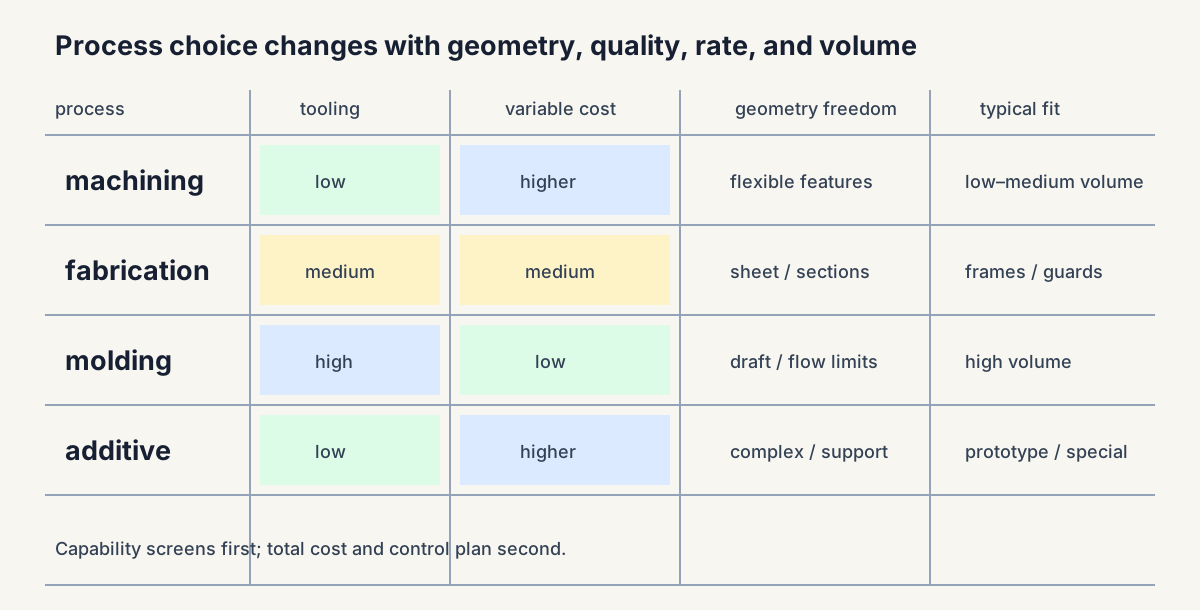
The pattern is general: make what’s big, simple, and forgiving; buy what’s small, precise, and hardened. MIT’s manufacturing course puts process choice the same way, as a match between what a part needs and what a process can deliver at the quantity you’re making 1.
Quick check
Make what the shop is good at; buy what needs precision tooling.
The wooden frame
The frame and bed come from methods the green woodworking and furniture courses already teach:
- Rive legs and the treadle from the log for straight grain; saw the bed from seasoned, quartersawn stock for stability.
- Drawbore the mortise-and-tenon joints: offset the peg hole in the tenon slightly toward the shoulder so driving the peg pulls the joint tight. It holds without glue 2.
- Use wedged through-tenons where the bed meets the legs, so the joint can be driven tighter after the wood shrinks in winter, and knocked apart to move the lathe.
Break-even example
The flywheel is a real choice. Suppose:
- a salvaged cast-iron treadle wheel costs $80, ready to use;
- a plywood wheel costs $35 in plywood and steel bar, plus about 4 hours to cut, true, and balance.
The two cost the same when $80 = $35 + 4h × (value of an hour), so at $45 ÷ 4 ≈ $11 an hour. If your shop time is worth less than that to you (or the building is the point), make it; if more, buy it. Then add what the numbers leave out: from lesson 2, the cast wheel stores about 104 J against the weighted plywood’s 56, so it runs smoother. The cost tie goes to cast iron.
The same logic, with a fixed cost and a per-unit cost, is behind every process decision at production scale. A low-setup process wins at small quantities and a high-setup, low-unit-cost process wins at large ones, with a break-even quantity where their costs cross.
Quick check
Below that, building wins on cost; above it, buying does, before counting the cast wheel’s extra energy.
Design for assembly
Even a one-off machine should be easy to put together, adjust, and take apart:
- Few fastener types. Carriage bolts of one size for every pillow block and the tailstock clamp means one wrench.
- Adjustment where the stack needs it. Shims under the tailstock (lesson 4), slotted holes for the pillow blocks, and a hinged or slotted headstock mount for belt tension.
- Nothing that has to be taken apart to service something else. The belt comes off without removing the flywheel; the pitman pin comes out without removing the treadle.
- Knock-down joints. Wedged tenons let the lathe come apart into a bed, two leg frames, and a treadle that fit through a door.
MIT’s design and manufacturing course is built around projects that get fabricated and tested, not just drawn 3; the same test applies here.
Quick check
A joint you can re-tighten each fall suits a wooden machine in a seasonal shop.
What to take from this
Go part by part: make what’s big, simple, and forgiving (rived and drawbored oak and ash frame, ash treadle and pitman); buy what’s small, precise, and hardened (sealed bearings in housings, ground shaft, centers). A break-even turns make-versus-buy into arithmetic: the flywheel ties at about $11 an hour of shop time, and the cast wheel’s extra energy breaks the tie. Design for assembly: one fastener size, adjustment where the stack needs it, and wedged joints that tighten after shrinkage and knock down for moving.
Lesson complete
Nice work.
Sources for this lesson
- 1Design and Manufacturing II. MIT OpenCourseWare. verifiedModern manufacturing organized around process physics, equipment and control, manufacturing systems, and design for manufacture.
- 2Christopher Schwarz. Drawboring in ‘Make a Joint Stool from a Tree’. Lost Art Press. 2012. verifiedPublisher discussion of the glue-free, offset drawbored joint documented by Jennie Alexander and Peter Follansbee.
- 3Design and Manufacturing I. MIT OpenCourseWare. verifiedProject-centered course on electromechanical design, machine elements, experiments, drawings, modeling, fabrication, and technical review.