Chronic Wasting Disease and Testing
What CWD is and how widespread it is in Wisconsin deer, getting a deer tested at a kiosk, a processor, or by sampling the lymph nodes yourself, waiting for results, and handling and processing precautions to limit exposure.
- 4 min
- 6 steps
- 3 questions
- Lesson 40 of 55
In this lesson
- What CWD is
- CWD in Wisconsin
- Getting a deer tested
- Handling and processing precautions
- Try it
- What to take from this
Picking up where you left off.
What CWD is
Chronic wasting disease is a prion disease, caused by a misfolded protein, that affects deer, elk, reindeer, sika deer, and moose 1. Infected animals lose weight, lose coordination, and become lethargic; the disease is always fatal, with no treatment or vaccine 1.
People: no human infections have been documented 1 2. Because prion diseases can incubate for decades, public health agencies still advise avoiding exposure: test deer from affected areas before eating them, and don’t eat a deer that tests positive 1 2.
Quick check
There’s no treatment or vaccine.
CWD in Wisconsin
The Wisconsin DNR’s summary of the 2025 season 2:
- 17,759 deer sampled; 2,006 positive (11.3%).
- 87% of positives came from the Southern Farmland Zone, where 22.7% of tested deer were positive.
- First wild positives in La Crosse and Clark counties.
- Testing done at the Wisconsin Veterinary Diagnostic Laboratory.
That means any deer from southern Wisconsin, Dane County included, is worth testing before you eat it.
Quick check
Statewide, 2,006 of 17,759 samples (11.3%) were positive; 87% of positives were in that zone.
Getting a deer tested
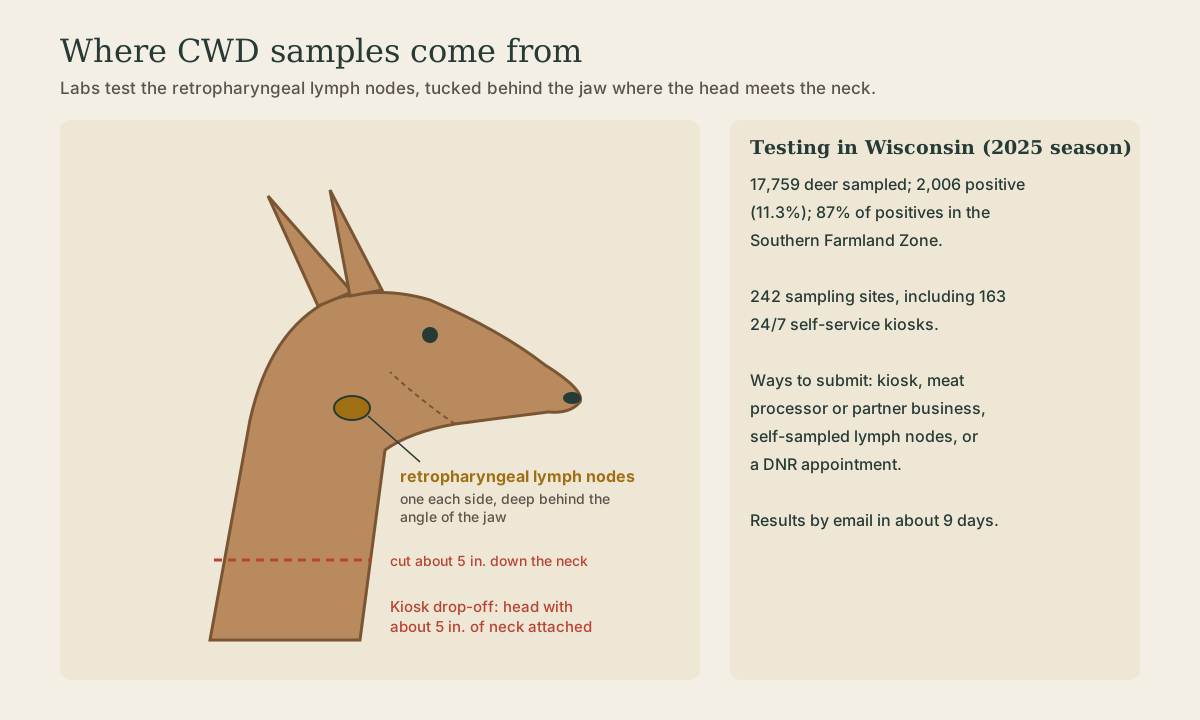
Labs test the retropharyngeal lymph nodes, tucked deep behind the angle of the jaw where the head meets the neck. Ways to submit in Wisconsin 2:
- Self-service kiosks: 163 of them in 2025, open around the clock. Drop off the head with about 5 in. of neck attached, with the required information.
- Meat processors and partner businesses, which collect heads or nodes at drop-off.
- Sample it yourself: remove the lymph nodes and drop them at a kiosk.
- DNR staff by appointment.
Results came back by email in an average of 8.9 days in 2025 2. Keep the meat frozen and labeled, separate from other deer, until you know. A negative result makes infection much less likely but doesn’t guarantee it.
Playback is optional. If the player is unavailable, open the video at its source.
Carcass disposal: don’t leave carcasses and bones on the landscape. Use DNR disposal dumpsters (127 in 2025), a licensed landfill, or your trash service as allowed 2.
Handling and processing precautions
From the National Prion Disease Pathology Surveillance Center 1:
- Don’t shoot, handle, or eat a deer that looks sick, acts strangely, or was found dead.
- Wear gloves while field dressing and processing.
- Minimize contact with the brain and spinal tissue, where prions concentrate, along with lymph nodes.
- Use dedicated tools for field dressing, not kitchen knives.
- Ask for individual processing at a processor, so your meat isn’t mixed with other deer.
At home, bone out the meat rather than sawing through bone, especially the spine; Wisconsin DATCP advises limiting sawing through bone for the same reason 3. Remove the lymph nodes and fat as you cut, and clean tools afterward with hot soapy water.
Quick check
Prions concentrate in brain, spinal cord, and lymph tissue.
Try it
Before the season, look up the kiosk nearest where you’ll hunt on the Wisconsin DNR’s CWD sampling map, and the nearest carcass dumpster. Plan to freeze the meat labeled and separate until the result arrives.
What to take from this
CWD is a fatal prion disease of deer with no documented human cases, but agencies advise testing deer from affected areas and not eating positives. In 2025 Wisconsin found 2,006 positives in 17,759 samples, mostly in the Southern Farmland Zone. Submit the head with about 5 in. of neck or the retropharyngeal lymph nodes at a kiosk, processor, or by appointment, and wait about nine days for results. Wear gloves, avoid brain and spinal tissue, use dedicated tools, bone out the meat, and dispose of carcasses properly.
Lesson complete
Nice work.
Sources for this lesson
- 1Chronic Wasting Disease (CWD). National Prion Disease Pathology Surveillance Center, Case Western Reserve University. verifiedCWD is a fatal prion disease of deer, elk, reindeer, sika deer, and moose with no treatment or vaccine; no human transmission documented, though prion incubation can last decades; test before eating and don't eat positives; don't handle sick or dead animals; gloves; minimize contact with brain and spinal tissue; dedicated tools; individual processing.
- 2DNR releases summary of 2025 CWD sampling efforts. Wisconsin Department of Natural Resources. 2026. verified17,759 deer sampled in 2025, 2,006 positive (11.3%); 87% of positives in the Southern Farmland Zone (22.7% positive there); first wild positives in La Crosse and Clark counties; 242 sampling sites including 163 self-service kiosks; average 8.9 days to results; no human cases reported; public health agencies advise against eating CWD-positive deer; 127 carcass disposal dumpsters.
- 3Caring for Venison in Warm Weather (DFS-MB-023). Wisconsin Department of Agriculture, Trade and Consumer Protection. 2013. verifiedField-dress immediately; ice or snow in sealed bags above 40 °F; don't carry deer on the hood or roof or in a trunk; chill the carcass surface to 40 °F within 24 hours; gloves; discard if organs smell offensive or show green discharge or black blood; food-grade bags, not trash bags; aging 32-36 °F, never above 40 °F, no longer than 2 weeks, hide on, only if clean and not gut-shot; don't freeze before rigor; limit sawing through bone, especially the spine; freeze at 0 °F, 9-12 months; thaw in the refrigerator.