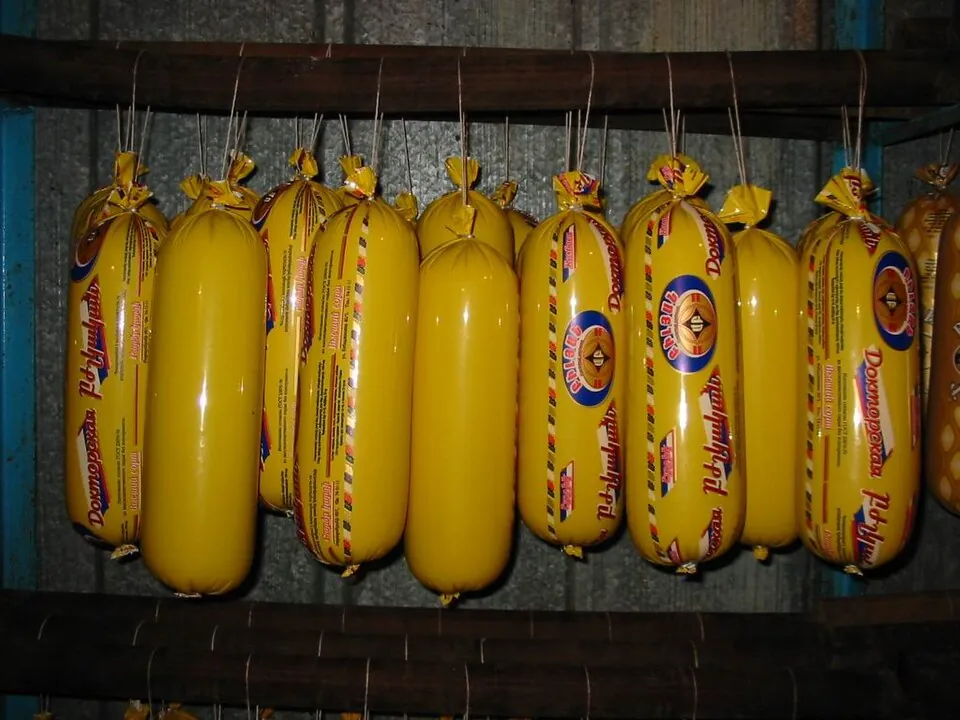
Sausage Making
Fresh pork sausage from trimmings: getting the lean-to-fat ratio right, keeping meat and grinder near 32°F so fat doesn't smear, coarse and fine grinds, seasoning by weight, mixing until tacky, soaking and stuffing natural casings, and how long sausage keeps.
- 5 min
- 7 steps
- 3 questions
- Lesson 46 of 55
In this lesson
- Lean and fat
- Keep it cold
- Grind, season, grind
- Casings and stuffing
- Storing and cooking
- Try it
- What to take from this
Picking up where you left off.
Lean and fat
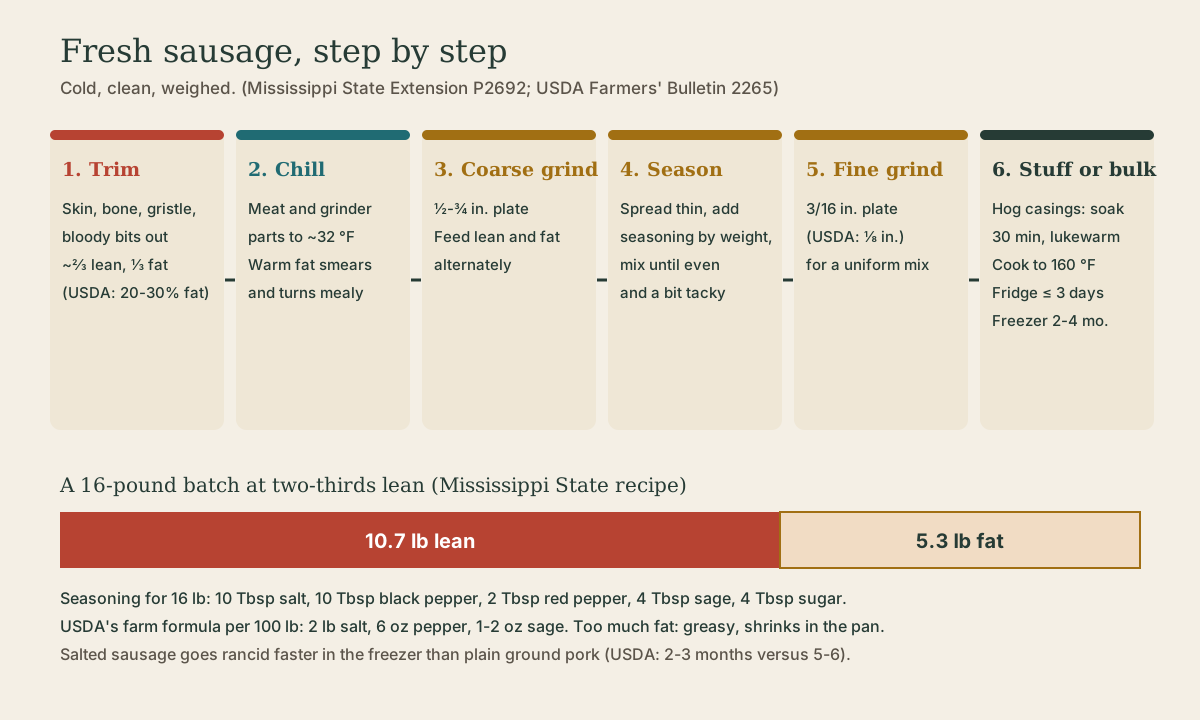
Sausage is what butchering trimmings are for: the scraps left after trimming hams, loins, bellies, and shoulders. USDA’s farm bulletin says to remove skin, bone, cartilage, and bloody bits before grinding, and to bone out a picnic shoulder if you want more or leaner sausage 1.
Fat is what makes sausage juicy. How much:
- Mississippi State: two-thirds lean, one-third fat, or 10.7 pounds of lean and 5.3 pounds of fat in a 16-pound batch 2.
- USDA: 20 to 30 percent fat. More makes sausage greasy and it shrinks a lot when cooked 1.
Whole shoulders are close to the right ratio on their own; hams usually need fat added 1. Back fat is the usual addition. For venison sausage, pork fat or pork shoulder supplies what lean deer lacks.
Quick check
More fat makes sausage greasy and it shrinks in the pan; too little makes it dry.
Keep it cold
Chill the meat to about 32°F before grinding to keep the fat from smearing 2. Warm fat smears instead of cutting cleanly, coats the lean, and gives sausage a greasy, mealy texture. Put the grinder’s head, auger, knife, and plates in the freezer too. Keep meat at 40°F or lower at all times, and work in batches so nothing sits out 2.
Quick check
Freeze the grinder head, auger, knife, and plates before you start.
Grind, season, grind
- Coarse grind through a 1/2- to 3/4-inch plate, dropping in lean and fat alternately so they mix 2.
- Season: spread the ground meat thin, sprinkle the seasoning evenly, and mix thoroughly 1.
- Fine grind through a 3/16-inch plate (USDA uses 1/8 inch) for a uniform blend 2 1.
Mississippi State’s breakfast sausage for 16 pounds of meat: 10 tablespoons salt, 10 tablespoons black pepper, 2 tablespoons red pepper, 4 tablespoons sage, 4 tablespoons sugar, and up to 1/2 pound of water 2. USDA’s per-100-pound farm formula is 2 pounds salt, 6 ounces pepper, and 1 to 2 ounces sage, plus small amounts of mace, nutmeg, cloves, or red pepper if you like 1.
Before committing a whole batch, fry a small patty and taste it. Mix until the meat turns slightly sticky: salt draws out proteins that bind the sausage together.
Casings and stuffing
Sausage can stay bulk (patties) or go into casings: natural, fibrous, or muslin 2. Natural casings are cleaned small intestines. Rinse off the salt they’re packed in and soak them about 30 minutes in lukewarm water 2. Slide a length onto the stuffing horn, tie off the end, and fill evenly without trapping air. Twist links in alternating directions and prick air pockets.

USDA’s 1978 bulletin admits that “stuffing sausage requires skill and proper equipment” and suggests a custom processor for stuffing and smoking 1. A dedicated vertical stuffer is easier than stuffing through a grinder, which reworks and warms the meat.
Smoked sausage is a different product: it needs cure. Mississippi State’s smoked sausage uses sodium nitrite at 156 parts per million of meat weight, cures about 24 hours, and smokes at no more than 90 to 95°F 2. The next lesson explains the cure.
Playback is optional. If the player is unavailable, open the video at its source.
Storing and cooking
- Cook sausage to 160°F 2.
- Refrigerate fresh sausage no more than 3 days; freeze it at 0°F or lower for 2 to 4 months; smoked sausage keeps up to 6 months frozen 2.
- Salt speeds rancidity in pork, so USDA suggests freezing unseasoned ground pork if you’ll store it long (5 to 6 months), then thawing and seasoning it 1.
Quick check
Salt speeds rancidity, so seasoned sausage keeps in the freezer for less time than plain ground pork.
Try it
Make 5 pounds of breakfast sausage from a pork shoulder: weigh the lean and fat, cube and freeze everything for 30 minutes, grind coarse, season at Mississippi State’s ratio (scaled down: about 3 tablespoons salt, 3 tablespoons pepper, 1 tablespoon sage, 1 tablespoon sugar, a pinch of red pepper), fry a test patty, adjust, regrind, and freeze in 1-pound packages.
What to take from this
Sausage turns trimmings into food: aim for about two-thirds lean, one-third fat (USDA says 20 to 30 percent fat). Keep meat and grinder near 32°F so fat cuts cleanly. Grind coarse, season by weight, mix until tacky, and grind fine. Soak natural casings 30 minutes before stuffing. Cook to 160°F, refrigerate no more than 3 days, and freeze for 2 to 4 months. Smoked sausage needs cure.
Lesson complete
Nice work.
Sources for this lesson
- 1H. Russell Cross. Pork Slaughtering, Cutting, Preserving, and Cooking on the Farm (Farmers' Bulletin 2265). U.S. Department of Agriculture (Project Gutenberg edition). 1978. verifiedIssued June 1978, revised 1981. Sausage from trimmings, more than 50 percent lean, 20-30 percent fat, ground through 1/2-in. then 1/8-in. plates, 2 lb salt, 6 oz pepper, 1-2 oz sage per 100 lb, seasoned sausage frozen no more than 2-3 months; dry cure 8-2-2 in three rubs, 36-42 F, bellies about 7 days per inch; sweet pickle cure 3-1/2 to 4 days per pound, ropy brine; soak 2 minutes per day in cure; smokehouse from a barrel and buried stovepipe; hardwoods only; ham and bacon smoking schedules; trichinae destroyed at 137 F or by specified freezing; lard rendering near 212 F and never above 255 F, leaf fat best, organ fat separately, no copper or brass, cool fast and stir to creamy.
- 2J. Byron Williams, Courtney A. Crist. Making Sausage at Home (Publication 2692). Mississippi State University Extension. 2023. verifiedTwo-thirds lean, one-third fat (10.7 lb lean, 5.3 lb fat per 16 lb); chill to about 32 F to minimize fat smearing; grind through a 1/2-3/4 in. plate then a 3/16 in. plate; seasoning for 16 lb (10 Tbsp salt, 10 Tbsp black pepper, 2 Tbsp red pepper, 4 Tbsp sage, 4 Tbsp sugar); natural casings soaked 30 minutes; nitrite at 156 ppm for smoked sausage, cured about 24 hours; smoke at no more than 90-95 F; cook to 160 F; fresh sausage refrigerated no more than 3 days, frozen 2-4 months.