Electric Fencing
How an electric fence works and why most failures are ground failures: the circuit through the animal and the soil, at least three galvanized 6–8 ft ground rods 10 ft apart, 2,000 V in summer and 4,000 in winter at the far end, the shorted-fence ground test (under 200 V), high-tensile wire at 22 and 40 inches for cattle, braced corners and post spacing, two-nail insulators and buried gate cable, training animals to respect the wire, and the never-dos (barbed wire, copper, overtightening).
- 5 min
- 8 steps
- 3 questions
- Lesson 14 of 55
In this lesson
- How it works
- Voltage
- Grounding
- Building the fence
- Training
- Troubleshooting
- Try it
Picking up where you left off.
A good electric fence holds cattle, goats, sheep, and pigs for a fraction of the cost of woven wire and moves wherever the grazing goes. A bad one teaches the animals that the wire is harmless, and then nothing holds them. The difference is almost always in parts you don’t see: the ground rods.
How it works
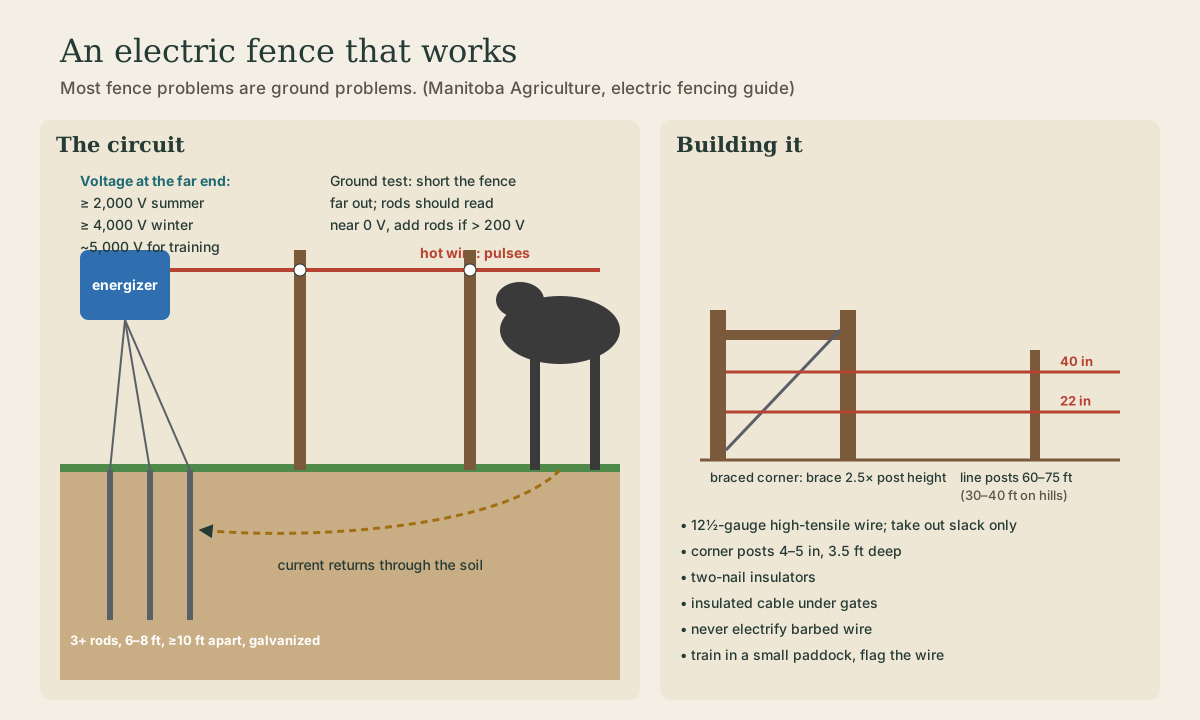
An energizer sends short, high-voltage pulses down the hot wire. When an animal touches it, current flows through the animal into the soil and back to the energizer through its ground rods, a brief, sharp shock it remembers 1. An electric fence is a psychological barrier, not a physical one, so it only works if every touch hurts.

Four things decide whether it does 1: an energizer big enough for the fence; a robust grounding system; good insulators and connections; and regular checking.
Voltage
Measure at the far end of the fence, not next to the energizer 1:
- ≥ 2,000 V in summer.
- ≥ 4,000 V in winter, when thick hair coats and frozen, snowy ground make the shock weaker.
- About 5,000 V for training.
Buy an energizer a little larger than you need today so the fence holds voltage when grass grows into it and when you add paddocks 1. Mount it indoors or out of rodents’ reach, with a lightning arrestor.
Grounding
Grounding is the most critical part of the system 1:
- At least three ground rods, 6–8 ft long.
- At least 10 ft apart, and at least 6 ft from the energizer.
- Galvanized rods, clamps, and wire. Never copper, which corrodes where it touches galvanized steel.
Test it: far out on the fence, short the hot wire to the ground with a metal bar, then read the voltage at the ground rods. A good ground reads near 0 V; over 200 V means add rods 1. Dry, sandy ground needs more rods than wet clay.
Quick check
Galvanized rods and connectors; copper corrodes against galvanized steel.
Building the fence
From Manitoba’s guide 1:
- 12½-gauge galvanized high-tensile wire. Take out the slack, don’t overtighten, and loosen it for winter, since contracting wire pulls braces out of line.
- A two-wire cattle fence at 22 and 40 inches from the ground. Bond top and bottom wires together at least every half mile. Goats and sheep need more, lower wires.
- Braced corners: the horizontal brace about 2.5 times the height of the post; corner posts 4–5 inches thick set 3.5 ft deep.
- Line posts up to 60–75 ft apart on level ground, 30–40 ft on hills.
- Two-nail insulators. Single-nail ones tilt and leak power.
- At gates, carry the power across in insulated cable buried in conduit, not overhead gate wire.
For rotational grazing, polywire or polytape with at least six conductive strands on step-in posts and a reel goes up and comes down in minutes 1.
Training
New animals, and animals that have never seen electric fence, need to learn it before you trust it 1:
- Use a small training paddock with 3–4 hot wires, at about 5,000 V.
- Tie foil or flagging to the wire so they investigate it with their noses.
- Most cattle learn after one shock and stay away from the fence within 3–4 days.
Quick check
Most cattle learn after one shock and avoid the fence within 3–4 days.
Troubleshooting
Low voltage is the common complaint. In order of likelihood 1:
- Vegetation touching the wire: walk the line and clear it.
- Broken, cracked, or cheap insulators.
- Poor grounding: run the shorted-fence test above.
- Low battery or a misaimed panel on a solar energizer.
- An energizer too small for the fence.
Record the voltage readings when the fence is new; later you’ll know what “normal” looks like. A fault finder points you toward the problem.
Never: electrify barbed wire or run electric wire alongside it, carry power across a brace with gate wire, or turn untrained animals into a new paddock 1.
Quick check
Vegetation touching the wire is the most common cause of low voltage; poor grounding is the next.
Try it
If you already have an electric fence, buy a fence tester and walk it: read the voltage at the far end, short it and read the ground rods, and note every insulator and weed touching the wire. If you’re building one, set the corner braces first, drive three galvanized ground rods, and test before the animals arrive.
Lesson complete
Nice work.
Sources for this lesson
- 1Electric Fencing for Livestock: A Practical, Professional Guide. Manitoba Agriculture. verifiedReliable performance depends on a powerful energizer, a robust grounding system (the most critical component), good insulation and connections, and maintenance. Target at the far end: at least 2,000 V summer, 4,000 V winter, about 5,000 V for training. Grounding: at least three galvanized rods 6-8 ft long, at least 2 m from the energizer and 3 m apart; galvanized clamps and wire, never copper; short the fence and if the ground rods read over 200 V add rods. 12.5-gauge high-tensile wire; two-wire cattle fence at 22 and 40 in; bond wires every half mile; two-nail insulators; underground coated cable under gates; horizontal brace 2.5 times the vertical post height, corner posts 4-5 in diameter set 3.5 ft deep; line posts 60-75 ft on level ground, 30-40 ft on hills. Train cattle in a 3-4 acre paddock with 3-4 hot wires and flagging; most learn after one shock, avoiding the fence after 3-4 days. Don't electrify barbed wire or run electric alongside barbed wire; don't overtighten; don't leave wire tight over winter; vegetation is the most common cause of low voltage.