Field Dressing
Gutting a deer cleanly and quickly so the meat cools and stays clean: what to carry, the step-by-step cuts from breastbone to anus, keeping the heart and liver, signs a carcass shouldn't be eaten, handling a gut-shot deer, and cooling and hauling it home.
- 5 min
- 7 steps
- 3 questions
- Lesson 39 of 55
In this lesson
- Why speed and cleanliness matter
- The cuts
- Heart, liver, and warning signs
- Clean up the cavity
- Cooling and hauling
- Try it
- What to take from this
Picking up where you left off.
Why speed and cleanliness matter
Field dressing removes the guts so the carcass loses heat fast and bacteria from the gut don’t reach the meat. Do it as soon as possible after the kill 1 2. Contamination is the most common mistake hunters make, and once fecal or stomach contents touch the meat, they can’t be fully cleaned off.
What to carry 2: a sharp knife, a small hatchet or saw, a whetstone or steel, several feet of rope, 6-in. rubber bands or string, paper towels or clean cloths, sealable food-grade bags, disposable gloves, clean water, and a cooler of ice for the trip home.
Gloves: wear disposable gloves, wash hands and arms before and after, and clean the knife often between cuts with clean water or alcohol wipes 1.
The cuts
Tie a leg to a tree with 6-8 ft of rope, or prop the deer on its back with logs or rocks, so the cavity stays open 1.
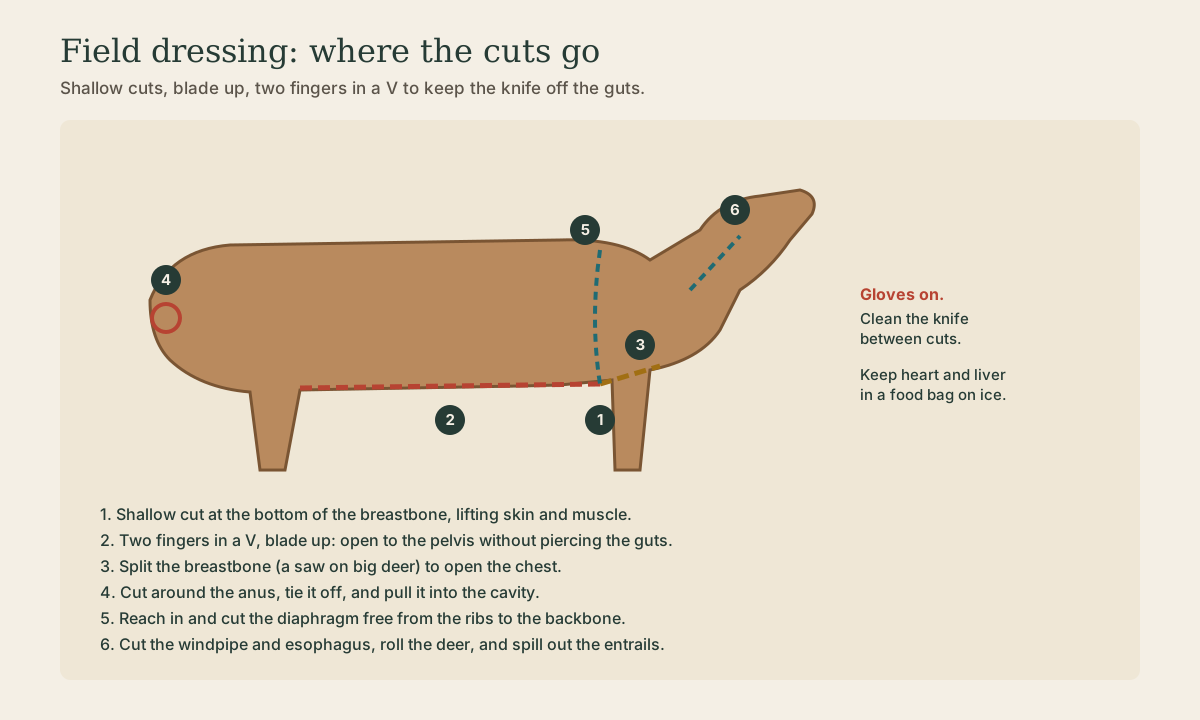
- Start at the bottom of the breastbone with a shallow cut, lifting skin and belly muscle together 1.
- Open the belly: blade facing up, two fingers in a V on either side of it pushing the guts away, cut along the midline to the pelvis without piercing the entrails 1.
- Remove the reproductive organs, with as small an opening as practical 1.
- Open the chest: cut forward from the breastbone and split the rib cage at the breastbone, with a small saw on a large deer 1.
- Pelvis and anus: continue from the pelvis to the anus, split the pelvic bone with a saw, cut carefully around the urethra without severing it, then cut around the anus, tie it off with a rubber band or string, and pull it into the body cavity 1. Pinch the bladder shut and cut it free carefully so it doesn’t spill.
- Diaphragm: hold the ribs open, reach in, and cut the diaphragm free from the rib cage down to the backbone, avoiding the stomach and intestines 1.
- Windpipe and esophagus: reach up into the chest and cut them as far forward as you can 1.
- Roll the deer on its side and spill out the entrails, loosening connective tissue as needed 1.
Playback is optional. If the player is unavailable, open the video at its source.
Quick check
Puncturing the guts contaminates the meat, one of the most common mistakes.
Heart, liver, and warning signs
Put the heart and liver in a resealable food bag and chill them 1. Look at the organs as they come out: if they smell offensive, show greenish discharge, black blood, or blood clots, or anything else looks abnormal, don’t eat the meat and dispose of the carcass properly 2 1. Don’t take a deer that looked sick or acted strangely (see Chronic Wasting Disease and Testing).
Quick check
If in doubt about the deer’s health, don’t take the risk.
Clean up the cavity
Prop the cavity open with a clean stick, remove any dirt, hair, feces, and bloodshot meat, drain blood, and wipe it out with paper towels 1 2. If you rinse it with clean water, dry it quickly; a wet cavity spoils faster 2.
Gut-shot: field dress immediately, trim away anything contaminated with a clean knife, cleaning the knife often, wash only if needed and dry thoroughly, and prop it open 1. Don’t age a gut-shot deer 2.
Cooling and hauling
- Chill fast: aim to get the carcass surface to 40 °F or below within 24 hours 2. If the air is above 40 °F, put ice or snow in sealed bags into the cavity and tie it shut 2 1.
- Keep it shaded and ventilated. Don’t tie a deer on the hood or roof or shut it in a trunk, where it warms up 2.
- Skin and refrigerate below 40 °F as soon as you reach home or camp 1, and always skin it before taking it to a processor 1.
- Follow Wisconsin’s registration and tagging rules for the season.
Quick check
Aim to chill the carcass surface to 40 °F within 24 hours; above 45 °F, refrigerate within 3-4 hours if you can.
Try it
Before the season, pack a field-dressing kit in a gallon bag: gloves, knife, small saw, rope, rubber bands, paper towels, two food-grade bags, and alcohol wipes. Walk through the eight steps on paper with the diagram until you can say them in order.
What to take from this
Field dress immediately, with gloves and a frequently cleaned knife. Open from the breastbone to the pelvis with the blade up and two fingers guarding the guts, split the breastbone and pelvis, tie off and pull the anus through, free the diaphragm, cut the windpipe, and roll out the entrails. Bag the heart and liver, reject the carcass if the organs look or smell wrong, wipe the cavity dry, and chill it to 40 °F within 24 hours, with ice in warm weather, out of the sun and off the hood.
Lesson complete
Nice work.
Sources for this lesson
- 1Catherine N. Cutter. Field Dressing Deer Pocket Guide. Penn State Extension. 2015. verifiedGloves and clean knife between cuts; tie a leg or prop the carcass; shallow cut at the bottom of the breastbone; two fingers in a V, blade up, to the pelvis; split breastbone and pelvis; cut around and tie off the anus; free the diaphragm; roll out the entrails and remove windpipe and esophagus; bag and chill heart and liver; discard if organs smell bad or look abnormal; prop open, clean, dry; ice or snow in bags in the cavity; skin and refrigerate below 40 °F at home or camp.
- 2Caring for Venison in Warm Weather (DFS-MB-023). Wisconsin Department of Agriculture, Trade and Consumer Protection. 2013. verifiedField-dress immediately; ice or snow in sealed bags above 40 °F; don't carry deer on the hood or roof or in a trunk; chill the carcass surface to 40 °F within 24 hours; gloves; discard if organs smell offensive or show green discharge or black blood; food-grade bags, not trash bags; aging 32-36 °F, never above 40 °F, no longer than 2 weeks, hide on, only if clean and not gut-shot; don't freeze before rigor; limit sawing through bone, especially the spine; freeze at 0 °F, 9-12 months; thaw in the refrigerator.