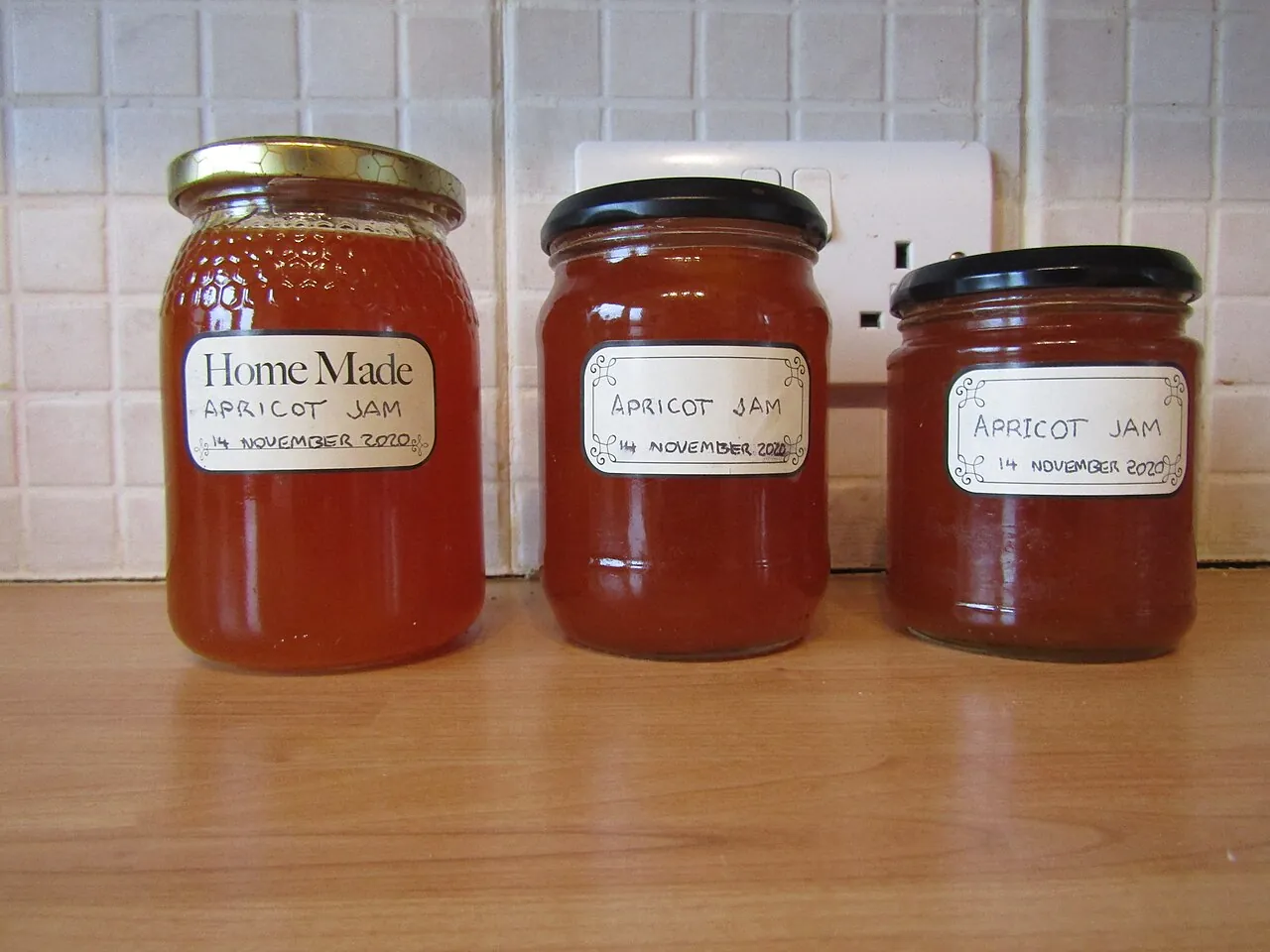
Jams, Jellies, and Pectin
Sweet spreads and how they set: fruit, pectin, acid, and sugar, jelly without added pectin from extracted juice, the jellying point at 220 °F and the sheet test, jam without added pectin, added-pectin recipes, reduced-sugar spreads, processing, and fixing soft jelly.
- 4 min
- 7 steps
- 3 questions
- Lesson 25 of 55
In this lesson
- How a spread sets
- Jelly without added pectin
- Jam without added pectin
- With added pectin
- Filling and processing
- Try it
- What to take from this
Picking up where you left off.
How a spread sets
Sweet spreads are fruit preserved mostly by sugar and thickened or jelled by pectin 1. Four things have to be in balance: fruit, pectin, acid, and sugar. Pectin forms the gel, acid helps it set, and sugar draws water away from pectin so it can bond, while also preserving.

- Jelly: clear, made from strained juice.
- Jam: crushed or chopped fruit cooked until it thickens.
- Preserves, conserves, marmalades, and butters: whole pieces, nuts, citrus peel, or long-cooked purées.
Some fruits carry enough pectin and acid alone: apples, crabapples, sour plums, cranberries, gooseberries, currants, and Concord grapes. Others need added pectin or a pectin-rich partner.
Jelly without added pectin
- Use firm fruit naturally high in pectin, about 3/4 ripe and 1/4 underripe. Don’t use bottled or frozen juice; its pectin is too low.
- Crush soft fruit, cut firm fruit small, and include peels and cores, which add pectin. Add water as the recipe says, boil, then simmer until soft. A pound of fruit should yield at least a cup of clear juice.
- Strain through a colander, then a double layer of cheesecloth or a jelly bag, letting it drip without squeezing, which clouds the jelly.
- Work in batches of no more than 6-8 cups of juice. Add sugar and lemon juice per the recipe, stir to dissolve, and boil hard.
- Cook to the jellying point: 220 °F at sea level, 8 °F above boiling, and 218 °F at 1,000 ft or 216 °F at 2,000 ft. Or use the sheet test: lift a cool metal spoon of boiling jelly a foot above the pot and turn it; it’s done when the syrup forms two drops that run together and sheet off the edge.
- Remove from heat and skim the foam.
Quick check
It’s lower at altitude: 218 °F at 1,000 ft, 216 °F at 2,000 ft.
Quick check
Let the juice drip through on its own.
Jam without added pectin
Use fully ripe fruit, washed but not soaked; remove stems, pits, and skins; crush; and cook with sugar per the recipe, stirring often, until it thickens 2. Jam without added pectin takes longer cooking, so it tastes more caramelized and yields less.
With added pectin
Commercial powdered and liquid pectins aren’t interchangeable, and the order of adding pectin and sugar differs. Follow the directions for the specific product. Added pectin sets reliably with less cooking, so the fresh fruit flavor and color hold up better.
Reduced sugar: in regular recipes sugar is part of the set and the preservation, so cutting it gives soft, quicker-spoiling spreads. Use pectins made for low or no sugar and their recipes, or refrigerated spreads set with gelatin, which aren’t canned 2.
Playback is optional. If the player is unavailable, open the video at its source.
Filling and processing
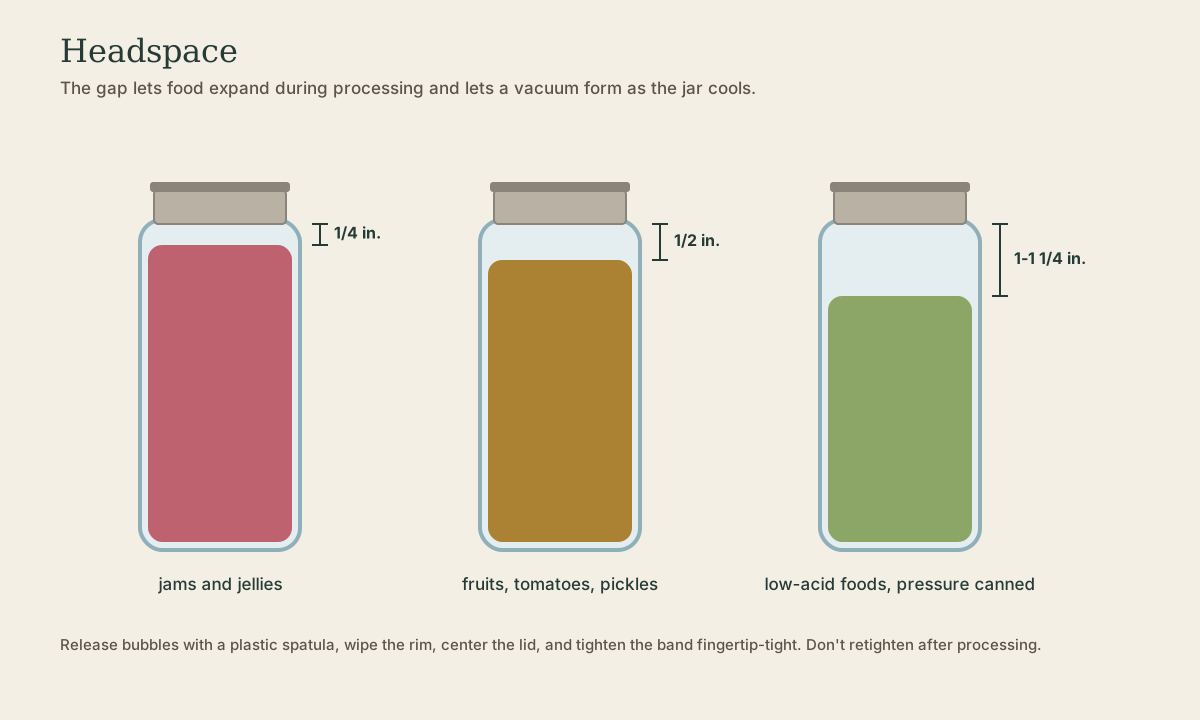
Fill sterile jars (see Water-Bath Canning) with hot jelly or jam through a wide funnel, leaving 1/4 in. headspace; wipe rims and lid them 2. Process in a boiling-water canner: half-pints or pints, 5 minutes at 0-1,000 ft, 10 minutes at 1,001-6,000 ft 2. Paraffin seals are no longer recommended.
Soft jelly: some set slowly; wait a couple of days. If it’s still runny, the USDA guide gives directions for remaking it with added pectin or more cooking 2.
Quick check
10 minutes at 1,001-6,000 ft; because the process is under 10 minutes, the jars must be sterilized first.
Try it
Make crabapple or chokecherry-apple jelly without added pectin: extract the juice, cook a 4-cup batch to the jellying point with a thermometer, check it with the sheet test, and can it in sterile half-pints.
What to take from this
Spreads set from a balance of fruit, pectin, acid, and sugar. For jelly without added pectin, use mostly ripe plus some underripe high-pectin fruit, drip the juice without squeezing, cook small batches to 220 °F at sea level (lower at altitude) or the sheet test, and skim. Added pectin sets faster with fresher flavor; follow that product’s recipe, and use special pectins for reduced-sugar spreads. Fill sterile jars with 1/4 in. headspace and process 5 minutes up to 1,000 ft, 10 minutes above.
Lesson complete
Nice work.
Sources for this lesson
- 1Complete Guide to Home Canning, Guide 1: Principles of Home Canning (2015 revision). U.S. Department of Agriculture and National Center for Home Food Preservation. 2015. verifiedBotulinum toxin forms in moist low-acid food at 40-120 °F with under 2% oxygen; pH 4.6 divides acid and low-acid foods; low-acid foods processed at 240-250 °F (10-15 psi); altitude adjustments above 1,000 ft; headspace 1/4, 1/2, and 1-1 1/4 in.; sterilize jars for processes under 10 minutes; vent pressure canners 10 minutes; check dial gauges yearly; no open-kettle, oven, microwave, or dishwasher canning; test seals after 12-24 hours; store below 95 °F; spoilage signs and detoxifying suspect jars by boiling 30 minutes; pickling salt and 5% vinegar; don't alter tested recipes.
- 2Complete Guide to Home Canning, Guide 7: Preparing and Canning Jams and Jellies (2015 revision). U.S. Department of Agriculture and National Center for Home Food Preservation. 2015. verifiedJelly without added pectin from 3/4 ripe and 1/4 underripe fruit; drip juice without squeezing; 6-8 cups juice per batch; jellying point 220 °F at sea level (8 °F above boiling), lower with altitude; sheet test; sterile jars, 1/4 in. headspace; jams and jellies process 5 minutes at 0-1,000 ft, 10 minutes at 1,001-6,000 ft.