Raspberries
Raspberries by UW-Madison Extension A1610: which colors grow where in Wisconsin, the two-year primocane and floricane cycle that explains all pruning, summer-bearers (cut out fruited canes after harvest, thin to 3–4 canes per foot) versus fall-bearers (mow once a year), the narrow hedgerow at 2–3 ft spacing in rows 6 ft apart, pH 6.0–6.8, and keeping new plantings away from wild brambles and old tomato or strawberry ground.
- 4 min
- 7 steps
- 3 questions
- Lesson 7 of 55
In this lesson
- Which raspberries grow where
- Two years per cane
- Site and planting
- Summer-bearers
- Fall-bearers
- Try it
Picking up where you left off.
Raspberries are among the easiest fruits for a Wisconsin homestead: they’re hardy, they fruit the year after planting, and a well-kept row gives 1 to 2 quarts per plant 1. The one thing people get wrong is pruning, and that comes down to understanding the canes.
Which raspberries grow where
From A1610 1:

- Red and yellow: statewide.
- Purple: the lower two-thirds of the state.
- Black: only the southern quarter, and only on good sites.
- Fall-bearing reds: the southern two-thirds, since frost can cut off the crop farther north. Summit ripens early enough to try in the north.
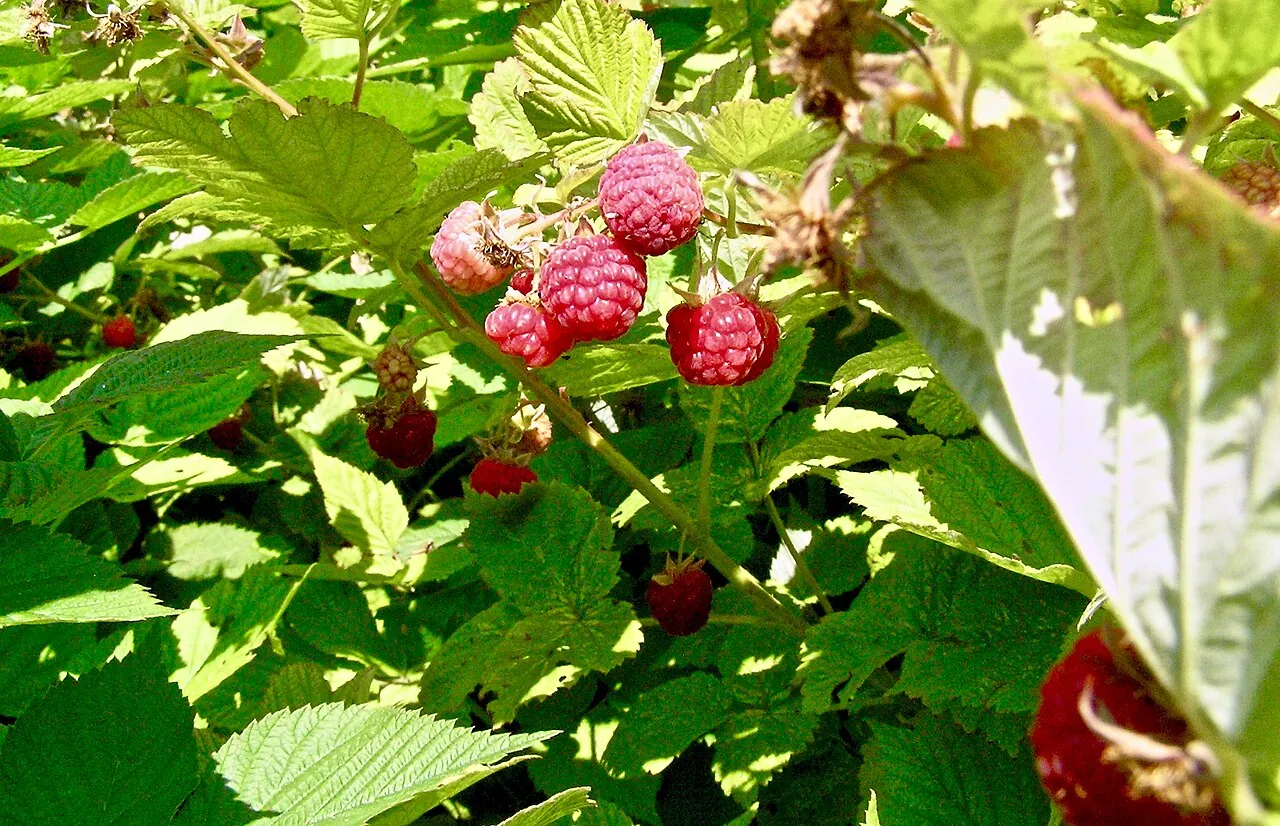
Proven summer-bearing reds include Boyne, Nova, Festival, and the old, very hardy Latham. Fall-bearers include Summit, Caroline, and Heritage 1.
Two years per cane
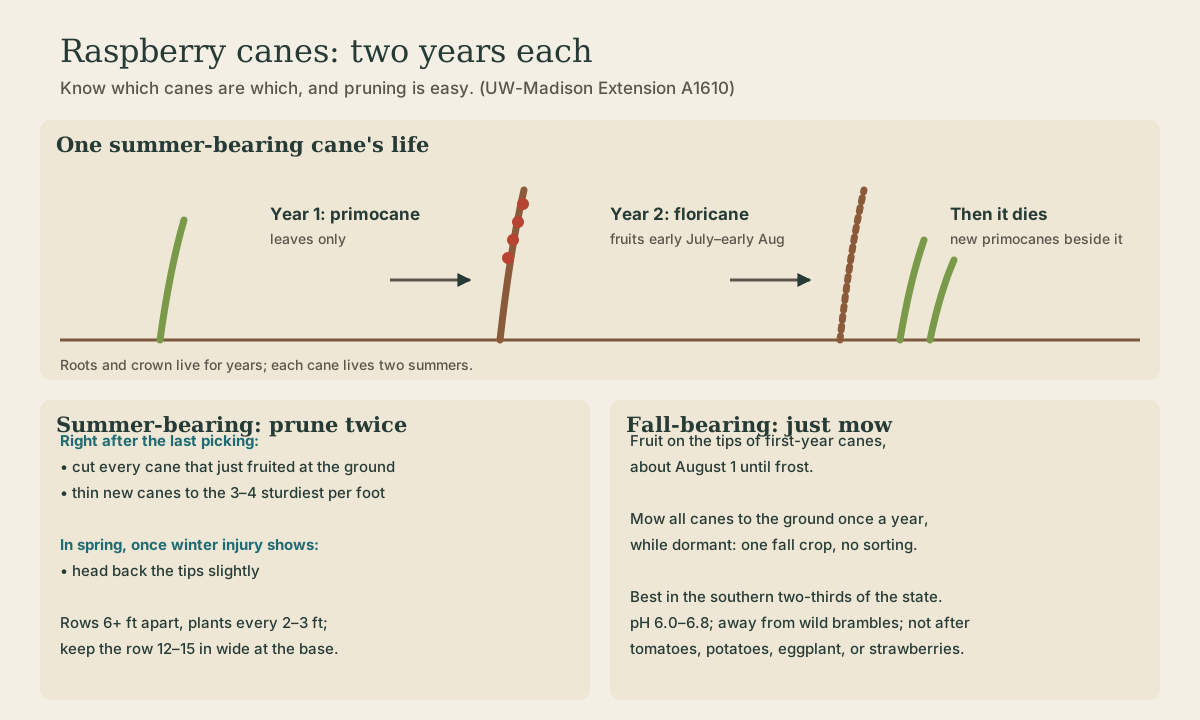
The roots and crown of a raspberry live for many years, but each cane lives only two summers 1:
- Year one: primocane. On summer-bearers it only grows leaves.
- Year two: floricane. The same cane fruits, from early July to early August, then dies.
New primocanes come up every year alongside the floricanes, so a row always has both. Fall-bearers are different: they fruit on the tips of first-year canes from about August 1 until frost, and would fruit again lower down the next summer 1.
Quick check
A cane grows leaves its first summer, fruits its second, then dies.
Site and planting
- Soil: well drained, ideally with a lot of organic matter; sandy soils work with irrigation. Raspberries like pH 6.0–6.8 and tolerate 5.5–7.5 1.
- Air: a slope or open spot so canes dry quickly after rain and dew.
- Disease history: keep new plantings away from wild raspberries and blackberries, and don’t plant where raspberries, strawberries, tomatoes, potatoes, or eggplant grew in the last 3 years. They share many diseases 1.
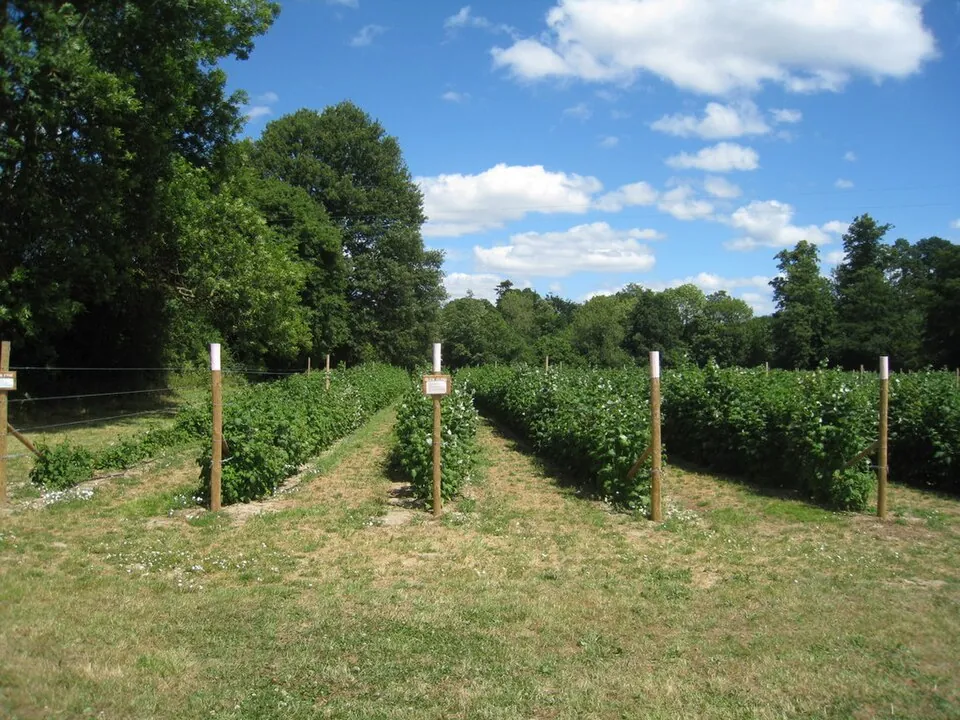
- Layout: the narrow hedgerow. Set reds every 2–3 ft in rows at least 6 ft apart (blacks and purples in rows 8 ft apart). Let new shoots fill in along the row, but don’t let the row get wider than 12–15 inches at the base: wide rows are hard to weed and pick and stay damp, which invites disease. Keep a 2–3 ft weed-free strip on each side with grass between rows 1.

A two-wire trellis on cedar posts about 20 ft apart keeps tall canes upright and the fruit where you can reach it 1.
Summer-bearers
Prune twice a year 1:
- Right after the last picking: cut every cane that just fruited at ground level and haul it away. Those canes are about to die anyway, and they carry disease. At the same time, thin the new canes to the three or four sturdiest per foot of row.
- In spring, after winter injury shows but before growth starts: finish any thinning you missed and head back the tips slightly, cutting off winter-killed ends and a little extra.
Last year’s fruited canes are easy to spot in summer: they’re woody, gray-brown, and peeling, while this year’s primocanes are green and flexible.
Playback is optional. If the player is unavailable, open the video at its source.
Quick check
The fruited canes will die anyway; removing them takes out disease and makes room for next year’s crop.
Fall-bearers
Fall-bearers can be pruned like summer-bearers for two small crops, but A1610 notes they’re usually mowed to the ground once a year, so they bear one big crop in the fall 1. Mow while they’re dormant, and the whole job takes ten minutes. A floating row cover over a freshly mowed bed in early spring can bring the fall harvest 5 to 15 days earlier; take it off when it’s above 80 °F or the canes are 12–18 inches tall 1.
Quick check
They fruit on first-year canes, so mowing gives one big fall crop every year.
Try it
Pick a sunny, well-drained strip that hasn’t grown tomatoes, potatoes, or strawberries for three years and is well away from wild brambles. Test the soil this fall. Next spring, plant a 20-foot row of a summer-bearer such as Nova and a 20-foot row of a fall-bearer such as Caroline: two harvests, two pruning styles.
Lesson complete
Nice work.
Sources for this lesson
- 1Growing Raspberries in Wisconsin (A1610). University of Wisconsin-Madison Extension. verifiedRed and yellow grow statewide, purple in the lower two-thirds, black only in the southern quarter. Yields 1-2 quarts per plant. Canes live two summers: primocane (first year) and floricane (second); summer-bearers fruit early July to early August on floricanes; fall-bearers fruit on primocane tips from about August 1 until frost and are usually mowed annually for one fall crop; fall-bearers recommended for the southern two-thirds. pH 6.0-6.8 (tolerates 5.5-7.5); isolate from wild brambles; wait 3 years after raspberries, strawberries, tomatoes, potatoes, eggplant. Narrow hedgerow: reds every 2-3 ft in rows at least 6 ft apart, row 12-15 in wide at the base. Summer-bearer pruning: right after harvest remove fruited canes at ground level and thin new canes to 3-4 sturdiest per foot; in spring head back tips slightly. Cultivars include Boyne, Nova, Festival, Latham; fall: Summit (good for the north), Caroline, Heritage.