Felling Trees
Dropping a tree where you mean it to go: reading lean, wind, dead limbs, and snow, dealing with danger trees, keeping everyone two tree lengths away, clearing a retreat path diagonally behind the stump, the undercut, hinge, and back cut, and limbing and bucking from the uphill side.
- 4 min
- 6 steps
- 3 questions
- Lesson 21 of 55
In this lesson
- Plan the fell
- Clear the area
- Undercut, hinge, and back cut
- Limbing and bucking
- Try it
- What to take from this
Picking up where you left off.
Plan the fell
OSHA’s rules for manual felling start before the saw is running 1:
- Read the tree: evaluate lean, wind, dead limbs, and snow and ice loads, and knock down or wait out accumulations that could fall 1.
- Pick the felling direction: with the lean when you can, into an opening, away from buildings, lines, and other trees.
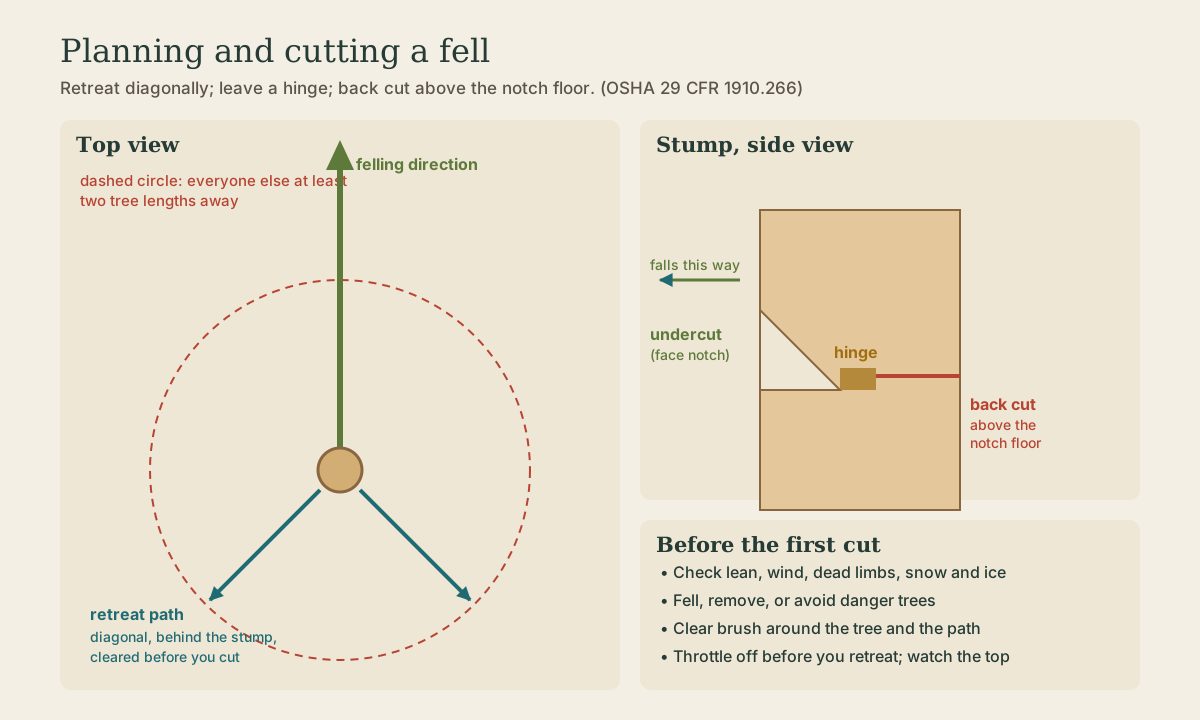
- Plan and clear a retreat path that runs diagonally away from the expected felling line, behind the stump; clear brush so you won’t trip 1. Never retreat straight back: a tree that kicks back off the stump or rides a limb comes straight back along its line.
Danger trees (deteriorated, damaged, or with broken limbs hanging) must be felled, removed, or avoided, with techniques that keep people out of reach; check for loose bark and hanging limbs and get them down first if you can 1. Never domino fell (cutting one tree partway and dropping another into it) 1.
Quick check
Plan and clear it before you start cutting.
Clear the area
No one comes closer than two tree lengths to a tree being felled until the feller says it’s safe 1. When cutting a spring pole (a sapling bent under another tree), keep everyone else two tree lengths away when the tension releases 1.
On a slope, fell uphill from or level with trees already down, so they don’t roll onto you 1.
Quick check
The same distance applies around a spring pole when its stress is released.
Undercut, hinge, and back cut
- Undercut (face notch): cut on the side facing the felling direction, “of a size so the tree will not split and will fall in the intended direction” 1. The notch aims the tree.
- Back cut: from the opposite side, leaving sufficient hinge wood to hold the tree to the stump during most of its fall 1. The hinge is the steering wheel: cut through it and the tree goes wherever it likes.
- The back cut sits above the level of the horizontal face cut, so the step that’s left stops the butt from sliding back toward you (kickback off the stump) 1.
When the tree starts to go, release the throttle or shut off the saw and walk out your retreat path, watching the top 1.
Playback is optional. If the player is unavailable, open the video at its source.
Quick check
The step stops the butt from kicking back; the hinge steers the fall.
Limbing and bucking
Once it’s down:
- On a slope, work from the uphill side of each log 1.
- With wind-thrown trees, the root wad can tip back upright and the butt can jump when cut free; chock or move the tree first 1.
- Watch for limbs and stems under tension, which can whip when cut, and keep the bar’s tip out of the wood to avoid kickback.
Try it
Before felling anything, practice on a log on the ground: cut a face notch and a back cut, leaving a hinge, and study the shape. Then, for your first real tree, pick a small, straight one leaning gently into an open area, and fell it with an experienced cutter watching. Write your plan first: lean, wind, felling direction, retreat path, and who’s watching from two tree lengths.
What to take from this
Read lean, wind, dead limbs, and snow before cutting, and fell, remove, or avoid danger trees; never domino fell. Keep everyone two tree lengths away. Plan and clear a retreat path diagonally behind the stump. Cut an undercut that aims the tree, then a back cut above the notch floor that leaves hinge wood to steer the fall. Release the throttle and retreat. Limb and buck from the uphill side.
Lesson complete
Nice work.
Sources for this lesson
- 129 CFR 1910.266, Logging Operations. Occupational Safety and Health Administration. verifiedChain saws: chain brake; continuous-pressure throttle; fuel at least 10 feet from open flame or ignition; start at least 10 feet from fueling, on the ground or firmly supported, never drop-started, with the chain brake engaged; thumbs and fingers of both hands encircling the handles; secure footing; clear brush from the work and retreat path; no cutting directly overhead; throttle released before retreat; brake or shut off when carried more than 50 feet. PPE: head, eye and face protection, cut-resistant leg protection such as ballistic nylon covering the full thigh to the boot top, cut-resistant foot protection. Felling: no one closer than two tree lengths; danger trees felled, removed, or avoided; no domino felling; plan and clear a retreat path diagonally away from the felling line; evaluate snow and ice, wind, lean, dead limbs; undercut sized so the tree won't split and falls as intended; backcut leaving sufficient hinge wood, above the level of the horizontal face cut; limb and buck from the uphill side.