Chainsaw Safety
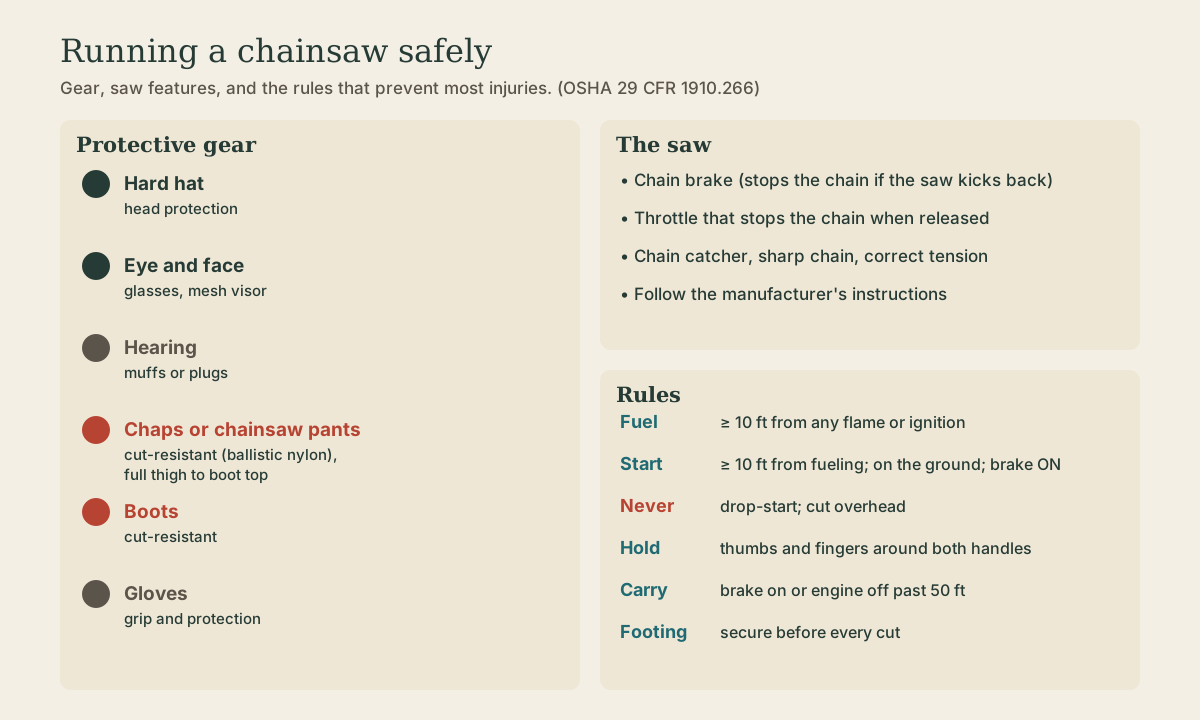
The chainsaw habits OSHA requires of professional loggers, applied at home: chaps, helmet, eye and ear protection, and cut-resistant boots; the chain brake and throttle; fueling and starting distances; never drop-starting; two hands on the handles; no overhead cuts; and carrying the saw safely.
- 4 min
- 7 steps
- 3 questions
- Lesson 20 of 55
In this lesson
- Start with the rules
- The saw
- Fuel and start
- Cutting
- Carrying
- Try it
- What to take from this
Picking up where you left off.
Start with the rules
OSHA’s logging standard sets the rules professional loggers work under. They’re a good minimum for anyone cutting firewood or clearing a woodlot 1.
Wear the gear
For chain saw operators, OSHA requires 1:
- Head protection: a hard hat. Falling limbs are the classic killer.
- Eye protection, and face protection where there’s a risk to the face; a mesh visor on a forestry helmet does both.
- Leg protection made of cut-resistant material, such as ballistic nylon, covering the full length of the thigh to the top of the boot on each leg. Chaps work by fouling the chain with long fibers that jam the sprocket in a fraction of a second.
- Foot protection: boots of cut-resistant material that protect against contact with a running saw.
Add hearing protection; a saw is loud enough to damage hearing over a day of cutting.
Quick check
Cut-resistant boots protect the feet too.
The saw
- A chain brake: required on saws, along with protection that minimizes kickback 1. Kickback is the sudden upward and backward throw of the bar toward the operator, most often when the upper tip of the bar touches wood; the brake stops the chain.
- A continuous-pressure throttle that stops the chain when you let go 1.
- Follow the manufacturer’s instructions for operating and adjusting the saw 1: chain sharp, tension right, chain catcher in place.
Quick check
And fuel at least 10 feet from any open flame or ignition source.
Quick check
Start it on the ground or firmly supported, with the chain brake engaged.
Cutting
- Hold the saw with the thumbs and fingers of both hands wrapped around the handles 1.
- Get secure footing before you start a cut 1.
- Clear brush that could catch the saw or block your retreat path 1.
- Never cut directly overhead 1.
- Shut the saw off or release the throttle before you retreat from a falling tree 1.
- When limbing and bucking on a slope, work from the uphill side so a rolling log can’t take you with it 1.
Carrying
Carry the saw so you can’t touch the chain or the hot muffler, and engage the chain brake or shut it off to carry it more than 50 feet or across hazardous ground 1. Bar to the rear, on the downhill side.
Try it
Before your next cutting day, check the saw: chain brake engages and stops the chain, throttle returns and the chain stops at idle, chain is sharp and tensioned, chain catcher is there. Lay out your gear (helmet with visor and muffs, chaps, boots, gloves) and don’t start the saw until it’s all on. Practice starting on the ground with the brake on until it’s automatic.
What to take from this
Wear a hard hat, eye and face protection, hearing protection, cut-resistant chaps covering thigh to boot top, and cut-resistant boots. Use a saw with a working chain brake and a throttle that stops the chain. Fuel 10 feet from ignition, start 10 feet from fueling, on the ground with the brake on, never drop-start. Two hands, firm footing, no overhead cuts, throttle off before retreating, and brake on to carry it more than 50 feet.
Lesson complete
Nice work.
Sources for this lesson
- 129 CFR 1910.266, Logging Operations. Occupational Safety and Health Administration. verifiedChain saws: chain brake; continuous-pressure throttle; fuel at least 10 feet from open flame or ignition; start at least 10 feet from fueling, on the ground or firmly supported, never drop-started, with the chain brake engaged; thumbs and fingers of both hands encircling the handles; secure footing; clear brush from the work and retreat path; no cutting directly overhead; throttle released before retreat; brake or shut off when carried more than 50 feet. PPE: head, eye and face protection, cut-resistant leg protection such as ballistic nylon covering the full thigh to the boot top, cut-resistant foot protection. Felling: no one closer than two tree lengths; danger trees felled, removed, or avoided; no domino felling; plan and clear a retreat path diagonally away from the felling line; evaluate snow and ice, wind, lean, dead limbs; undercut sized so the tree won't split and falls as intended; backcut leaving sufficient hinge wood, above the level of the horizontal face cut; limb and buck from the uphill side.