Resting, Cutting Up, and Freezing a Bird
Finishing the birds: chilling and resting until rigor passes so the meat is tender, cutting a whole bird into eight pieces through the joints, splitting or spatchcocking for the grill, packaging without air, freezing, and why pink meat near the bones of young birds is safe.
- 5 min
- 5 steps
- 3 questions
- Lesson 38 of 55
In this lesson
- Chill and rest
- Eight pieces
- Freezing
- Try it
- What to take from this
Picking up where you left off.
Chill and rest
After evisceration, birds go into ice water until the carcass reaches 40 °F 1. Then they need to rest before freezing. Right after slaughter the muscles stiffen in rigor mortis; freeze a bird in rigor and it cooks up tough. Resting cold lets rigor pass.
NDSU Extension’s rule: chill home-slaughtered poultry in the refrigerator below 40 °F, 6 hours for broiler-fryers and 24 hours for older birds. Without fridge space, two to three hours in a large tub of ice water will do 2.
Drain the birds well before cutting or packaging 1.
Quick check
NDSU’s figures; resting lets rigor pass, so the meat isn’t tough.
Eight pieces
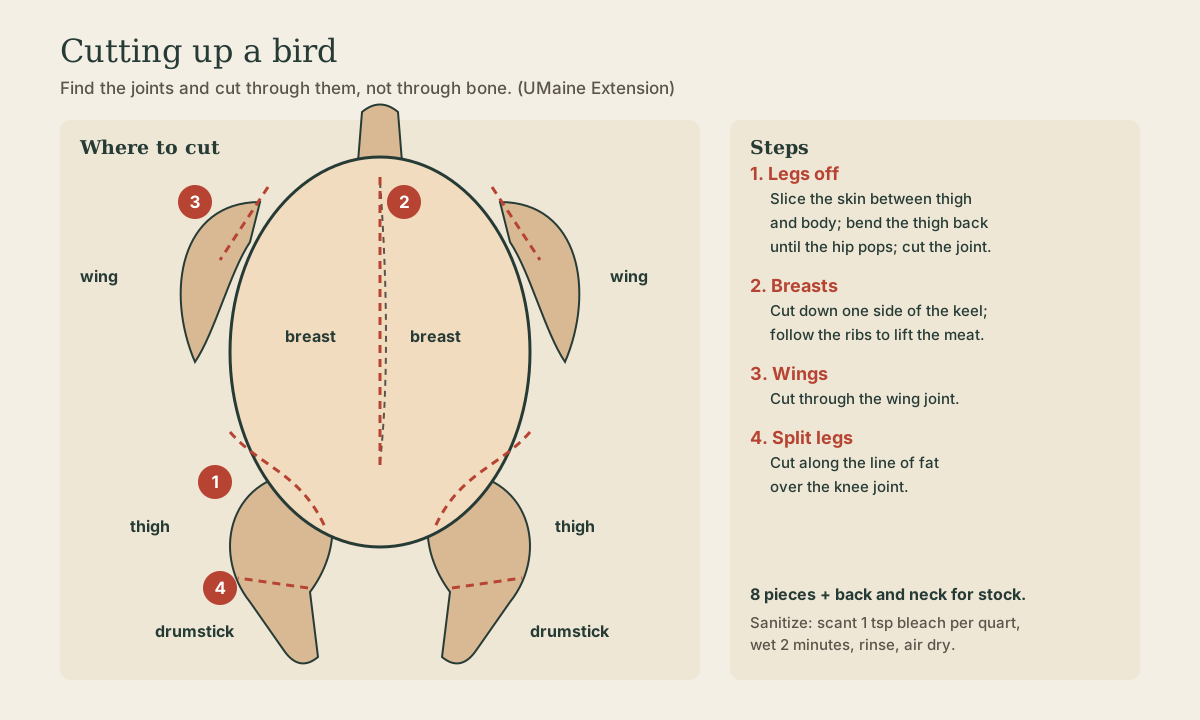
University of Maine Extension’s method, with a sharp 6-inch boning knife on a board that won’t slide (a damp towel underneath) 3:
- Set up: breast side up, legs toward you. Don’t rinse raw chicken in the sink; it spreads bacteria around the kitchen.
- Legs: loosen the skin between the leg and body, cut through it, bend the thigh back until the hip joint dislocates, and cut through the joint to free the leg. Repeat.
- Breasts: cut down one side of the keel bone and follow the curve of the ribs to lift the breast meat off; repeat on the other side. The carcass that’s left goes into the stock pot.
- Wings: cut through the wing joint where it meets the breast.
- Thigh and drumstick: skin side down, find the line of fat over the knee joint, and cut along it through the joint.
- Tenderloins and boneless thighs (optional): peel the tenderloin from the underside of each breast, and cut thigh meat away from the bone.
That gives two drumsticks, two thighs, two breasts, and two wings, plus the back and neck for stock 3. Kansas State’s options are the same: split birds for barbecuing, pieces for frying 1.
Playback is optional. If the player is unavailable, open the video at its source.
Spatchcocking (butterflying) for the grill: cut along both sides of the backbone with poultry shears, remove it, turn the bird over, and press it flat.
Clean up: wash knives and board in warm soapy water, rinse, then sanitize with a scant teaspoon of bleach per quart of water, kept wet 2 minutes, rinsed, and air-dried 3.
Quick check
Cutting through joints instead of bone is the whole trick.
Freezing
- Short term: in the refrigerator for less than 4 days 1.
- Package flat and tight: wrap giblets separately; tie the wings and legs close to the body on whole birds; use freezer bags or freezer wrap 2.
- Get the air out: put the bird in a bag and lower it into a pan of cold water; the water pushes the air out the top; twist the neck of the bag, seal it, and dry the bag 2. A vacuum sealer does the same.
- Never stuff a bird before freezing: the stuffing cools and later thaws slowly enough to let bacteria grow 2.
- Label with the date and contents; package in the portions you’ll use.
Pink meat, dark bones: meat around the bones of young broilers sometimes stays pink even when thoroughly cooked, and bones can turn dark maroon, especially after freezing. Both come from hemoglobin in young bones and are safe 2. Use a thermometer, not color, to judge doneness.
Quick check
Dark maroon bones in frozen chicken have the same cause and are safe.
Try it
Cut up one bird into eight pieces and the next into a spatchcock. Rest a third whole bird for 24 hours before freezing and roast it a month later; compare tenderness with a bird frozen after 6 hours.
What to take from this
Chill carcasses to 40 °F, then rest them below 40 °F (6 hours for broilers, 24 for older birds) so rigor passes before freezing. Cut through joints, not bones: legs off at the hip, breasts along the keel and ribs, wings at the joint, thighs from drumsticks along the fat line. Sanitize the board with a scant teaspoon of bleach per quart. Freeze flat, airless packages with giblets separate, never stuffed, and don’t worry about pink meat near young bones if it reached a safe temperature.
Lesson complete
Nice work.
Sources for this lesson
- 1R. Scott Beyer, Eric W. Johnson. Processing Farm-Raised Poultry (EP-71). Kansas State University Research and Extension. 2000. verifiedOff feed 8-10 hours before slaughter; reject birds with liver spots or lumps, fluid in the body cavity, orange fat in a thin bird, enlarged organs, breast meat colored like thigh meat, or white streaks; hang in a cone and cut the jugular veins on both sides; scald at 140 °F for 30-40 seconds with an up-and-down motion; skin tears if water is too hot; icy slush while processing; remove neck skin, windpipe, crop, feet at the hocks, oil gland, viscera, and lungs; chill to 40 °F; refrigerate under 4 days or freeze.
- 2Julie Garden-Robinson. Food Freezing Basics: Freezing Poultry and Fish (FN615). North Dakota State University Extension. 2005. verifiedChill home-slaughtered poultry in the refrigerator below 40 °F, 6 hours for broiler-fryers and 24 hours for older birds, or 2-3 hours in ice water; wrap giblets separately; flat compact packages; remove air by submerging the bag in water; never stuff before freezing; pink meat or dark bones in young birds are from hemoglobin and safe.
- 3Kate Yerxa, Rob Dumas, Alex Gayton. How to Cut Up a Whole Chicken (Bulletin 4068). University of Maine Cooperative Extension. 2021. verifiedBreast up, legs toward you, on a non-slip board with a 6-in. boning knife; don't wash raw chicken; loosen skin, bend the thigh back until the hip dislocates, cut the joint; follow the keel and ribs to lift the breasts; cut through the wing joint; split thigh and drumstick along the line of fat; optional skinning and boning; sanitize boards with a scant teaspoon of bleach per quart, wet 2 minutes.