Hog Butchering
Slaughtering a hog at home: choosing and penning the animal, site and equipment, stunning and sticking, scalding at 140 to 145°F and scraping (or skinning), hanging and gutting cleanly, splitting, checking organs, chilling without freezing, and the cuts and yields you can expect.
- 7 min
- 8 steps
- 3 questions
- Lesson 43 of 55
In this lesson
- Before the day
- Stun and bleed
- Scald and scrape, or skin
- Gut and split
- Chill it
- What you get
- Try it
- What to take from this
Picking up where you left off.
Before the day
USDA’s farm bulletin starts with the animal 1:
- Health: no fever, fast breathing, or diarrhea. A sick hog goes to the vet, not the cooler.
- Kind: barrows and gilts. Boars give meat a strong, “soapy” off-odor; an old boar should be castrated and healed first.
- Size: the best pork comes from young, meaty hogs of 175 to 240 pounds with back fat no more than about 1.6 to 1.7 inches. One meat-type hog feeds a family of two for 10 to 12 months.
- Care: pen it clean and dry the day before, no feed for 24 hours, water always. Don’t chase or wrestle it: hot, excited animals give darker meat, and bruises have to be trimmed out.
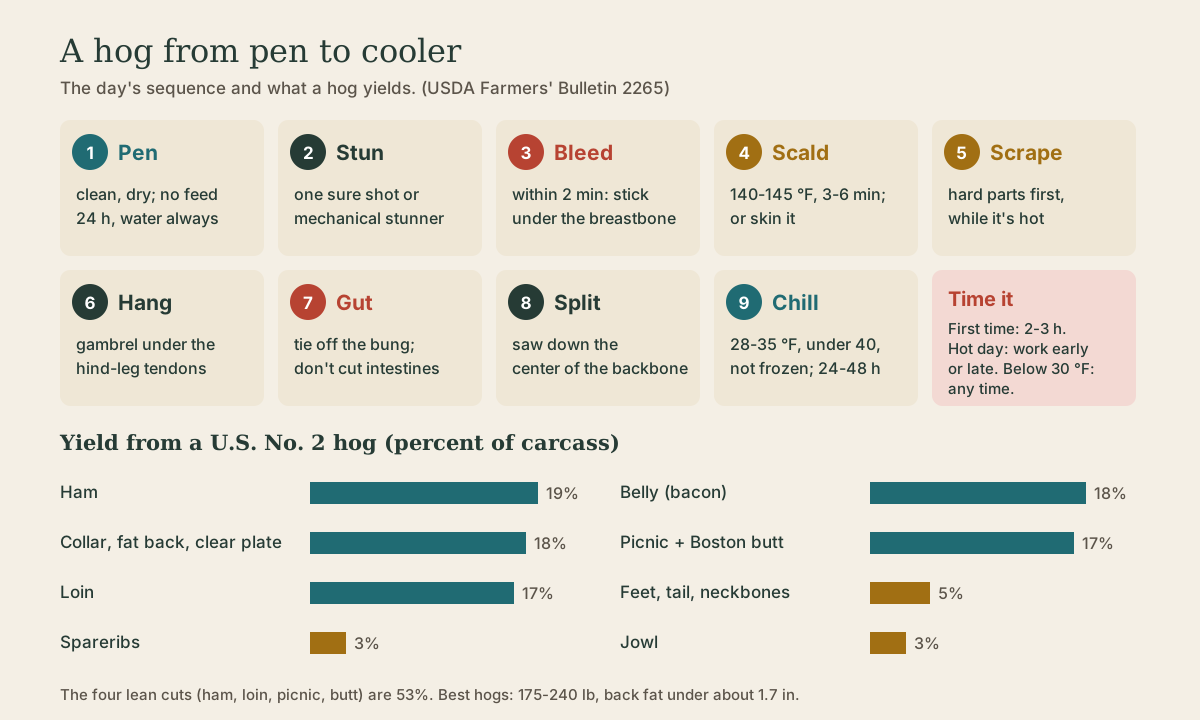
Site: a strong limb 6 to 8 inches thick and 8 to 10 feet up, or a beam or tripod, near a fire for heating water and clean running water. Rake the area, put down straw, and plan for waste: arrange a pickup from a locker plant or renderer, or bury viscera where dogs can’t dig them up 1. In hot weather, work early or late; a first-timer takes 2 to 3 hours. Below 30°F, any time works 1.
Equipment: a .22 rifle, skinning and boning knives with a steel, a meat saw, a block and tackle, a gambrel, buckets, cold water, and for scalding a 55-gallon barrel, about 50 gallons of near-boiling water, a thermometer to 200°F, bell scrapers, and a hog hook 1.
Stun and bleed
Stun with one sure shot in the forehead, midway between and slightly above the eyes, or one blow with a mechanical stunner; the first attempt has to work 1. Use every firearm precaution.
Bleed within 2 minutes, or rising blood pressure can burst capillaries and cause blood splash: safe, but unsightly 1. Roll the hog on its back, find the tip of the breastbone, and insert a 6-inch knife at a 35- to 40-degree angle under the breastbone, point toward the tail, then dip the point up to sever the carotid artery. Don’t twist, and don’t angle off to one side, which makes a bloody “shoulder stick” 1.
Quick check
Blood splash is safe but unsightly.
Scald and scrape, or skin
Scalding keeps the skin on 1:
- Heat the water before you stun. 140 to 145°F for 3 to 6 minutes is optimal; fall’s “hard-hair” season needs 146 to 150°F or longer.
- Water cools fast, so many start at 155 to 160°F and keep the hog moving in and out. Overscalding “sets” the hair and cooks the skin, and then the hair won’t come out.
- Dip head first, and test: when hair pulls easily in the flanks, switch ends. Pull the toenails and dewclaws with a hook.
- Scrape fast while it’s hot: the hard places (head, feet, jowl) first, then the back and sides. Tilt the bell scraper’s forward edge up and pull hard; finish with rotary strokes and hot water. A burlap sack soaked with hot water loosens stubborn patches.
- Hang it, singe the last hairs with a torch, shave, and wash.
Skinning takes less equipment and is faster, and the bulletin notes that the old belief that hams and bacon need the skin to cure isn’t necessarily true. Cut through the hide from the inside out, blade up, so dirt on the hide doesn’t contaminate the meat 1.
Either way, hang the carcass by a gambrel slipped under the big tendons of the hind legs 1.
Playback is optional. If the player is unavailable, open the video at its source.
Quick check
Too hot ‘sets’ the hair and cooks the skin; keep the hog moving if you start the water at 155 to 160°F.
Gut and split
Cut around the bung deep into the pelvic canal, loosen it, and tie it off with string 1. Split the hams at their natural seam through the cartilage of the aitch bone (older hogs need a saw), and open the breastbone. Open the belly from the top with the knife handle inside and the blade pointing outward so you don’t nick the intestines. Let the stomach and intestines roll out and hang; don’t let them drop, or the esophagus tears and spills 1.
Take the liver (cut off the gall bladder without spilling it), then cut through the diaphragm and remove the heart and lungs. Split the heart to wash it, and put liver and heart on ice 1.
Saw down the center of the backbone from the inside, remove the head at the atlas joint, and take out the kidneys and leaf fat (the best lard; see Rendering Lard). Wash the carcass 1.
Check the organs: bruises, a single abscess, or parasites in an organ can be trimmed, but inflamed lungs, intestines, or body cavity, or many pearl-like growths through the organs, need a veterinarian’s opinion before anyone eats the meat. Line up a vet before the day 1.
Chill it
Chill at 28 to 35°F, wrapped in a clean sheet in a ventilated shed, and get it below 40°F; if you can’t, take it to a locker plant. Don’t let it freeze the first day, which can toughen the meat. Cut after 24 to 48 hours 1.
The law: under the Federal Meat Inspection Act, meat from an animal slaughtered outside an inspected plant is only for you, your household, nonpaying guests, and employees. None of it can be sold 1.
Quick check
Chill at 28 to 35°F, get it below 40°F, and cut after 24 to 48 hours.
What you get
A meat-type hog yields about 65 to 70 percent of its carcass weight as ham, picnic, loin, bacon, and Boston butt. From a U.S. No. 2 hog: ham 19 percent, belly 18, loin 17, picnic and butt 17, collar, fat back, and plate 18, spareribs 3, jowl 3 1. Order chops ½ to ¾ inch thick for frying, 1 inch for broiling, and allow ¾ pound bone-in per person 1. The Processing module covers sausage, curing, smoking, and lard.
Try it
Before raising a hog, spend a butchering day helping someone experienced, or book a local custom processor for your first hog and ask to watch the kill and cut. Write your own cutting instructions using the yields above: how many chops, roasts, bellies for bacon, and pounds of sausage you want.
What to take from this
Pick a healthy barrow or gilt of 175 to 240 pounds, pen it clean, and withhold feed 24 hours. Stun with one sure shot, bleed within 2 minutes under the breastbone, then scald at 140 to 145°F for 3 to 6 minutes and scrape fast, or skin from the inside out. Hang by the gambrel, tie off the bung, open the belly blade-out, and split the backbone. Have a vet on call for anything abnormal. Chill below 40°F without freezing, cut after 24 to 48 hours, and remember home-slaughtered meat can’t be sold.
Lesson complete
Nice work.
Sources for this lesson
- 1H. Russell Cross. Pork Slaughtering, Cutting, Preserving, and Cooking on the Farm (Farmers' Bulletin 2265). U.S. Department of Agriculture (Project Gutenberg edition). 1978. verifiedIssued June 1978, revised 1981. Sausage from trimmings, more than 50 percent lean, 20-30 percent fat, ground through 1/2-in. then 1/8-in. plates, 2 lb salt, 6 oz pepper, 1-2 oz sage per 100 lb, seasoned sausage frozen no more than 2-3 months; dry cure 8-2-2 in three rubs, 36-42 F, bellies about 7 days per inch; sweet pickle cure 3-1/2 to 4 days per pound, ropy brine; soak 2 minutes per day in cure; smokehouse from a barrel and buried stovepipe; hardwoods only; ham and bacon smoking schedules; trichinae destroyed at 137 F or by specified freezing; lard rendering near 212 F and never above 255 F, leaf fat best, organ fat separately, no copper or brass, cool fast and stir to creamy.