Scalding, Plucking, and Evisceration
From feathers to a clean carcass: scald water temperature and timing and how to tell when it's right, hand and drum plucking, singeing pin hairs, the ice slush, and evisceration step by step, from the neck and oil gland to the vent cut, viscera, gall bladder, and lungs.
- 5 min
- 6 steps
- 3 questions
- Lesson 37 of 55
In this lesson
- Scalding
- Plucking
- Evisceration
- Chilling
- Try it
- What to take from this
Picking up where you left off.
Scalding
Feathers are held tight in the skin. A short dunk in hot water loosens them.
- Kansas State: water at 140 °F, the bird moved up and down in it for 30 to 40 seconds so the water penetrates the feathers; a little dish detergent helps it penetrate 1.
- Maryland: water at 130-160 °F for about 1-1/2 minutes 2.
The difference is the usual trade-off: hotter is faster but riskier. Test the bird, not the clock: when a wing or tail feather pulls out easily, it’s done. If the water is too hot, the skin cooks slightly and tears easily in plucking 1. Keep a thermometer in the pot and add hot or cold water to hold the temperature as you work through birds.
Quick check
Kansas State scalds at 140 °F for 30-40 seconds; Maryland at 130-160 °F for about 1-1/2 minutes. Too hot and the skin tears.
Plucking
- By hand: hang the bird or lay it on a table and rub the feathers off in handfuls, working against the grain on the body and pulling the wing and tail feathers individually 1.
- By machine: a drum (tub) plucker with rubber fingers spins a scalded bird clean in under a minute 1. Worth renting or borrowing if you do more than a handful of birds.
- Pin hairs: mature chickens and turkeys may have a few hair-like feathers; singe them off with an open flame. Most meat breeds have very few 1.
Then put the bird straight into an icy slush until all the birds are plucked. Cold slows bacteria, and keeping the carcass wet stops the skin from drying and browning 1.
Playback is optional. If the player is unavailable, open the video at its source.
Quick check
Then the clean carcasses are chilled in ice water to 40 °F.
Evisceration
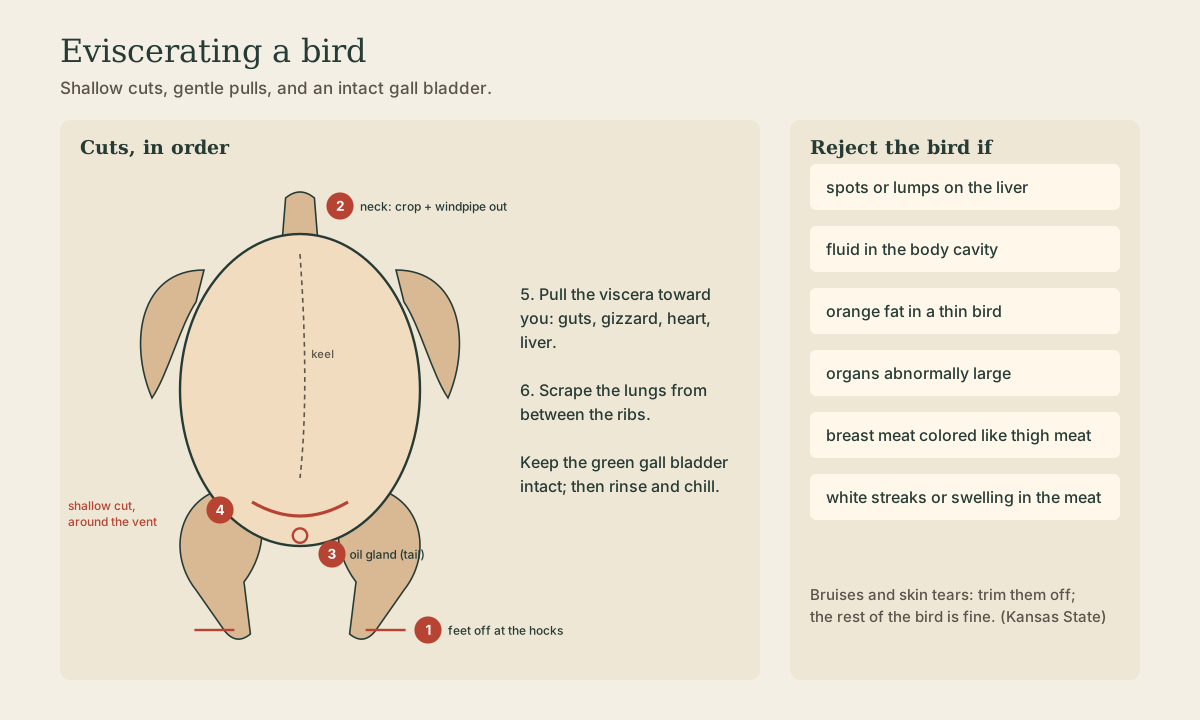
Take each bird out of the slush and work on a clean, flat, solid surface 1:
- Feet and head: cut off the feet at the hock joint and remove the head.
- Neck: slit the skin of the neck from the head end to the body, and pull out the windpipe and crop (the food pouch at the base of the neck).
- Oil gland: cut out the oil gland on top of the tail with a scoop-shaped cut.
- Open the cavity: make a careful, shallow cut through the skin below the keel and around the vent, without cutting into the intestines.
- Viscera: reach in along the inside of the breastbone and gently pull the intestines, gizzard, heart, and liver toward you, keeping the vent attached so the intestine comes out in one piece.
- Lungs: they’re embedded between the ribs along the backbone; scrape them out with your fingers 1.
- Rinse the carcass inside and out with clean, cold water 1.
Keep the gall bladder intact: the small green sac on the liver holds bile that turns any meat it touches bitter. Cut it away from the liver with a margin of liver around it.
Giblets: clean and rinse the gizzard (split it and peel out the tough lining), liver, and heart 1. Chill them separately.
Playback is optional. If the player is unavailable, open the video at its source.
Quick check
Cut the gall bladder away from the liver with a margin; if it breaks, trim and rinse.
Try it
For your first birds, work slowly with the evisceration diagram on the table next to you. Process two birds, and before cutting the second, find each organ in the first: crop, gizzard, liver and gall bladder, heart, lungs, oil gland.
What to take from this
Scald at about 140 °F for 30-40 seconds (or 130-160 °F for up to a minute and a half) until the wing feathers pull out easily; hotter water tears the skin. Pluck by hand or in a drum plucker, singe pin hairs, and hold birds in icy slush. Eviscerate on a clean table: feet and head off, crop and windpipe out through the neck, oil gland out, a shallow cut around the vent, viscera pulled gently with the gall bladder intact, lungs scraped out. Rinse and chill to 40 °F.
Lesson complete
Nice work.
Sources for this lesson
- 1R. Scott Beyer, Eric W. Johnson. Processing Farm-Raised Poultry (EP-71). Kansas State University Research and Extension. 2000. verifiedOff feed 8-10 hours before slaughter; reject birds with liver spots or lumps, fluid in the body cavity, orange fat in a thin bird, enlarged organs, breast meat colored like thigh meat, or white streaks; hang in a cone and cut the jugular veins on both sides; scald at 140 °F for 30-40 seconds with an up-and-down motion; skin tears if water is too hot; icy slush while processing; remove neck skin, windpipe, crop, feet at the hocks, oil gland, viscera, and lungs; chill to 40 °F; refrigerate under 4 days or freeze.
- 2Jonathan Moyle. Home Processing and Egg Laying/Handling. University of Maryland Extension. 2022. verifiedWithhold feed 9-12 hours; hang by the feet to avoid bruising; cut the jugular vein on each side of the neck; scald at 130-160 °F for about 1-1/2 minutes, a large pot and propane burner works; remove head, feet, and viscera; wash and chill promptly below 40 °F.