Lamb
Slaughtering and cutting a lamb: lamb versus yearling mutton and mutton, why withholding feed and giving water help, pelting by fisting while keeping the fell intact, chilling the whole carcass, removing the thin cuts, and the four primals: shoulder, rack, loin, and leg.
- 5 min
- 8 steps
- 3 questions
- Lesson 45 of 55
In this lesson
- Lamb or mutton
- Before the day
- Stun and bleed
- Pelting
- Chilling
- The four primals
- Try it
- What to take from this
Picking up where you left off.
Lamb or mutton
Age decides the meat 1:
- Lamb: 12 to 14 months or less.
- Yearling mutton: 14 to 24 months.
- Mutton: over 2 years, with an intense flavor some people dislike; it’s seldom sold as retail cuts and goes mostly to soup and processed products.
A meat-type lamb carcass yields over 70 percent of its weight in major trimmed cuts 1.
Before the day
Pen the lamb clean and dry, withhold feed 24 hours, and give water freely. The bulletin explains both: an emptier gut is easier to remove and lets fewer bacteria migrate into the blood, and water improves bleeding, gives brighter lean, and makes pelting easier 1.
Quick check
USDA lists both reasons.
Stun and bleed
Tie the lamb to a tree or post and stun it with a .22 bullet in the forehead, midway between and slightly above the eyes; make the first shot count 1. Bleed immediately: kneel on or behind the shoulder, pull the head back by the lower jaw, insert a straight boning knife just behind the angle of the jaw close to the neckbone with the edge outward, and cut through and out, severing the windpipe, gullet, and blood vessels 1.
Pelting
Wool and dirt on the carcass are hard to remove and usually have to be trimmed, so keep hands and tools clean and keep plenty of clean water at hand. Pelting, or fisting, means working the pelt off with your fist between pelt and carcass, and it’s easier with slightly wet hands 1.
Open the pelt down the front of the forelegs and along the breast and belly, cutting toward the skin, not the carcass, to keep the fell intact. The fell is the thin membrane covering the carcass; tear it and the lean bulges through 1. Work the pelt off the sides and legs by fisting, then hang and finish over the back. The bulletin also covers preserving lamb pelts 1.
Evisceration follows the same rules as the hog: tie off the bung and don’t nick the intestines 1.
Quick check
Wet hands make fisting the pelt easier.
The four primals
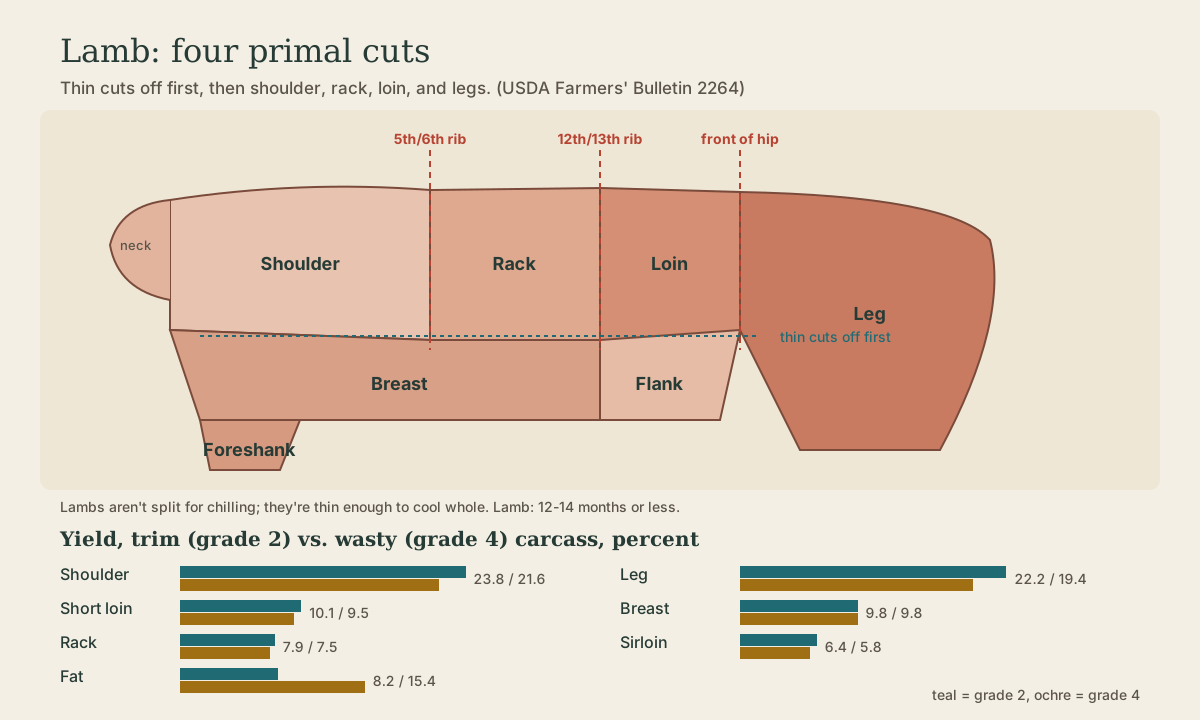
- Thin cuts first: lay the carcass on its side and remove the breast, flank, and foreshank along a line from the elbow to the front of the hind leg, staying close to the elbow to keep the shoulder roast large. Remove the kidneys, kidney fat, and diaphragm, then the neck 1.
- Shoulder: cut between the fifth and sixth ribs 1.
- Rack (rib): from there back to a cut between the 12th and 13th (last) ribs 1.
- Loin: keeps the 13th rib, back to the front of the hipbones 1.
- Legs: separated just in front of the hipbones, then split through the backbone 1.
The shoulder (about 24 percent of a trim carcass) and legs (22 percent) are the biggest cuts; the short loin is about 10, the rack 8, and the breast 10. A wasty carcass carries nearly twice the fat, 15 percent versus 8 1.
Rib and loin chops are small, so figure two or three a serving; sirloin and shoulder chops are bigger. Allow 3/4 pound bone-in per person 1.
Playback is optional. If the player is unavailable, open the video at its source.
Quick check
The 12th-13th rib cut separates rack from loin; the leg comes off in front of the hipbones.
Try it
Buy a whole or half lamb from a Wisconsin farm, cut-and-wrapped, and ask for the hanging weight and cutting sheet. Compare what you get to the yields above. Next time, ask for the primals uncut and break them down yourself with a boning knife and a meat saw: racks into chops, loins into chops or a roast, legs into roasts.
What to take from this
Lamb is 12 to 14 months or less; mutton tastes much stronger. Withhold feed but give water. Stun between and above the eyes, bleed behind the jaw, and fist the pelt off with wet hands, cutting toward the skin to keep the fell intact. Chill the carcass whole and cut after 24 to 48 hours. Take off the thin cuts, then the shoulder (5th/6th rib), rack (to the 12th/13th rib), loin, and legs in front of the hipbones.
Lesson complete
Nice work.
Sources for this lesson
- 1H. Russell Cross. Lamb Slaughtering, Cutting, Preserving, and Cooking on the Farm (Farmers' Bulletin 2264). U.S. Department of Agriculture (Project Gutenberg edition). 1977. verifiedNo feed 24 hours (smaller gut, fewer bacteria entering the blood), water always (better bleeding, brighter lean, easier pelting); lamb 12-14 months or less, yearling mutton 14-24 months, mutton over 2 years; over 70 percent of carcass in major trimmed cuts; yield table for yield grade 2 and 4; stun with a .22 midway between and slightly above the eyes; bleed just behind the jaw; pelt (fist) with wet hands, cutting toward the skin to keep the fell intact; carcass not split for chilling; chill at 28-35 F, cut after 24-48 hours; thin cuts off first, shoulder between fifth and sixth ribs, rack to the 12th-13th rib, loin, and legs in front of the hipbones.