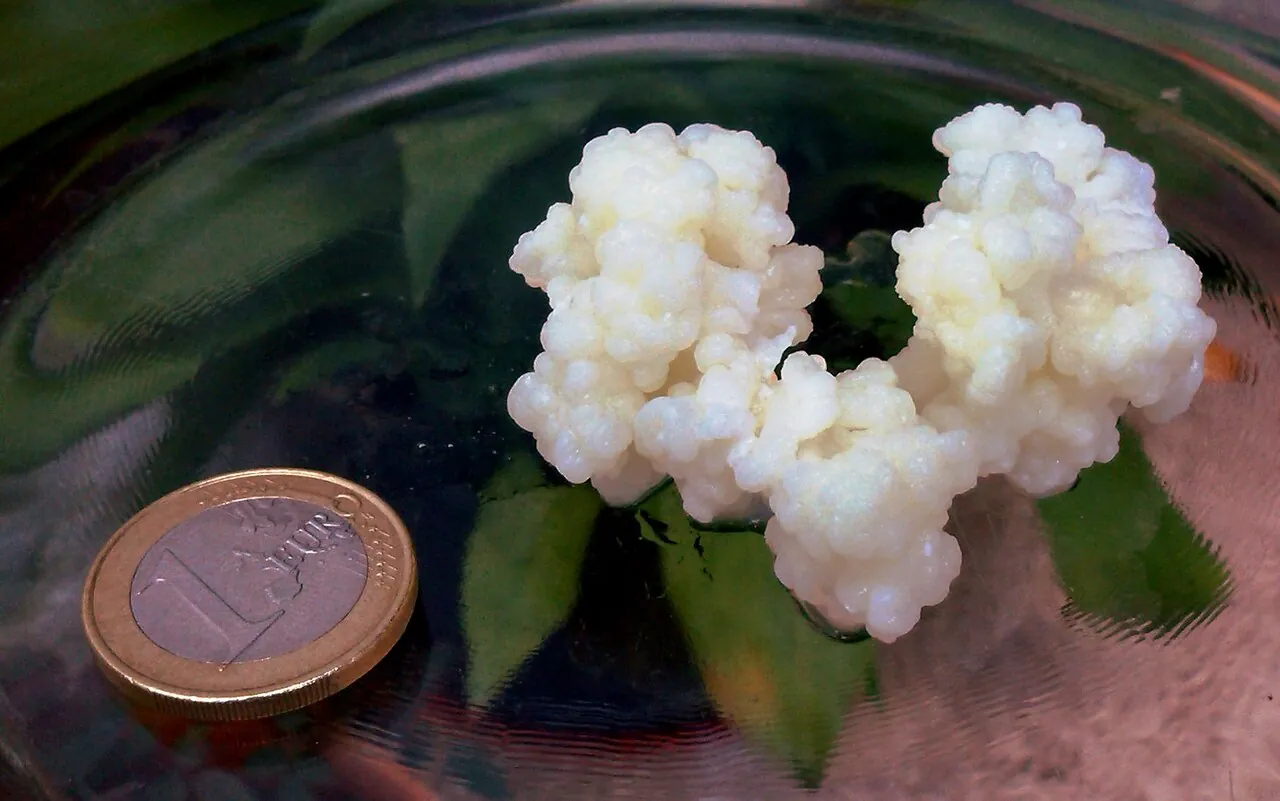
Yogurt, Kefir, and Cultured Butter
Cultured milk at home: why yogurt milk is heated to 180 °F and cooled before inoculating, incubating at 108-115 °F, firmer yogurt with dry milk, draining for Greek yogurt, fixing thin or separated batches, re-culturing kefir at room temperature, and ripening, churning, washing, and salting cultured butter.
- 5 min
- 6 steps
- 3 questions
- Lesson 29 of 55
In this lesson
- Making yogurt
- When it goes wrong
- Kefir
- Cultured butter
- Try it
- What to take from this
Picking up where you left off.
Making yogurt
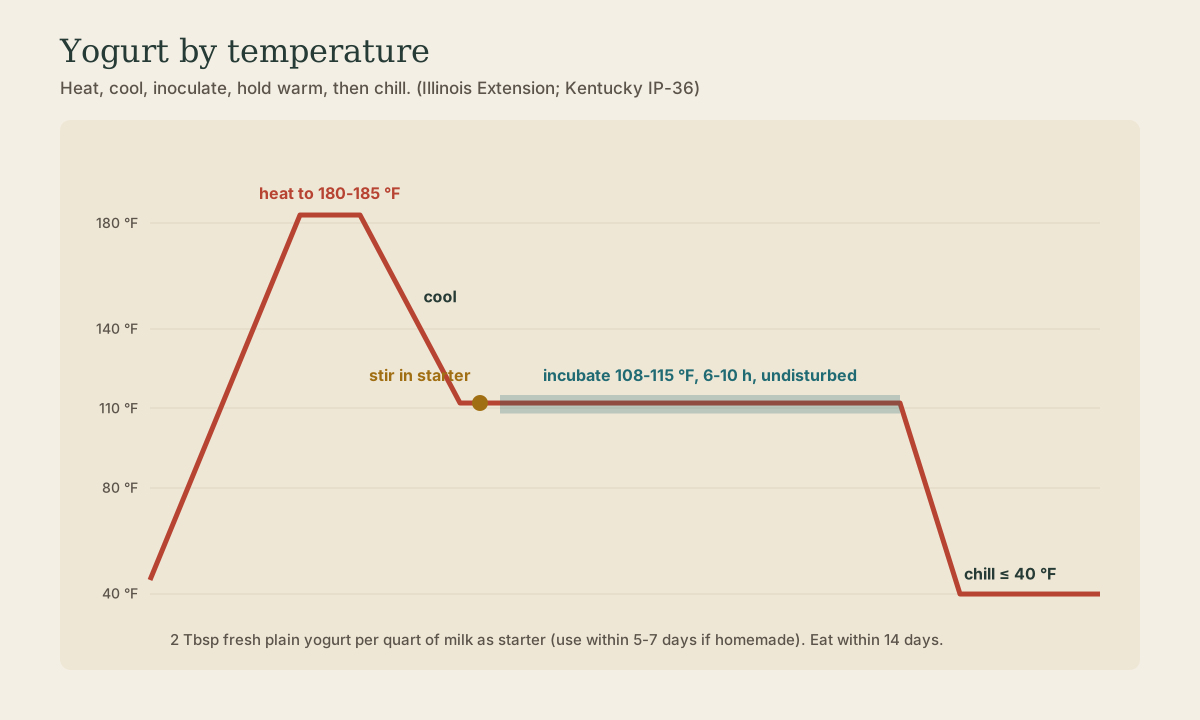
Yogurt is milk soured and set by two bacteria, Lactobacillus bulgaricus and Streptococcus thermophilus, which turn lactose into lactic acid; the acid makes the milk proteins gel 1. Illinois Extension’s basic method 2:
- Heat 1 quart of milk slowly to 180-185 °F, stirring so it doesn’t scorch. Heating changes the milk proteins so the yogurt sets thicker.
- Cool to 108-115 °F. Hotter milk would kill the starter.
- Inoculate: stir 2 tablespoons of plain yogurt into a cup of the warm milk, then stir that back in. Use store yogurt before its date, or homemade within 5 to 7 days.
- Incubate covered at 108-115 °F for 6 to 10 hours, undisturbed.
- Refrigerate at 40 °F or below as soon as it’s gelled, which stops the souring. Eat within 14 days.
Kentucky’s IP-36 is a quicker variant: heat to 160 °F for 1 minute, cool to 102 °F, add 3 tablespoons of starter per half gallon, hold in a 105 °F water bath for 3 to 4 hours until tiny flakes show when it’s dripped down a glass, then refrigerate at once 1.
Incubators you already have 2: an oven preheated to 200 °F, turned off, and bumped on briefly to hold about 100 °F; a cooler or slow cooker half full of 120 °F water around the jars; or a yogurt maker or electric pressure cooker following its own directions.
Thicker yogurt: add nonfat dry milk. Kentucky recommends about 5% (1-1/2 cups per half gallon) to keep whey from separating 1. For Greek yogurt, drain it in doubled cheesecloth in the refrigerator; drain longer for spreadable yogurt cheese 2.
Playback is optional. If the player is unavailable, open the video at its source.
Quick check
Illinois cools to 108-115 °F and incubates there 6-10 hours.
When it goes wrong
Illinois’s troubleshooting table 2:
- Not firm: starter without live cultures, incubation too hot or too cold, or milk not heated enough.
- Separated: incubated too long, or not refrigerated soon enough.
- Off flavors: milk or starter not fresh, or equipment not clean.
- Thin: dry milk not added to cold milk at the start, yogurt too cold before incubating, or not covered while incubating.
Quick check
Also: milk not heated enough, or unclean equipment.
Kefir
Kefir is a tart, drinkable milk cultured by a mix of bacteria and yeasts, at room temperature rather than yogurt’s 110 °F. Utah State’s method 3:

- Start with a packet of kefir starter culture (or dehydrated kefir grains) in 1 quart of whole milk.
- Re-culture by stirring 1/4 cup of finished kefir into 1 quart of milk and holding it at about 80 °F (26.6 °C) until it’s thick and tangy, pH 4.6 or below; a counter in summer works.
- Re-culture from the last batch up to 7 times within a week, then start fresh.
Use it as a drink, in smoothies and dressings, or in place of buttermilk in baking 3.
Cultured butter
Cultured butter is made from cream that’s been soured with a culture first, which gives it more flavor than sweet-cream butter. The FAO’s small-scale dairy manual 4:
- Ripen the cream: heat it (the FAO uses 80-90 °C, which pasteurizes raw cream), cool to about 18 °C (64 °F), stir in a little cultured buttermilk (about 50 ml, 3 dessert spoons) or a mesophilic starter, and leave 24 hours at that temperature.
- Churn: a churn, stand mixer, or a jar shaken by hand. It goes from whipped cream to stiff to suddenly breaking; churn until the butter grains are the size of peas and the buttermilk looks watery. This takes 15 to 60 minutes, depending on temperature and cream.
- Drain off the buttermilk (keep it for baking).
- Wash with clean cold water, again and again; the more buttermilk you remove, the better the butter keeps.
- Work it with damp wooden paddles until no water droplets show.
- Salt if you like, about 10 g per kg (1%), and work it again the next day.
A liter of cream makes about 300 to 400 g of butter 4.
Playback is optional. If the player is unavailable, open the video at its source.
Quick check
Whipped cream comes first; keep going until it breaks.
Try it
Make yogurt and butter the same weekend. Make a quart of yogurt by the Illinois method in a cooler; at the same time, culture a pint of heavy cream with 2 tablespoons of cultured buttermilk at room temperature. Churn the cream the next day in a jar or mixer, wash it until the water runs clear, and weigh the butter.
What to take from this
Yogurt: heat milk to 180-185 °F, cool to 108-115 °F, stir in 2 tablespoons of live yogurt per quart, hold 6-10 hours, and refrigerate at once; add about 5% dry milk for body and drain for Greek style. Most failures are a dead starter, wrong incubation temperature, or skipped heating. Kefir re-cultures at about 80 °F with 1/4 cup per quart. Cultured butter: ripen cream with buttermilk for a day, churn to pea-size grains, wash until clear, work out the water, and salt about 1%.
Lesson complete
Nice work.
Sources for this lesson
- 1E. Russell-Campbell, C.L. Hicks, F.T. Maruyama. Making Yogurt at Home (IP-36). University of Kentucky Cooperative Extension. verifiedHalf gallon milk plus 1-1/2 cups nonfat dry milk (5% prevents whey separation), heated to 160 °F for 1 minute, cooled to 102 °F, 3 Tbsp commercial plain yogurt as starter, incubated in a 105 °F water bath 3-4 hours until flakes show, refrigerated at once; Lactobacillus bulgaricus and Streptococcus thermophilus; 2-3 weeks refrigerated.
- 2Making Yogurt at Home (Best Practice Guide). University of Illinois Extension. 2024. verified1 quart milk heated to 180-185 °F, cooled to 108-115 °F, 2 Tbsp plain yogurt starter (homemade starter used within 5-7 days), incubated 6-10 hours at 108-115 °F, refrigerated at 40 °F or below and eaten within 14 days; oven, cooler, or slow-cooker incubators; troubleshooting; draining for Greek yogurt and yogurt cheese.
- 3Kelsie Maw, Brian Nummer, Callie Ward, Melanie Jewkes. Kefir. Utah State University Extension, Preserve the Harvest. verifiedActivate starter in 1 qt whole milk; re-culture with 1/4 cup kefir per quart of milk at about 80 °F (26.6 °C) until pH 4.6 or lower; can be recycled up to 7 times within a week; uses in smoothies, dressings, baking, and as a drink.
- 4Small-Scale Dairy Farming Manual, Technology Unit 10.2: Small Scale Butter Making. Food and Agriculture Organization of the United Nations. verifiedHeat cream to 80-90 °C, cool to 18 °C, add about 50 cc sour buttermilk or mesophilic starter and ripen 24 hours at 18 °C; churn 15-60 minutes until pea-size grains form and the buttermilk looks watery; wash in cold water; work until no water droplets show; about 10 g salt per kg; 1 L cream gives 300-400 g butter.