Fresh Cheese at Home
How milk becomes cheese: rennet and acid curds, sanitation and milk choice, the clean break, cutting and cooking curds, queso blanco by acid and heat, a buttermilk-and-rennet queso fresco, 30-minute mozzarella stretched in hot whey, and how long fresh cheeses keep.
- 6 min
- 9 steps
- 3 questions
- Lesson 30 of 55
In this lesson
- How milk becomes cheese
- Sanitation
- Milk and supplies
- Queso blanco: acid and heat
- Queso fresco: buttermilk and rennet
- 30-minute mozzarella
- How long it keeps
- Try it
- What to take from this
Picking up where you left off.
How milk becomes cheese
Cheese is the protein (casein) and fat of milk concentrated into a curd, with most of the water, lactose, and whey proteins draining off as whey. About 10 lb (1.25 gallons) of milk make 1 lb of cheese 1.

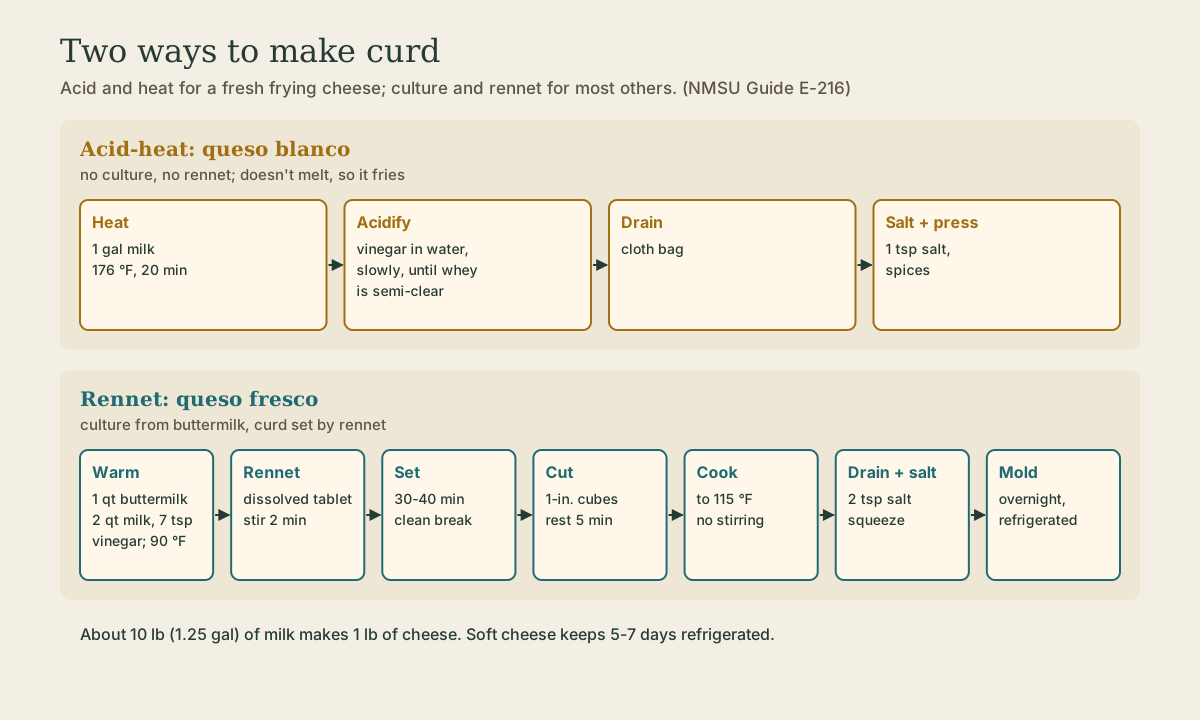
There are two ways to make the curd 1:
- Rennet: an enzyme that makes casein link into a gel that traps fat and water. Most cheeses also get a culture of lactic acid bacteria, which sours the milk and builds flavor. The gel is cut, warmed (“cooked”), and drained; the temperature and handling decide the texture.
- Acid and heat: hot milk curdled with vinegar or lemon juice, with no culture or rennet: queso blanco and paneer. They’re simple, give a high yield, and don’t melt.
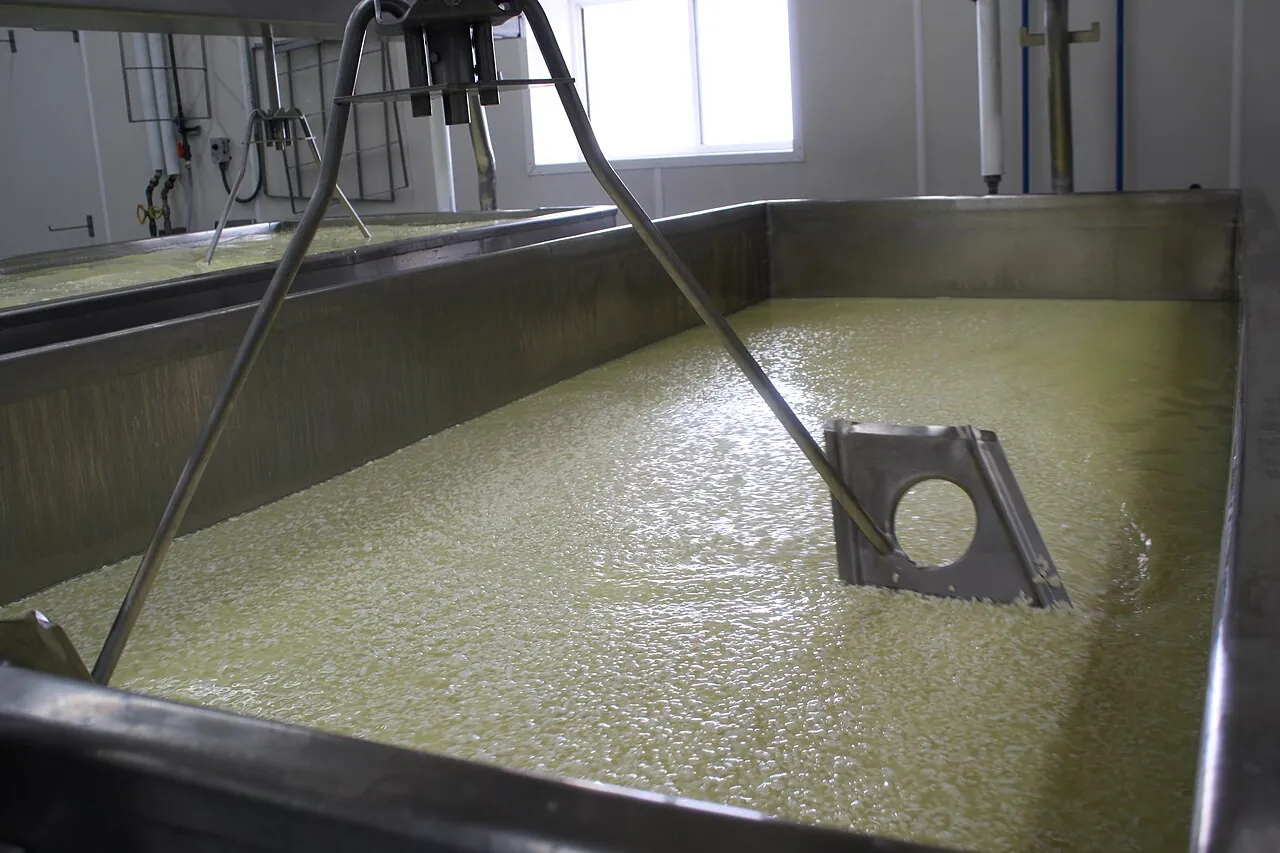
The clean break tells you a rennet curd is ready: slip a spatula into a slit in the curd and lift; if it splits cleanly like custard, cut it. If not, wait and check every 5 minutes 1.
Quick check
If it doesn’t break cleanly, wait and check every 5 minutes.
Sanitation
Fresh cheese can carry Salmonella, E. coli, Listeria, and Staphylococcus, so cleanliness isn’t optional 1:
- Wash hands and all equipment in hot soapy water and rinse it clean; “squeaky clean is clean.”
- Boil equipment or soak it 2 minutes in a bleach solution of 1 tablespoon unscented bleach per gallon, made fresh each time.
- Use new or sterilized cheesecloth each time.
- Raw milk must be pasteurized first: 140-145 °F for 30 minutes, stirring, never above 145 °F, then cooled 1.
Milk and supplies
- Milk: store milk works, but not ultrapasteurized for rennet cheeses 2. Homogenized milk gives a different texture from traditional cheese 1.
- Rennet: liquid or tablet; 1 teaspoon of liquid equals 1 tablet. Dissolve it in cool distilled or boiled water just before use 1.
- Culture: freeze-dried culture, or simply cultured buttermilk or yogurt 1.
- Calcium chloride helps homogenized milk set a firmer curd, but not for mozzarella, where it ruins the stretch 1.
- Equipment: an accurate thermometer (calibrate it in ice water to 32 °F), a heavy stainless pot or double boiler, a long knife, a slotted spoon, colander, cheesecloth, and molds 2 1.
Quick check
Calcium chloride helps homogenized milk set a firmer curd in other cheeses.
Queso blanco: acid and heat
NMSU’s recipe for a white frying cheese 1:
- Heat 1 gallon of pasteurized milk to 176 °F and hold it 20 minutes.
- Mix 4.6 fl oz of 5% vinegar into 9.2 fl oz of distilled water, and add it slowly to the hot milk until the whey turns semi-clear and the curds mat and stretch about 1 cm before breaking. You may not need all of it.
- Drain in a cloth bag, knead in 1 teaspoon of salt and any spices, and press out the whey.
- Seal in boilable bags and dip in boiling water 5 minutes to protect the surface. Refrigerated, it keeps several weeks, but it’s best fresh.
Quick check
Paneer is made the same way. It fries or grills without melting.
Queso fresco: buttermilk and rennet
NMSU’s “safe queso fresco,” developed to replace raw-milk queso fresco after Salmonella outbreaks 1:
- Mix 1 quart cultured buttermilk with 2 quarts pasteurized milk and 7 teaspoons of 5% vinegar.
- Warm to 90 °F and take off the heat.
- Stir in 1 teaspoon liquid rennet (or 1 tablet) dissolved in 1/2 cup water, for about 2 minutes.
- Rest 30-40 minutes until firm, then cut into 1-inch cubes and rest 5 minutes.
- Heat curds and whey to 115 °F without stirring; rest 5 minutes.
- Drain in cheesecloth 5 minutes, twist into a ball to squeeze out whey, break up the curd, and mix in 2 teaspoons of salt. Squeeze again.
- Pack into a mold and refrigerate overnight.
Playback is optional. If the player is unavailable, open the video at its source.
30-minute mozzarella
Alaska Extension’s quick mozzarella sours the milk with citric acid instead of a culture 2:
- Dissolve 2 teaspoons citric acid in 1/2 cup cool water and stir it into 1 gallon of whole milk (not ultrapasteurized).
- Heat slowly to 88 °F, stir in 1/2 teaspoon liquid rennet in 1/4 cup water for 30 seconds, then heat on low to 105 °F. Off the heat, rest 15 minutes.
- Cut into 1-inch squares, rest 3-5 minutes, and scoop the curd into a colander. Add 3/4 teaspoon salt.
- Stretch: dip portions in whey heated to 170-175 °F (or microwave 20 seconds at a time), fold and pull until it’s smooth and shiny like taffy.
- Chill in an ice brine (1 tablespoon salt per cup of water), then refrigerate. Use within a week.
The more you knead and stretch, the drier and firmer it gets 2. Leftover whey goes into bread, ricotta, or the pigs.
How long it keeps
Soft cheeses are over 45% water and keep only 5 to 7 days refrigerated 1. Pressed fresh cheeses wrapped tightly keep 7-10 days and can be frozen for 4-6 months at some loss of quality 1. Aged cheeses like cheddar need a cheese press, a cave or wine fridge, and months; they’re a next step after these.
Try it
Make queso blanco and queso fresco from the same gallon run: a half-gallon batch of each. Fry slices of the queso blanco in a dry pan (it won’t melt) and crumble the queso fresco over beans. Weigh the yield of each per pound of milk.
What to take from this
Cheese is concentrated casein and fat; about 10 lb of milk makes 1 lb. Acid and heat (queso blanco: 176 °F plus vinegar) make a non-melting fresh cheese; culture and rennet make most others. Sanitize with 1 tablespoon bleach per gallon, pasteurize raw milk at 140-145 °F for 30 minutes, and avoid ultrapasteurized milk and, for mozzarella, calcium chloride. Cut rennet curd at a clean break, cook it gently, drain, and salt. Fresh soft cheese keeps 5-7 days.
Lesson complete
Nice work.
Sources for this lesson
- 1Nancy C. Flores. Making Homemade Cheese (Guide E-216). New Mexico State University Cooperative Extension. verifiedAbout 10 lb milk per lb of cheese; rennet forms a casein gel that is cut, cooked, and drained; sanitation with 1 Tbsp bleach per gallon; pasteurize raw milk at 140-145 °F for 30 minutes; no calcium chloride for mozzarella; queso blanco by heating milk to 176 °F and adding vinegar; queso fresco with buttermilk, rennet at 90 °F, 1-in. cubes, cook to 115 °F; cream cheese, feta-style, Neufchâtel, and pizza cheese recipes; soft cheese keeps 5-7 days.
- 2Julie Cascio. Making Fresh Mozzarella (FNH-00063). University of Alaska Fairbanks Cooperative Extension Service. 2024. verified1 gal whole milk (not ultrapasteurized), 2 tsp citric acid, 1/2 tsp rennet, 3/4 tsp salt; acidify, heat to 88 °F, add rennet, heat to 105 °F, rest 15 minutes, cut 1-in. squares, drain, stretch in 170-175 °F whey or by microwave, chill in brine; use within a week.