Canning Safety and Botulism
Why home canning follows tested recipes: Clostridium botulinum and the conditions that let it make toxin, the pH 4.6 line between acid and low-acid foods, why low-acid foods need 240 °F, altitude adjustments, methods that aren't safe, storing jars, and recognizing and disposing of spoiled food.
- 5 min
- 9 steps
- 3 questions
- Lesson 22 of 55
In this lesson
- The danger: botulism
- Acid or low-acid
- Why 240 °F
- Altitude
- What not to do
- Storing jars
- Spoiled jars
- Try it
- What to take from this
Picking up where you left off.
The danger: botulism
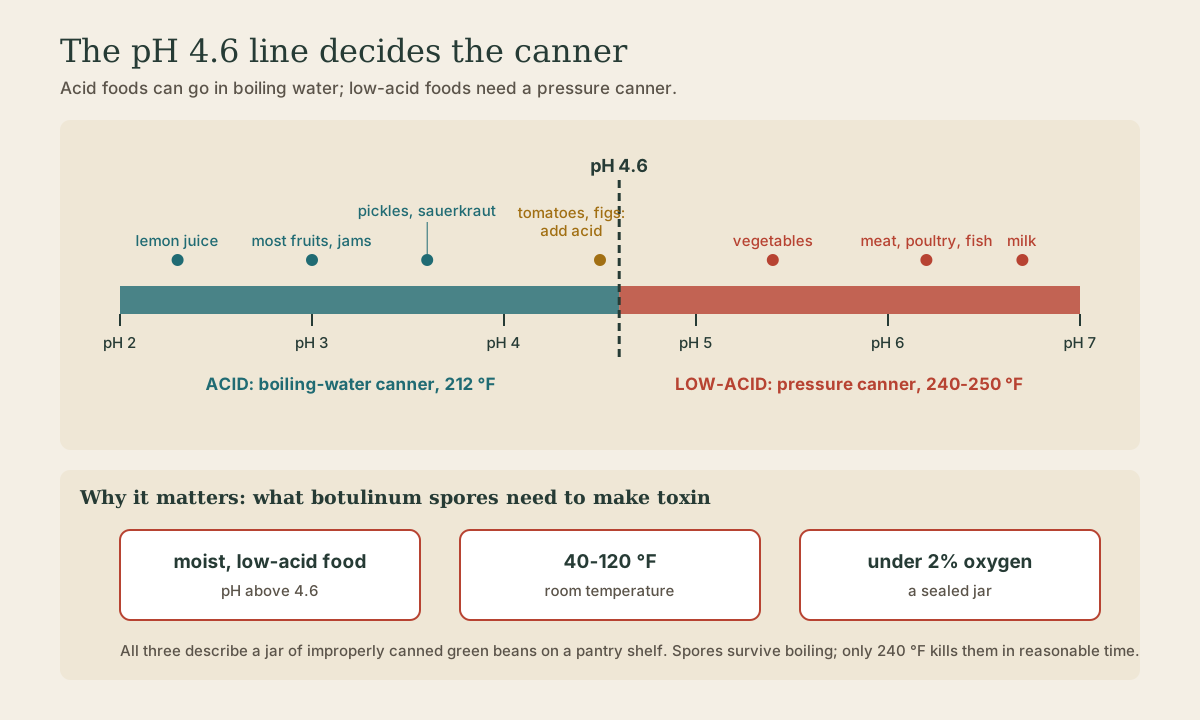
The bacterium Clostridium botulinum lives as spores in soil and water and on most fresh food surfaces, where it’s harmless because it can’t grow in air 1. Given the right conditions, the spores produce cells that multiply and can make a deadly toxin within 3 to 4 days 1. The conditions 1:
- a moist, low-acid food,
- a temperature between 40 and 120 °F, and
- less than 2% oxygen.
That’s a sealed jar of underprocessed vegetables on a pantry shelf. Home canning works only because tested processes either keep the food acidic enough or heat it hot enough, long enough, to destroy the spores.
Playback is optional. If the player is unavailable, open the video at its source.
Acid or low-acid
- Acid foods (pH 4.6 or lower): fruits, pickles, sauerkraut, jams, jellies, marmalades, fruit butters. The acid blocks botulinum growth, so they can be processed in a boiling-water canner.
- Low-acid foods (pH above 4.6): red meat, seafood, poultry, milk, and all fresh vegetables except most tomatoes. Mixtures of acid and low-acid foods are low-acid unless the recipe adds enough acid. They must be pressure canned.
- Tomatoes and figs sit right around 4.6. To can them as acid foods, add lemon juice or citric acid as the tested recipe says.
Quick check
Low-acid foods, above 4.6, must be pressure canned.
Why 240 °F
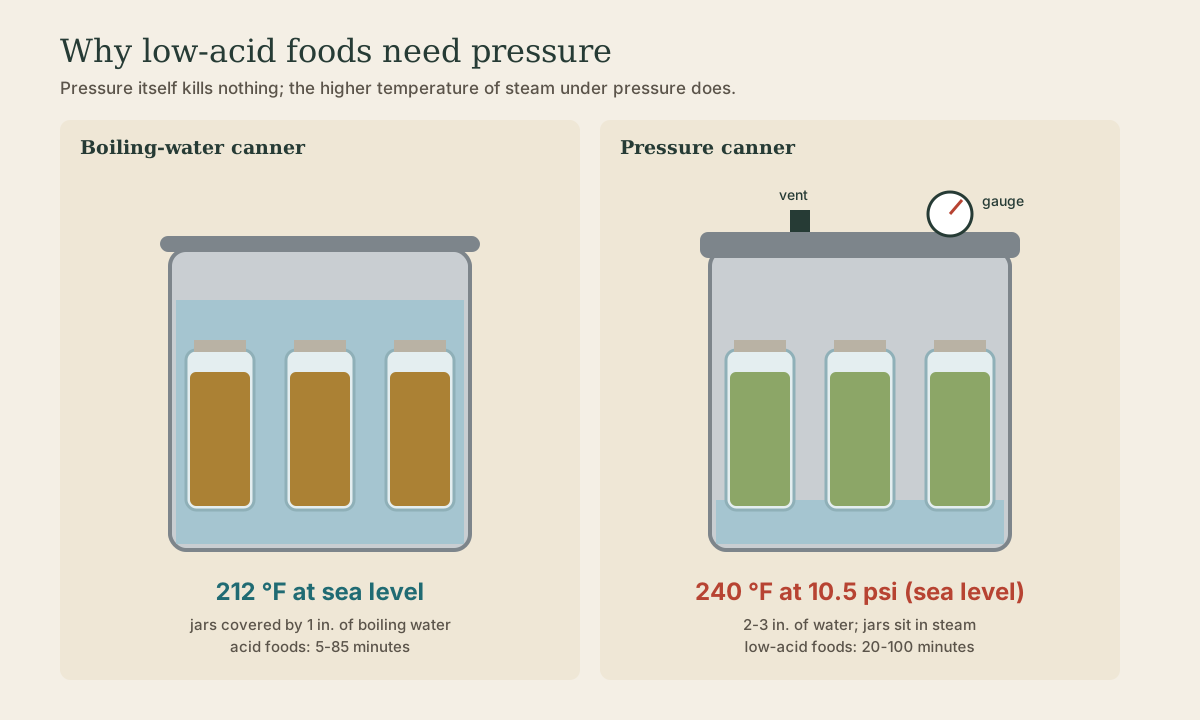
Botulinum spores are very hard to destroy at boiling temperature. Low-acid foods are processed at 240-250 °F, reached in a pressure canner at 10-15 pounds of gauge pressure; at those temperatures it takes 20 to 100 minutes, depending on the food, pack, and jar size 1. Doing the same in boiling water would take 7 to 11 hours 1. Acid foods in boiling water need 5 to 85 minutes 1.
At sea level, a pressure canner at 10.5 lb of gauge pressure reaches 240 °F inside 1. The pressure doesn’t kill anything; the temperature of the steam does.
Quick check
Killing spores at boiling temperature would take 7-11 hours.
Altitude
Water boils at lower temperatures as altitude rises, and lower temperatures kill less. Starting at 1,000 ft, add processing time in a boiling-water canner or pressure in a pressure canner, using the altitude columns in tested recipes 1. Much of southern Wisconsin is under 1,000 ft, but plenty of the state, including the north and the higher ridges of the Driftless, is above it. Look up your elevation once and write it on your canning notebook.
What not to do
The USDA doesn’t recommend 1:
- Open-kettle canning (filling hot jars and letting them seal without processing).
- Processing jars in an oven, microwave, or dishwasher.
- Steam canners with times not specifically researched for them.
- So-called canning powders in place of proper processing.
- Changing a tested recipe’s proportions, especially vinegar, acid, or vegetables in pickles and salsas.
Use research-tested recipes: the USDA guide, the National Center for Home Food Preservation, extension publications, and the Ball Blue Book. Old family recipes and internet improvisations aren’t tested.
Spoiled jars
Before opening any jar, check that the lid is concave and tight, look for streaks of dried food down the outside, rising bubbles, or unnatural color, and when opening, for spurting liquid, off odors, or mold 1. Never taste food from an unsealed jar or one showing spoilage 1.
Spoiled low-acid foods, tomatoes included, may show very little evidence, so treat any suspect low-acid jar as containing botulinum toxin 1:
- Still sealed: put it in a heavy garbage bag, close it, and put it in the trash.
- Unsealed, open, or leaking: wearing gloves, cover the jars with water in a large pot and boil 30 minutes to detoxify, then discard 1. Clean surfaces with 1 part unscented chlorine bleach to 5 parts water, left 30 minutes, then rinse 1.
Botulinum toxin can be fatal if eaten or if it enters through the skin 1.
Quick check
Spoiled low-acid foods may show little evidence; botulinum toxin can be fatal even through skin contact.
Try it
Look up your elevation. Then take three family or internet canning recipes and check each against a USDA or extension tested recipe for the same food: same acid, same headspace, same time, same method?
What to take from this
Botulinum spores make toxin in moist, low-acid food at 40-120 °F without oxygen: exactly an underprocessed jar. Foods at pH 4.6 or below can be boiling-water canned; low-acid foods must be pressure canned at 240-250 °F. Adjust for altitude from 1,000 ft, use only tested recipes, skip open-kettle and oven methods, store jars cool and dry, and never taste a suspect jar; discard sealed ones bagged and boil unsealed ones 30 minutes before disposal.
Lesson complete
Nice work.
Sources for this lesson
- 1Complete Guide to Home Canning, Guide 1: Principles of Home Canning (2015 revision). U.S. Department of Agriculture and National Center for Home Food Preservation. 2015. verifiedBotulinum toxin forms in moist low-acid food at 40-120 °F with under 2% oxygen; pH 4.6 divides acid and low-acid foods; low-acid foods processed at 240-250 °F (10-15 psi); altitude adjustments above 1,000 ft; headspace 1/4, 1/2, and 1-1 1/4 in.; sterilize jars for processes under 10 minutes; vent pressure canners 10 minutes; check dial gauges yearly; no open-kettle, oven, microwave, or dishwasher canning; test seals after 12-24 hours; store below 95 °F; spoilage signs and detoxifying suspect jars by boiling 30 minutes; pickling salt and 5% vinegar; don't alter tested recipes.