Drying and Dehydrating
Preserving by removing water: why 140 °F, dehydrators versus ovens and sun, pretreating fruit against browning, blanching vegetables, testing doneness by feel, conditioning dried fruit, storing it, and making venison jerky safely.
- 5 min
- 8 steps
- 3 questions
- Lesson 31 of 55
In this lesson
- Heat and air
- Equipment
- Pretreating
- Is it done?
- Conditioning and storage
- Venison jerky
- Try it
- What to take from this
Picking up where you left off.
Heat and air
Drying preserves food by removing the water that molds and bacteria need; it also slows the food’s own enzymes 1. Two things do the work: gentle heat and moving air.
Drying works best at about 140 °F. Much hotter and the food starts to cook instead of dry 1; the outside hardens and traps water inside, which is called case hardening, and those pieces can mold later.
Quick check
Steady, moderate heat and moving air dry food evenly.
Equipment
- Electric dehydrator: trays, a heater, and a fan. Both horizontal (rear-fan) and vertical (stacked) types work 1. Rotate trays if drying is uneven.
- Oven: only if it holds 140 °F. Prop the door open a little and set a fan blowing at the gap 1. Good for an occasional small batch.
- Microwave: only for herbs 1.
- Sun drying: acceptable for fruit only, not vegetables or meat, and hard to control; sun-dried food has to be pasteurized against insects 1. In Wisconsin’s humid summers it’s rarely reliable.
- Air drying indoors: bundles of hot peppers and herbs hung in a ventilated room, loosely covered with a perforated paper bag against dust 1.
Pretreating
Fruits that brown (apples, pears, bananas) look and keep better pretreated, soaked 10 minutes then drained 1:
- ascorbic acid (vitamin C), 2-1/2 tablespoons per quart of cold water; or
- citric acid, 1 teaspoon per quart; or
- lemon juice and cold water, half and half.
Small fruits with skins (grapes, cherries, blueberries): dip in boiling water 30 to 60 seconds to crack the skins, chill in cold water, and dry on a cloth 1.
Vegetables: most are blanched first in boiling water, which softens cell walls and helps drying: carrots 4 minutes, potatoes 7. Chill in cold water and drain before drying 1.
Is it done?
- Fruit: about 20 percent moisture: pliable but not sticky. Fold a piece; it shouldn’t stick to itself, and you can’t squeeze out moisture 1.
- Vegetables: about 10 percent: brittle or crisp 1.

Times vary from hours to more than a day with the food, the slice thickness, and the humidity; even, thin slices (about 1/4 in.) dry together.
Playback is optional. If the player is unavailable, open the video at its source.
Quick check
Dried vegetables are the opposite: brittle or crisp, about 10 percent.
Conditioning and storage
Pieces dry at different rates, so fruit gets conditioned 1:
- Let it cool.
- Pack it loosely into clean jars or covered containers, and close them.
- Leave at room temperature 7 to 10 days, shaking daily.
- If condensation appears, back into the dehydrator it goes.
Then store dried food airtight, in a cool, dark place; the freezer extends storage further.
Quick check
Pack loosely in closed jars 7-10 days, shaking daily; condensation means back to the dryer.
Venison jerky
Jerky is dried meat, and it needs one extra step for safety, since a dehydrator’s 140 °F doesn’t reliably kill pathogens in meat. Heat it to 160 °F, either 1:
- Before drying: bring the strips to a boil in their marinade and boil 5 minutes (longer for strips over 1/4 in.), check with a thermometer, drain, and dry; or
- After drying: heat the dried strips on a baking sheet in a 275 °F oven for 10 minutes.
Use lean meat (trim venison fat, which goes rancid), slice 1/4 in. thick, and dry until a piece cracks but doesn’t break when bent. Jerky keeps about two weeks at room temperature; refrigerate or freeze the rest 1. Illinois’s basic marinade for 1-1/2 to 2 lb of meat: 1/4 cup soy sauce, 1 tablespoon Worcestershire, 1/4 teaspoon each black pepper and garlic powder, 1/2 teaspoon onion powder, 1 teaspoon hickory-smoked salt, 1-2 hours or overnight in the refrigerator 1.
Try it
Dry a dehydrator load of apples: half pretreated with ascorbic acid, half untreated. Dry at 140 °F until pliable, condition in jars for a week, and compare color and texture a month later.
What to take from this
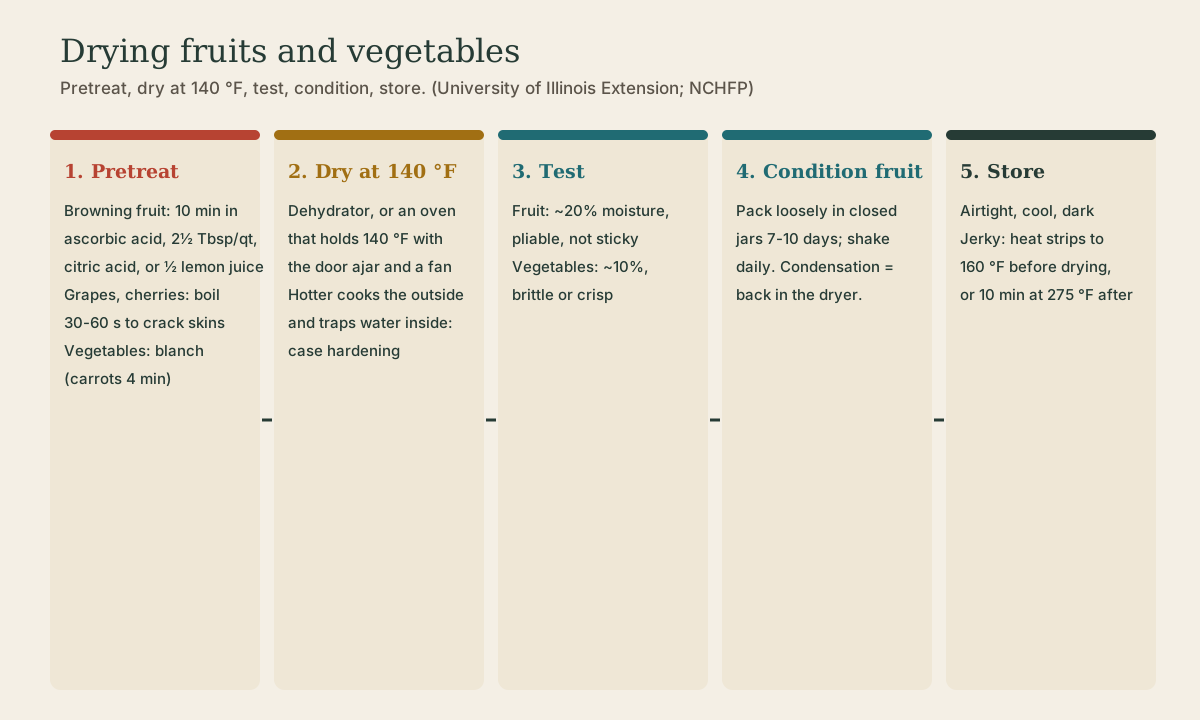
Dry at about 140 °F with moving air; hotter case-hardens food. Use a dehydrator or a 140 °F oven with the door ajar and a fan; sun-dry only fruit. Pretreat browning fruit 10 minutes in ascorbic acid (2-1/2 Tbsp per quart), crack skins on grapes and cherries, and blanch vegetables. Fruit is done pliable and not sticky (about 20%), vegetables brittle (about 10%). Condition fruit in closed jars 7-10 days. Heat jerky to 160 °F before drying or for 10 minutes at 275 °F after.
Lesson complete
Nice work.
Sources for this lesson
- 1Caitlin Mellendorf. Fill Your Pantry: Drying Foods at Home. University of Illinois Extension. 2021. verifiedDry at about 140 °F; hotter cooks rather than dries; dried fruit about 20% moisture, pliable not sticky, vegetables about 10%, brittle or crisp; dehydrators, ovens that hold 140 °F with the door ajar and a fan, microwave only for herbs; sun drying for fruit only; pretreat browning fruit 10 minutes in 2-1/2 Tbsp ascorbic acid per quart, 1 tsp citric acid per quart, or equal parts lemon juice and water; boil grapes and cherries 30-60 s; blanch vegetables (carrots 4 min, potatoes 7); condition fruit 7-10 days in closed jars; jerky heated to 160 °F before drying or 10 minutes at 275 °F after; jerky keeps about 2 weeks at room temperature.