Wells and Rainwater
Water for a Wisconsin homestead: what makes a private well safe (casing above grade, a vermin-proof cap, a grout seal, nothing in a pit), how bacteria get in, the DNR's testing schedule (bacteria and nitrate yearly, arsenic every five years), what to do with a bad result, and the rainwater math: a 1,000-square-foot roof sheds 623 gallons per inch, far more than a barrel holds, enough to water the garden but not to drink.
- 5 min
- 5 steps
- 3 questions
- Lesson 17 of 55
In this lesson
- A sound well
- Testing
- The rainwater math
- Try it
Picking up where you left off.
Most rural Wisconsin homes run on a private well, and almost all of them give safe water. The homeowner, not the state, is responsible for keeping it that way. Rainwater is the cheap second supply, for the garden, not the kitchen.
A sound well
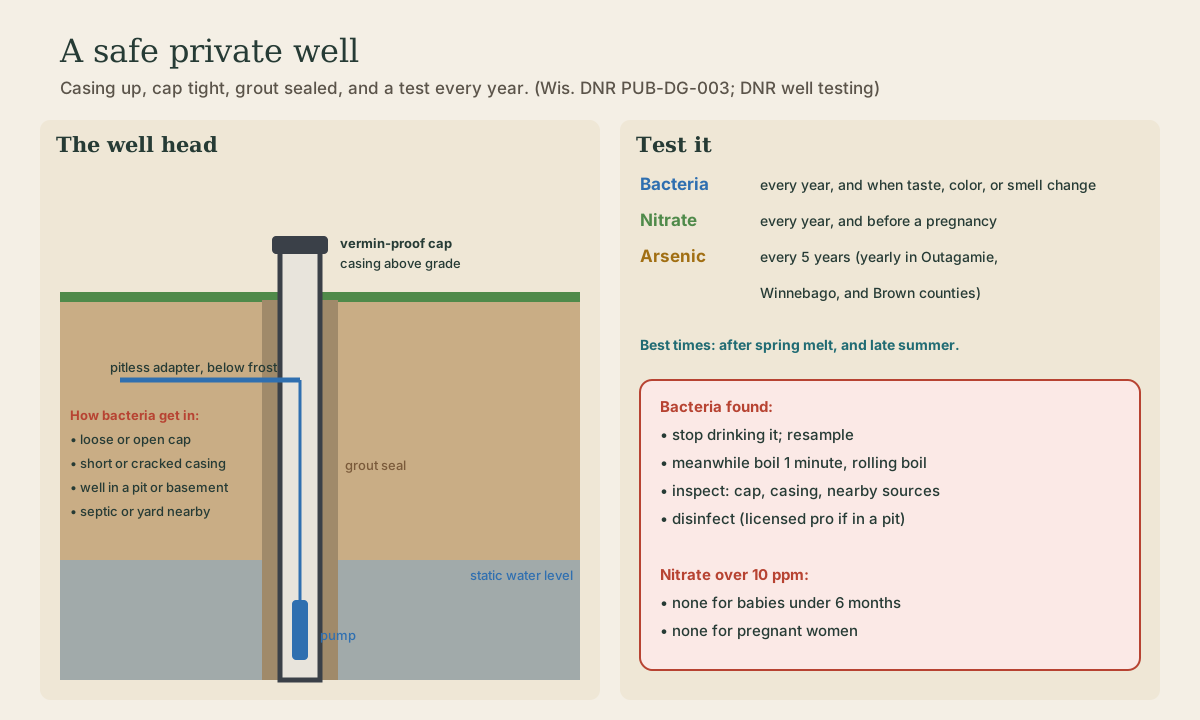
A drilled well is a steel casing sunk through the soil into the aquifer, with a submersible pump hanging inside below the water level (see the pumps lesson for how the pump and pressure tank work). Soil filters bacteria out of water as it soaks down; a good well keeps unfiltered surface water from taking a shortcut down the well 1.
What the DNR looks for 1:
- Casing above the ground, far enough that surface water can’t run in the top. A casing that ends in a pit, alcove, or basement that floods or seeps is a defect that usually can’t be fixed. The well typically needs replacing.
- A DNR-approved vermin-proof cap. Loose caps let in insects, spiders, and mice.
- A proper grout seal around the casing, and a casing deep enough for the local geology. Fractured bedrock and coarse gravel filter poorly.
- Nothing too close: septic systems, animal yards, abandoned wells, sinkholes.
The state well code (NR 812) requires every new well, pump, and pressure tank to be disinfected and the water tested for bacteria before use 1.
Quick check
Pits and basements flood and seep; the DNR says such wells usually need replacing.
Testing
The DNR’s schedule for every private well 2:
| Test | When |
|---|---|
| Bacteria | every year, and whenever taste, color, or smell change |
| Nitrate | every year, and before use by anyone who is or may become pregnant |
| Arsenic | every 5 years (every year in Outagamie, Winnebago, and Brown counties, or after a detection) |
Get a kit from a certified lab and follow its directions exactly. Most false positives come from sloppy sampling, and bacteria samples must reach the lab within 48 hours 2. The best times to test are when wells are most likely to be unsafe: after spring snowmelt and in late summer 1.
Playback is optional. If the player is unavailable, open the video at its source.
Reading the results
- Bacteria present: stop drinking the water. Resample to rule out a sampling error. Until it’s fixed, boil drinking and cooking water at a rolling boil for at least one minute. Look for the cause: the cap, the casing, nearby sources, a cross-connection. Then have the well disinfected 1. The DNR’s brochure gives a do-it-yourself chlorination procedure for ordinary wells, but never enter a well pit, and hire a licensed pump installer for wells in pits, alcoves, or basements 1.
- E. coli specifically means fecal contamination. Treat it as serious and deal with it immediately 1.
- Nitrate over 10 ppm: don’t use the water for infants under six months, for formula, or during pregnancy 2. Boiling concentrates nitrate; it doesn’t remove it 1.
Quick check
Arsenic is every five years for most of the state, yearly in Outagamie, Winnebago, and Brown counties.
The rainwater math
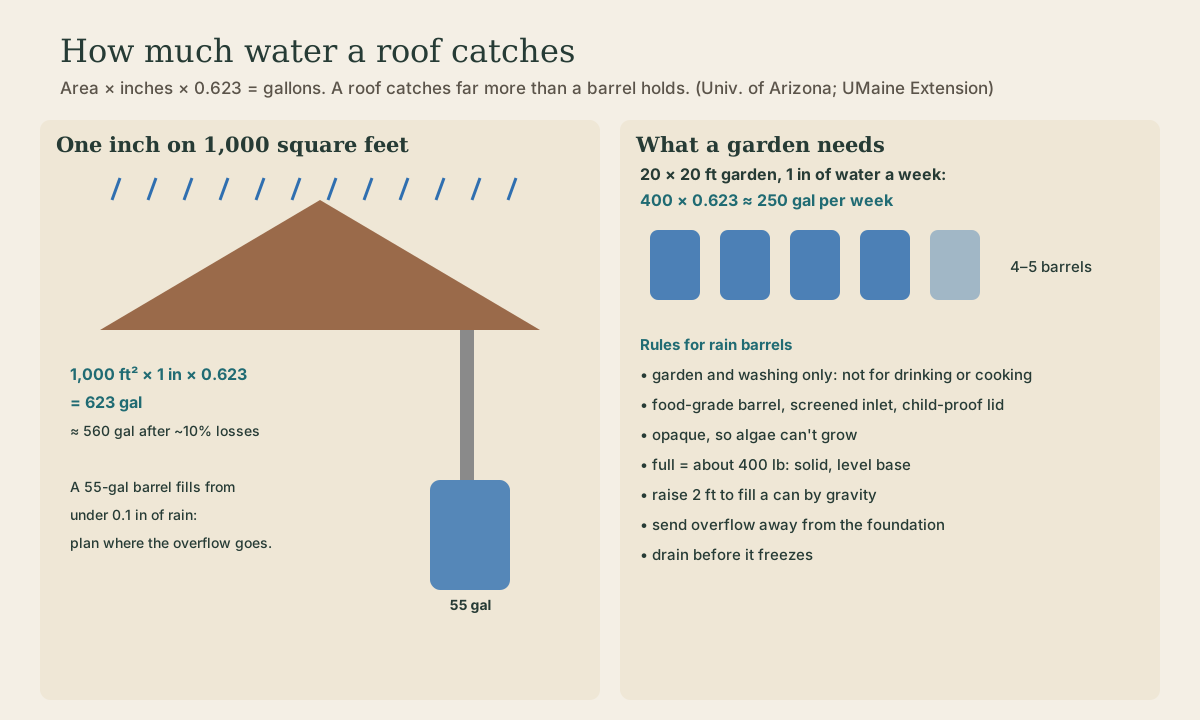
Every square foot of roof sheds rain. The conversion 3:
gallons = roof area (ft²) × rainfall (inches) × 0.623
(One inch over one square foot is 1/12 cubic foot, and a cubic foot is 7.48 gallons.) Take about 90% of that for losses 3.
- A 1,000 ft² roof sheds 623 gallons in a 1-inch rain, about 560 after losses.
- A 55-gallon barrel fills from under a tenth of an inch of rain on that roof. The overflow plan matters more than the barrel.
- A 20 × 20 ft garden getting an inch a week needs 400 × 0.623 ≈ 250 gallons a week, four or five barrels’ worth.
Barrel rules
From UMaine and Arizona Extension 4 3:
- Garden and washing only, never drinking or cooking.
- Food-grade barrels only, never ones that held oil or chemicals, with screened, insect- and child-proof lids. Mosquitoes breed in open water.
- Opaque barrels, or paint translucent ones, so algae can’t grow.
- A full barrel weighs about 400 pounds: set it on a flat, solid base of blocks or a sturdy platform. Raising it 2 feet lets you fill a watering can by gravity.
- Send the overflow away from the foundation.
- Drain it before it freezes, or the ice will crack it.
Quick check
Area × inches × 0.623; use about 90% for losses.
Try it
Look up your well’s construction report on the DNR’s well database, or walk out and check the cap and how high the casing stands above the ground. Order a bacteria and nitrate kit from a certified lab for next spring’s melt. Then measure the roof area that drains to your nearest downspout and work out how many gallons last week’s rain would have given you.
Lesson complete
Nice work.
Sources for this lesson
- 1Bacteriological Contamination of Drinking Water Wells (PUB-DG-003). Wisconsin DNR, Bureau of Drinking Water and Groundwater. 2017. verifiedColiform indicates risk; E. coli indicates fecal contamination. Paths: contamination sources too close with inadequate casing depth; unsanitary construction; poorly sealed dug wells, inadequate grout, casing too short above ground, casing ending in a basement or pit, corroded casing; fractured bedrock or coarse gravel; caps that aren't vermin-proof; cross-connections. NR 812 requires disinfection and a bacteria test for new wells and after pump work. Test annually; best times after spring snowmelt and in late summer. If unsafe: resample, boil at least one minute at a rolling boil, look for sources, have the system inspected and disinfected; DNR-approved vermin-proof cap. Do not enter well pits; hire a pro for wells in pits, alcoves, or basements.
- 2Test your private well water annually. Wisconsin Department of Natural Resources. verifiedBacteria once a year and when taste, color, or smell change; nitrate once a year and before use by a woman who is or may become pregnant; arsenic every five years for most, every year in Outagamie, Winnebago, and Brown counties or after a previous detection. Use a certified lab's kit and get samples there within 48 hours. Stop drinking if bacteria are present; over 10 ppm nitrate, avoid for pregnancy and don't give to infants under six months or use for formula.
- 3Residential Rain Water Catchment Systems: Useful Information. University of Arizona Cooperative Extension (Water Wise). verified1,000 sq ft of roof yields 623 gallons per inch of rain; gallons = area x inches x 0.623, then use 90% to allow for losses. 7.48 gallons per cubic foot; 1 gallon weighs 8.34 lb; 2.31 ft of elevation = 1 psi. Screen openings against mosquitoes; use opaque containers to stop algae; drip systems need 15-20 psi.
- 4Rainwater Harvesting and rain barrel guidelines. University of Maine Cooperative Extension, York County. 2018. verifiedUse new or clean recycled food-grade barrels with insect- and child-proof lids, never oil or chemical barrels; a full barrel weighs around 400 lb, so set it on a flat, level, solid base; raising it 2 ft lets you fill a watering can by gravity; direct overflow away from the house; never use barrel water for drinking or cooking; drain before freezing weather to prevent cracking.